Photo: Makara Heng / Pexels
Tesla vs India's EV Rivals in 2026: Price, Range, Verdict
Tesla finally sells cars in India in 2026 — and the most striking thing about its arrival is how ordinary the numbers suddenly look. When the Model Y opened for orders, Indian buyers already had a shelf full of homegrown electric SUVs that go nearly as far on a charge for a fraction of the price. The EV race has changed shape: it is no longer Tesla against the world, but Tesla against a confident pack of global and Indian rivals, each attacking from a different price point.
This is our own comparison of where the contest actually stands in mid-2026 — globally, where Tesla and BYD are trading the crown every quarter, and in India, where the real fight is over the ₹15-25 lakh sweet spot Tesla has chosen not to enter yet.

Globally, Tesla and BYD are swapping the lead
For most of 2025 the story was simple: BYD had pulled ahead. The Chinese giant sold roughly 2.25 million battery-electric vehicles over the year against Tesla's 1.64 million, the clearest sign yet that Elon Musk's company no longer owned the EV future.
Then the pendulum swung back. In the first quarter of 2026, Tesla delivered 358,023 cars worldwide against BYD's roughly 310,000 pure-electric units, reclaiming the quarterly sales crown by about 47,000 vehicles. BYD's slump was largely a China problem — new EV taxes, tighter rules and a brutal domestic price war knocked its home-market momentum, dragging volumes down sharply year-on-year.
The takeaway isn't that one side won. It's that the two are now close enough that a single quarter, a tax tweak or a factory ramp can flip the ranking. Tesla still leans heavily on just two cars — the Model 3 and Model Y make up the overwhelming bulk of its sales — while BYD wins on sheer breadth, selling everything from sub-₹10-lakh hatchbacks abroad to luxury sedans.

What Tesla actually brought to India
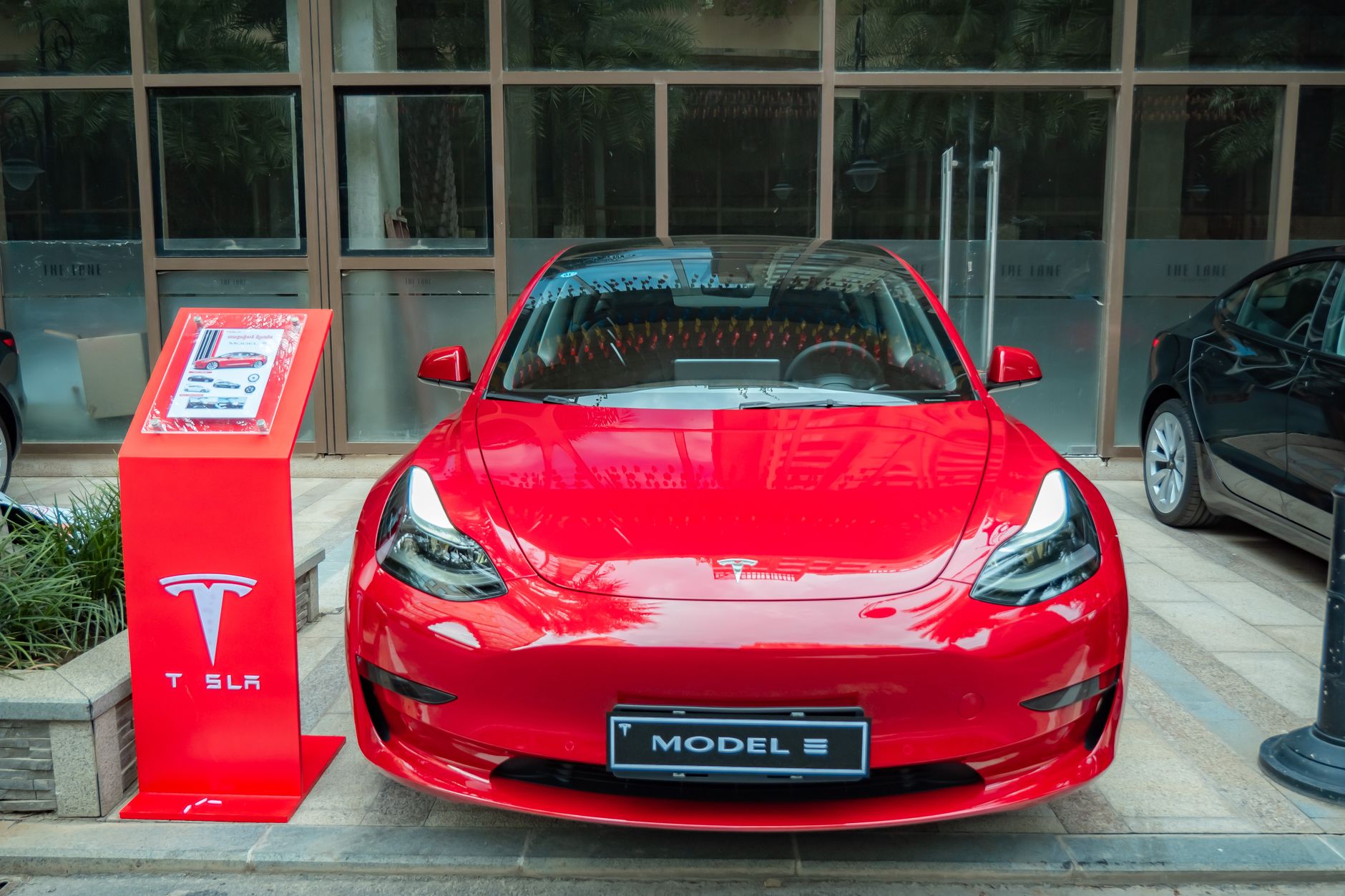
Tesla entered India in 2025 with a Mumbai showroom and a single car, the Model Y, priced at ₹59.89 lakh. In 2026 it sharpened the pitch: a new Model Y Premium RWD at ₹50.89 lakh (ex-showroom) became its cheapest India offering, while a six-seat, long-wheelbase Model Y L arrived at around ₹61.99 lakh with a claimed range of 681 km.
The catch is baked into those prices. Every Tesla sold here is imported as a fully built unit, so it carries India's steep customs duty — the same car that looks mid-priced in the US becomes a luxury purchase in Mumbai. Tesla is, in its own words, testing the waters: building experience centres, service hubs and charging infrastructure city by city rather than betting on a local factory. Until that changes, Tesla is a premium import, not a mass-market player.
The price-and-spec scoreboard
Here is how the headline contenders stack up. All prices are ex-showroom and approximate; ranges are manufacturer-claimed (MIDC for Indian models), which real-world driving will trim by 20-30%.
| Model | Body | Claimed range | Price (ex-showroom) | Built |
|---|---|---|---|---|
| Tesla Model Y (RWD) | Premium SUV | ~500 km | from ₹50.89 lakh | Imported |
| Tesla Model Y L (6-seat) | Premium SUV | ~681 km | ~₹61.99 lakh | Imported |
| BYD Atto 3 | Compact SUV | ~468 km | from ~₹24.99 lakh | Imported |
| BYD Sealion 7 | Premium SUV | up to ~567 km | up to ~₹54.90 lakh | Imported |
| Mahindra XEV 9e | Coupe SUV | up to ~656 km | from ~₹21.90 lakh | India |
| Mahindra BE 6 | Compact SUV | up to ~683 km | from ~₹18.90 lakh | India |
| Tata Harrier EV | Midsize SUV | up to ~627 km | from ~₹21.49 lakh | India |
| Hyundai Creta Electric | Compact SUV | 420-510 km | ₹18.02-23.82 lakh | India |
| MG Windsor EV | CUV | 332-449 km | ₹14.10-18.60 lakh | India |
Look down the range column and Tesla's old advantage evaporates. A Mahindra BE 6 or XEV 9e claims more kilometres on paper than the base Model Y, for roughly a third of the money.
Where Tesla still wins — and where it doesn't
Numbers don't capture the whole car, so it's worth being honest about both sides.
What Tesla still does better:
- Software and over-the-air updates — Tesla's interface, navigation and self-driving-adjacent features remain a step ahead of most rivals.
- The Supercharger experience — fast, reliable charging is Tesla's quiet superpower, though its India network is still tiny.
- Brand and resale aura — for a certain buyer, the badge is the point.
- Build and efficiency — Tesla squeezes more range per kWh than almost anyone.
Where Indian and Chinese rivals win:
- Price — homegrown EVs undercut Tesla by 60-70%, a gap no software polish can close for most families.
- After-sales reach — Tata, Mahindra and Hyundai have service networks in hundreds of towns; Tesla has a handful of cities.
- Features for the money — ventilated seats, big screens, ADAS and premium audio now come standard on cars costing ₹20 lakh.
- Made-in-India pricing — local manufacturing dodges the import duty that inflates every Tesla.
The Indian battlefield Tesla is ignoring
The real volume in India sits well below Tesla's entry price. The MG Windsor has been a runaway hit partly because of a clever battery-rental scheme that pushes the upfront cost down, while the Hyundai Creta Electric leverages the most trusted nameplate in the segment. Tata, the original mass-market EV pioneer here, fields everything from the affordable Punch and Nexon EVs up to the Harrier EV.
Mahindra's born-electric duo — the BE 6 and XEV 9e — has arguably reset expectations, pairing genuinely big claimed ranges with sci-fi cabins at prices that make a base Tesla look eye-watering. BYD, meanwhile, plays a similar premium-import game to Tesla and even nudged its India prices up in mid-2026, ceding the value ground to local brands.
In this crowd, Tesla isn't competing for the typical Indian EV buyer at all. It's chasing the buyer who would otherwise look at a German luxury SUV — a much smaller pool.
The verdict
For the average Indian buyer in 2026, the honest answer is that a homegrown EV wins. If you want the most range and equipment per rupee, the Mahindra BE 6, Tata Harrier EV, Hyundai Creta Electric or MG Windsor deliver it, backed by service networks Tesla can't yet match. BYD offers polish but at import-inflated prices, making it a niche pick.
Tesla is worth it only if you specifically want its software, charging ecosystem and brand, and can absorb the duty premium and thin service footprint. As a status object and a technology showcase, the Model Y delivers. As a value proposition in a market that invented the affordable EV, it is — for now — outgunned by the cars built right here. The race Tesla is winning is the global one; the race that matters to Indian wallets, it hasn't really entered.