Trump's G7 Arrival, Hours After a White House Fight Night
A short clip is racing around YouTube and it does something deliberately jarring: it stitches Donald Trump the cageside fight-night showman to Trump the G7 statesman, all inside the span of a news cycle. The framing is that the US President went from a White House UFC spectacle straight onto Air Force One and into Europe for the G7 Summit with the world's other major leaders. It is a tidy, almost cinematic contrast, and that is exactly why it travels.
Before anyone treats the headline as gospel, it is worth separating what is clearly true from what is being implied. Trump's appetite for mixed martial arts is real and well documented. The idea of a fight on the White House lawn went from stated plan to reality. A White House UFC card did take place in the days before this trip, which is the part worth pinning down precisely.
What the viral clip actually shows
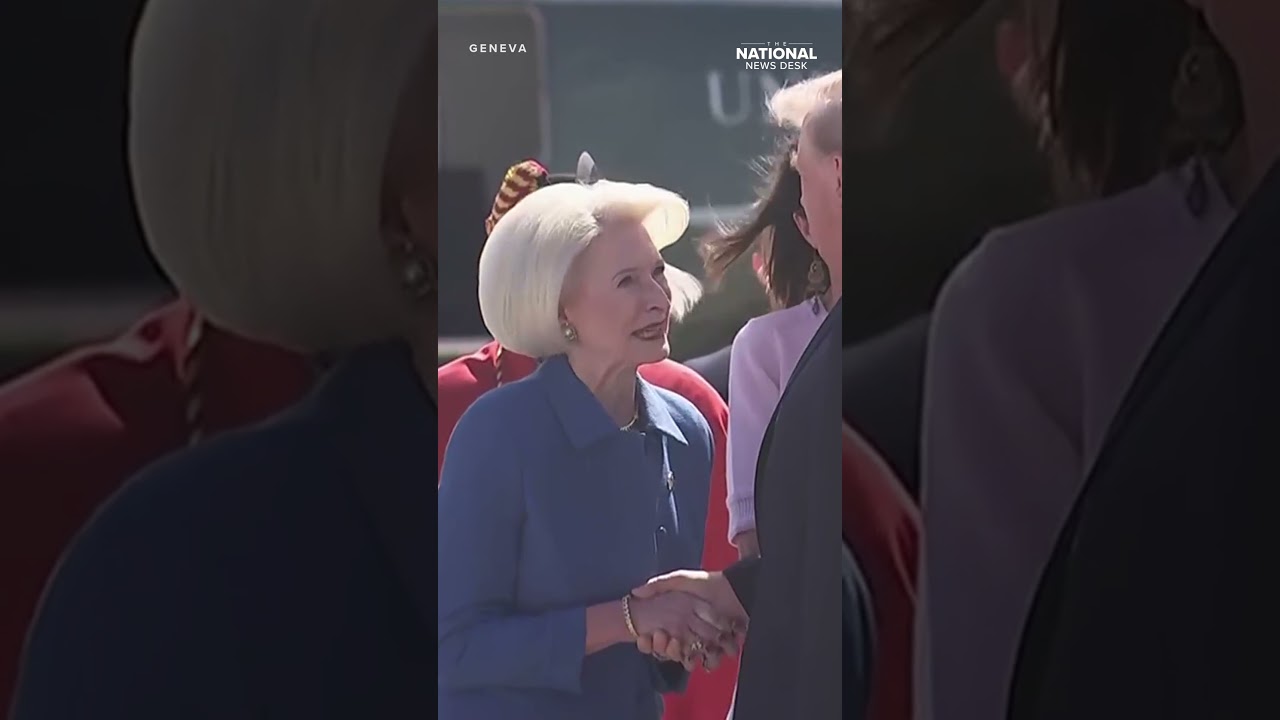
The video leans on juxtaposition rather than narration. You get the imagery of combat sport and crowd energy on one side, and the stiff choreography of an arrival on a foreign tarmac on the other: the steps, the handshake, the motorcade. The implied storyline is momentum, that the same man works a fight crowd one night and sits across from heads of government the next.
That contrast is the entire appeal. It compresses a sprawling, complicated diplomatic event into a single emotional beat that anyone can grasp in fifteen seconds. It is also why short-form political clips like this outperform the careful summit explainers that follow them.
The White House fight, separated from the hype
Here is the careful version. Trump has long been close to Dana White, the head of the UFC, who has appeared at Trump events and spoken warmly of him. Trump regularly turns up cageside at UFC cards in the United States, walking out to roaring arenas, and those entrances themselves go viral.
Separately, Trump staged a UFC card on the White House grounds to mark the 250th anniversary of American independence, the semiquincentennial. He first floated July 4 as the date, but the event — billed as UFC Freedom 250 — was ultimately held on June 14, 2026, his 80th birthday, on the South Lawn.
What the clip compresses is the timing between those two events. The White House bout took place on June 14, and the G7 opened in France the next day, so the sequence the clip implies — a fight night followed quickly by a summit arrival — broadly tracks the actual calendar. The video's work is fusing Trump's habit of fight-night appearances with that marquee White House spectacle into a single punchy story.
Why it is blowing up
Virality rewards a few specific ingredients, and this clip has most of them:
- Spectacle plus power. Combat sport and great-power diplomacy almost never share a frame. The collision feels novel.
- A familiar protagonist. Trump is already one of the most clip-able figures alive. Any footage of him arrives pre-loaded with audience.
- Ambiguity that invites argument. Supporters read it as energy and dominance. Critics read it as the presidency turned into reality television. Both camps share it, which doubles the reach.
- Low cost to watch. It is seconds long, needs no context, and slots neatly between other shorts.
The comment sections tell the same split story. One side celebrates a leader who refuses to look stiff and ceremonial. The other argues that pairing a fight night with a summit trivialises serious diplomacy. Neither reaction is surprising, and the algorithm feeds on the friction between them.
What the G7 is, and why this summit matters
Strip away the theatrics and the substance is genuinely consequential. The G7 is the club of large advanced economies: the United States, United Kingdom, France, Germany, Italy, Canada and Japan, with the European Union also at the table. In 2026 the rotating presidency sits with France, so the agenda and venue are shaped from Paris this year.
These summits rarely produce binding law. What they produce is alignment, or the visible absence of it, on the issues that move markets and borders. This year that list is heavy: trade and tariffs, energy security after a turbulent stretch in the Gulf, the war in Ukraine, the state of the global economy, and how democracies handle artificial intelligence. The body language of who stands where, and who is smiling, becomes its own headline.
The India angle most coverage skips
For Indian readers there is a direct stake here, even though India is not a G7 member. India has become a near-fixture on the outreach guest list, and Prime Minister Modi has been invited to several recent summits. India is again among the outreach guests for the 2026 French-hosted edition, in keeping with that pattern.
Why it matters for India runs deeper than a photo opportunity. Washington's trade posture is the live wire. There has been friction over proposed US tariffs touching Indian goods, and any G7 signalling on trade rules, supply chains or labour standards can ripple into negotiations that affect Indian exporters. Energy is the other thread. India imports the bulk of its crude and a large share of its cooking gas through Gulf routes, so any G7 statement on Middle East stability or oil flows lands squarely on Indian household budgets.
There is also the softer signal. When the G7 talks about expanding cooperation with major economies of the Global South, India is usually the first name in the room. How warmly Trump engages on that front, on camera, becomes a data point analysts in Delhi will parse.
What happens next
Expect the summit itself to generate a closing communique or a set of leader statements. Watch for language on tariffs and trade, on Ukraine, and on the Gulf, because those are where disagreement among the seven is sharpest. The gap between a warm joint photo and a watered-down final text is often where the real story sits.
On the UFC side, the White House card has now happened: UFC Freedom 250 was staged on the White House grounds on June 14. The thing to track from here is the fallout — the cost, the guest list and the legal challenges around it — rather than whether it was real. Clips that pair it with the summit arrival are, on the timeline, broadly accurate.
The broader pattern is the one worth keeping in view. Trump has spent years collapsing the wall between entertainment and statecraft, and footage that places an octagon next to a summit arrival is the purest expression of that strategy. It is effective precisely because it is shareable. The job for anyone watching is to enjoy the contrast without mistaking a fifteen-second edit for the full record of what a G7 meeting actually decides.