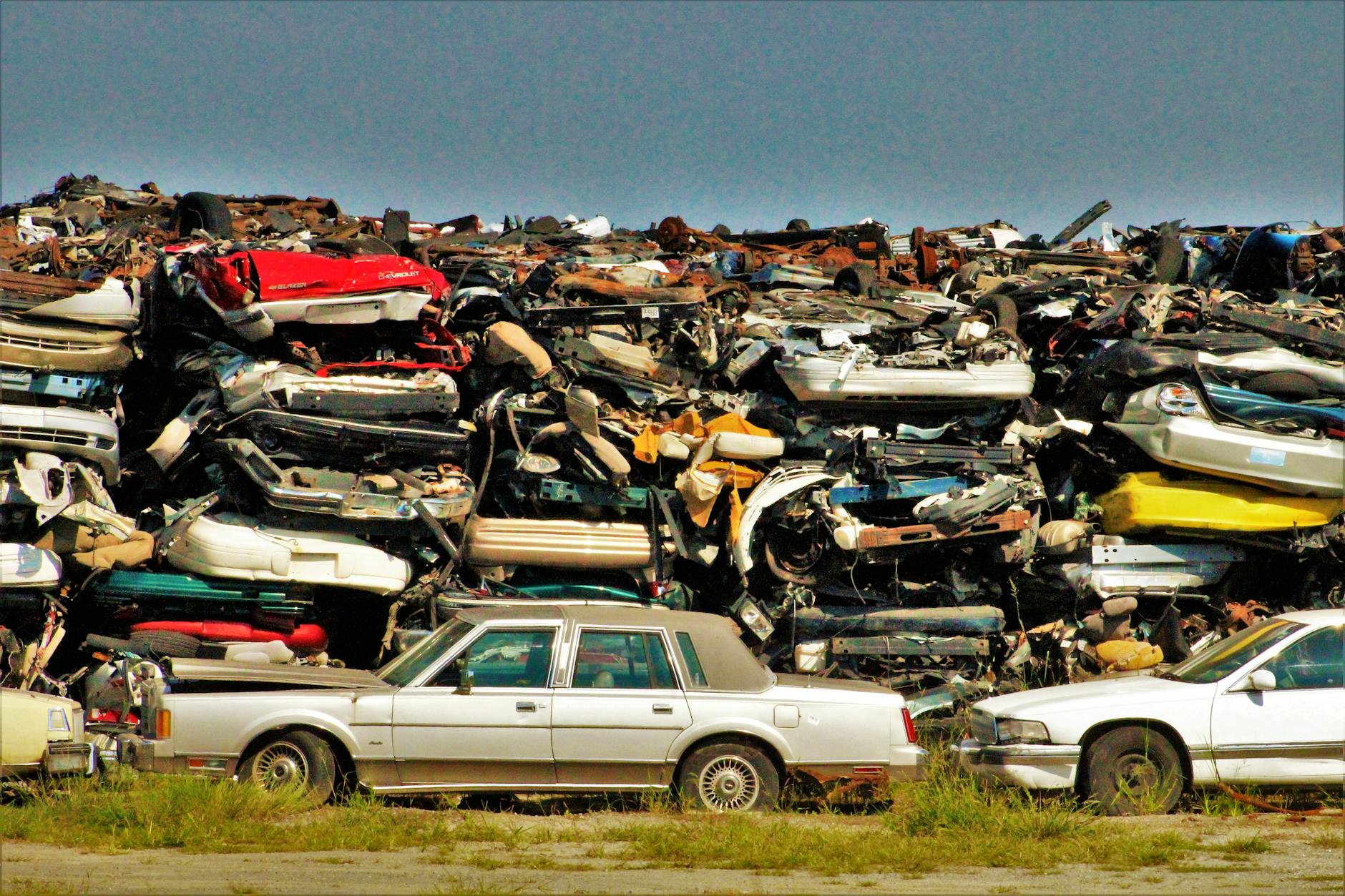
Photo: Benhur Emmanuel / Pexels
Scrapping Your Old Car in India: How to Cash the Certificate of Deposit
Most people think scrapping an old car means hauling it to a local kabadiwala, haggling over the weight of the metal, and walking away with a few thousand rupees. Under India's Vehicle Scrappage Policy, that instinct now leaves serious money on the table. Do it right — at an authorised facility — and you walk out with a Certificate of Deposit that can shave a quarter off the road tax on your next car, waive its registration fee, and unlock a discount from the manufacturer. The scrap metal is the smallest part of the payout.
This is a practical guide to turning a tired, out-of-warranty vehicle into the maximum legal benefit, and to avoiding the traps that quietly keep you on the hook for a car you thought you'd disposed of.
When your car actually has to go
There is a widespread myth that every car is illegal at 15 years. For private vehicles, that isn't true nationally. A personal car only faces a mandatory fitness test after 20 years; a commercial vehicle faces it after 15 years. If your car passes the test at an Automated Testing Station, you can re-register it and keep driving — typically for another five-year block.
Scrapping becomes compulsory only when a vehicle repeatedly fails this fitness check, or when its registration can no longer be renewed. So the age number that matters most is the one in your registration certificate combined with how the car actually performs on the testing line.
The big exception is the National Capital Region. Following long-standing pollution orders, Delhi-NCR deregisters petrol cars at 15 years and diesel cars at 10 years, regardless of how healthy the engine is. Owners there genuinely have no choice but to scrap, sell to another state with a valid No-Objection Certificate, or convert to a cleaner fuel where allowed.

The Certificate of Deposit is the real prize
When you scrap at a Registered Vehicle Scrapping Facility (RVSF), the yard issues a digital Certificate of Deposit (CoD) once the vehicle is dismantled and deregistered. Treat this document as the actual product of the whole exercise.
The CoD is a negotiable instrument. That means:
- You can use it yourself when buying your next vehicle.
- You can transfer it once to an immediate family member, so a relative buying a new car can claim the benefits in your place.
- It carries the value of the scrap material credited to you, separate from the policy incentives.
In short, the metal gets crushed, but the paper keeps working for you at the showroom and the RTO counter.
How the benefits stack up
The scrappage incentives are designed to be combined, and this is where most owners under-claim. Presented with a valid CoD, you can layer:
- Road tax rebate — states are advised to offer up to 25% off road tax on a new personal vehicle, and around 15% for commercial ones. The exact figure varies by state, so confirm your state's notified rate before you buy.
- Registration fee waiver — the registration charge on the new vehicle bought against a scrapping certificate is waived.
- Manufacturer's loyalty discount — most carmakers offer an additional scrappage discount, commonly in the ₹15,000–50,000 range, when you produce a CoD.
- Scrap value — the fair market price of the metal and recyclable parts, paid by the yard.
Stacked together on a new car costing several lakh rupees, these can comfortably outweigh anything a roadside dealer would ever offer for the old vehicle. The catch is that almost every benefit beyond the scrap value depends on that single piece of paper from a registered yard.
Why a roadside scrap dealer is a costly mistake
Here is the trap. An unregistered scrap dealer can crush your car, but he cannot deregister it in the government's records. If the vehicle's registration stays alive in the database, you remain the legal owner on paper — liable for any misuse of the chassis or number plate, and ineligible for every incentive above.
There have been enough cases of a "scrapped" car's identity resurfacing on the road that this is a real risk, not a hypothetical one. The only way to be sure the vehicle is legally dead is to use a facility that issues the CoD and files the deregistration with the transport authority.
You can find authorised yards in the Vehicle Scrapping section of the Parivahan portal, which lists RVSFs and testing stations state by state. If an operator isn't on that list, walk away.
The step-by-step scrapping process
Once you've decided to scrap, the flow is fairly clean:
- Clear the paperwork. Settle any pending challans, ensure the loan is closed and hypothecation removed, and keep the original registration certificate ready.
- Pick an RVSF on Parivahan and book a slot, either online or by contacting the facility directly.
- Hand over the vehicle with KYC documents and the RC. Many facilities offer pickup; insist on a receipt acknowledging custody.
- Dismantling and deregistration happen at the yard, after which your vehicle's records are cancelled in the system.
- Collect your Certificate of Deposit and the scrap-value payment. Verify the deregistration reflects online before you relax.
- Use the CoD at your dealership and RTO to claim the tax rebate, fee waiver and manufacturer discount on the new vehicle.
Keep a copy of the CoD and the deregistration acknowledgement safely; you'll need them at the time of the new registration.
Should you scrap, sell, or keep driving?
Scrapping isn't automatically the right answer. If your car is well under the fitness-test age, runs cleanly, and has resale demand, a private sale or exchange often fetches more than scrap value plus incentives combined. The policy rewards getting an old, polluting or genuinely unfit vehicle off the road — not a sound ten-year-old hatchback.
The maths tips toward scrapping when the vehicle is near or past its fitness deadline, when it sits in a strict zone like Delhi-NCR, or when repair and re-registration costs start rivalling its market value. In those cases, the stacked benefits turn a depreciating liability into a meaningful down payment on something newer and safer.
The one rule that never changes: whatever you decide, only ever scrap through a registered facility. The Certificate of Deposit is the difference between disposing of a car and merely losing it.


