Why a YouTuber's Welcome to the Jungle Review Went Viral
A trailer review, not the trailer, is the story
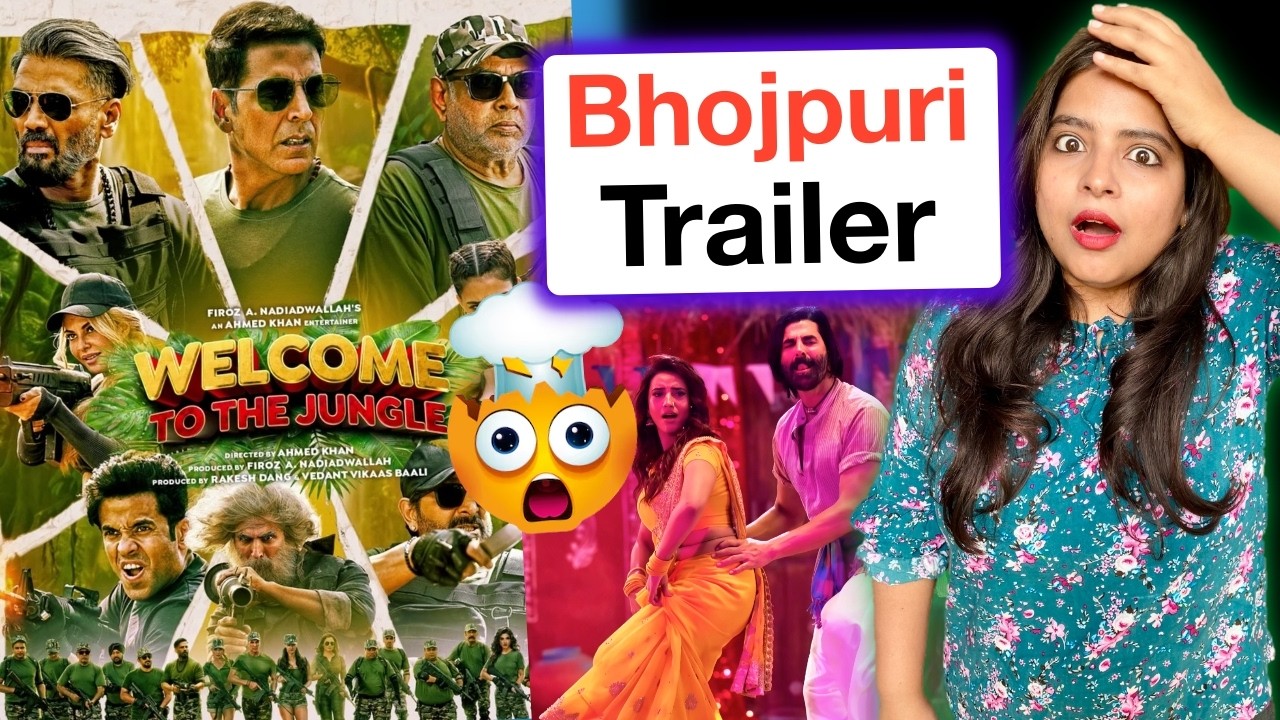
The video climbing YouTube right now is not the official Welcome to the Jungle trailer. It is one person, Deeksha Sharma, sitting in front of a camera and giving her honest read on it. That distinction matters more than it sounds. In 2026, the reaction to a trailer often travels faster and lands harder than the trailer itself, and this clip is a clean example of how that machinery works.
The film in question is the long-gestating third chapter of producer Firoz Nadiadwala's Welcome comedy series, a franchise built on chaos, double-crosses and a sprawling cast of comic actors. After years of stop-start production, casting churn and shifting release chatter, any official footage was always going to be an event. What is genuinely interesting is who got to deliver the verdict first, and why so many viewers chose a single creator's take over a polished studio promo.
How a solo creator became the verdict-giver
For most of Bollywood's history, the first public judgement on a film came from newspaper critics, then from a handful of star reviewers on television. That gatekeeping has quietly collapsed. Channels run by individuals now publish a reaction within minutes of a trailer dropping, and audiences increasingly trust a familiar face talking plainly over an institutional byline.
Deeksha Sharma's clip fits a format that has become its own genre. The appeal is not production value. It is speed, candour and relatability. A viewer who has not yet decided whether to care about the film gets a quick, opinionated summary from someone who sounds like a friend rather than a brand.
The mechanics that push these videos are worth spelling out:
- Timing. Posting in the first window after a trailer release captures the search and recommendation surge.
- A face and a name. Regular viewers return for the reviewer, not just the film.
- A clear verdict. Audiences reward a definite yes, no or maybe over careful fence-sitting.
- Comment-section fuel. Disagreement keeps the video circulating long after the initial spike.
None of this requires a press pass or a screening invite. It requires being early, being clear, and being watchable.
Why this particular film draws such heat
The Welcome name carries weight, and that is precisely why a trailer review of it spreads. The franchise is associated with broad, loud, ensemble comedy — the kind that splits opinion instantly. Some viewers see comfort food and a guaranteed laugh. Others see a formula that has been recycled too often. A trailer for a film like this is almost designed to start an argument, and arguments are what the creator economy runs on.
There is also the matter of the cast. These films are famous for stacking the frame with established comic and action stars, which doubles as both the biggest selling point and the biggest gamble. A packed ensemble promises star power in every scene, but it also raises an obvious question that reviewers love to pose: can any single character actually land when the screen is this crowded?
Deeksha Sharma's review, like others in the same wave, leans into exactly that tension. She is not narrating the footage shot by shot. She is answering the question the audience is already asking — is this worth my money and my Friday evening — and that is the question that converts a casual scroll into a click.
Verdict culture: judged before a ticket is sold
What we are watching is the maturing of what could fairly be called verdict culture. A film is now assessed, scored and filed away in the public imagination before it has sold a single ticket. The trailer is the product launch, the reaction videos are the reviews, and the comment sections are the focus groups, all running in the same 48-hour window.
This has real consequences for how films are marketed. Studios can no longer control the first impression. They can release a trailer, but the framing of that trailer is immediately handed over to hundreds of independent voices, each putting their own spin on it. A promo that the marketing team built to look like a sure-fire hit can be reframed within the hour as tired, or as underrated, depending on which creator's video catches fire.
For a franchise comedy especially, this is a double-edged sword. Positive creator buzz can build the sense of an event film that everyone is talking about. Negative buzz, delivered by a trusted reviewer, can harden into received wisdom before the release date even arrives.
What the numbers do and do not tell us
It is tempting to treat a viral review as proof that the film will succeed or fail. That leap is not supported by evidence. View counts measure curiosity, not ticket sales. A reaction video racking up large numbers tells us the topic is hot, not that the audience has made up its mind in the film's favour.
A few honest caveats are worth keeping in view:
- Engagement is not endorsement. People click on negative reviews as eagerly as positive ones.
- One creator is not the market. A single popular take can be loud without being representative.
- Trailers are marketing, not the film. The most thrilling cut can sell a disappointing movie, and the dullest trailer can hide a good one.
- Virality fades fast. Today's must-watch reaction is often forgotten by the weekend, well before release.
None of this diminishes what Deeksha Sharma and her peers are doing. It simply means the right way to read the moment is as a snapshot of attention, not a prediction of fortune.
The bigger shift this clip represents
Step back from this one video and a larger pattern comes into focus. The power to shape a film's first impression has moved from a small group of professional critics to a wide, decentralised network of creators. That shift rewards different qualities than print criticism ever did. It prizes personality over institutional authority, immediacy over considered analysis, and a strong opinion over a balanced one.
There are trade-offs in that. Audiences get more voices, more honesty and far less gatekeeping, which is genuinely democratising. They also get a culture where being first and being loud can matter more than being right, and where nuance is often the first casualty of the algorithm.
For Welcome to the Jungle, the practical upshot is that its fate online is now partly out of its makers' hands. The official trailer set the stage. Reviewers like Deeksha Sharma are running the show.
What to watch next
The useful thing to track is not whether this one review was kind or harsh, but whether the wider creator reaction settles into a consensus. When dozens of independent voices start landing on the same verdict, that mood tends to stick, and it becomes the story the film has to either ride or fight against on release.
Keep an eye on three signals in the coming days. First, whether the buzz holds or fades once the novelty of the trailer wears off. Second, whether the conversation centres on the cast, the comedy, or the franchise's baggage, because that tells you what audiences are really reacting to. Third, whether the studio responds with more footage to steer the narrative back in its direction.
Whatever the film ultimately delivers, the review going viral is its own little lesson in how movies are sold and judged in India now. A trailer arrives, and within hours the verdict belongs to whoever the audience trusts to deliver it. Right now, for a lot of viewers, that person is a YouTuber with a camera and an opinion.