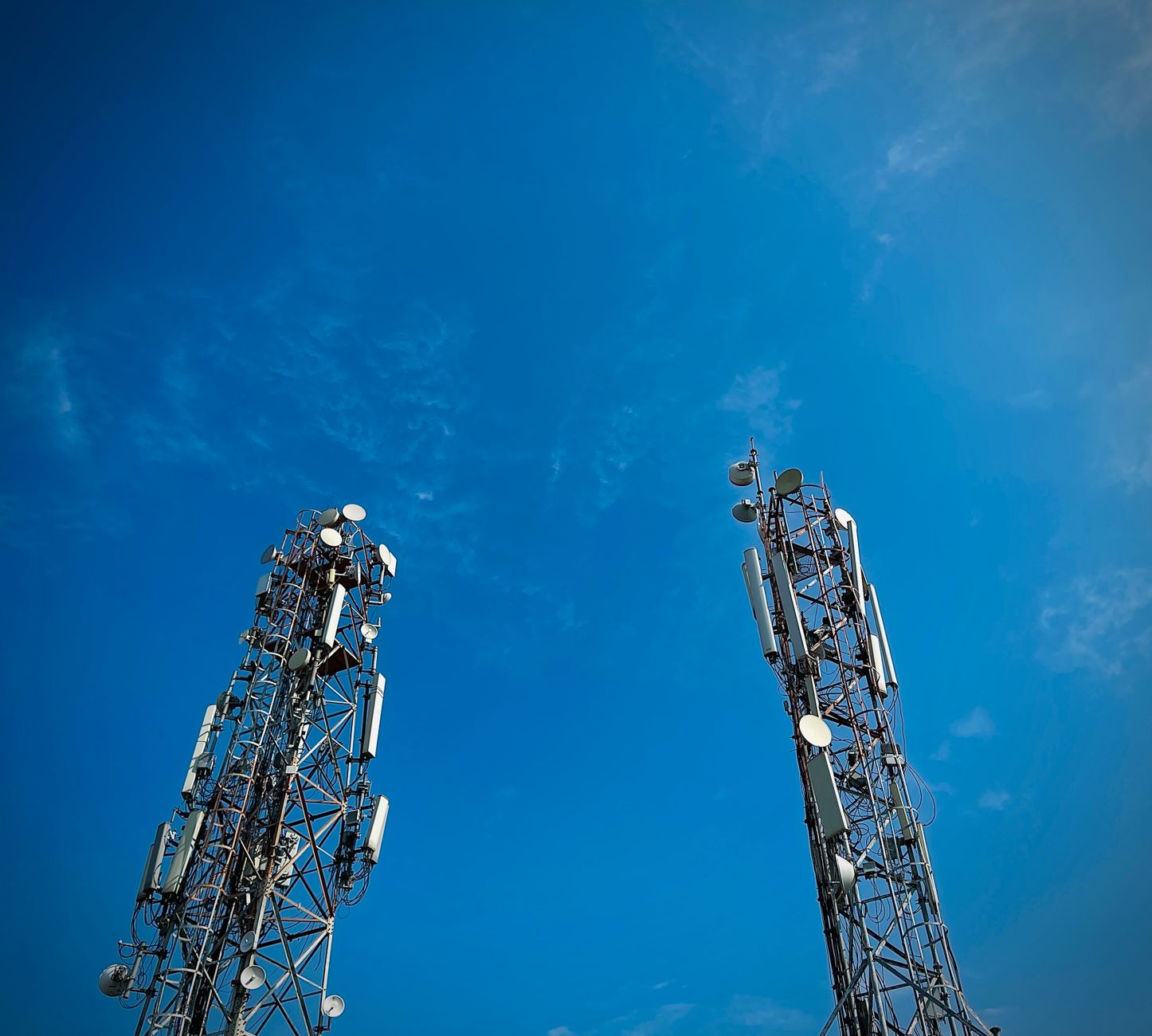
Photo: Nishant Aneja / Pexels
Bombay HC Quashes One-Time Spectrum Charge on Airtel, Vi
A liability that had shadowed India's biggest telcos for more than a decade was wiped off the table this week. On 8 June 2026, the Bombay High Court struck down the Centre's one-time spectrum charge on Bharti Airtel and Vodafone Idea, ruling that the government overstepped its powers when it tried to bill the operators retrospectively for airwaves they had been using for years.
A division bench of Justices Manish Pitale and Shreeram Shirsat not only set aside the demand notices but annulled every action taken on the back of them, and directed that the bank guarantees the companies had deposited be returned. For two carriers carrying heavy debt and a graveyard of legacy disputes, the timing could hardly be better.

What exactly the court threw out
The charge in question dated back to the chaotic months after the Supreme Court cancelled 122 telecom licences in the 2G case in 2012. With the spectrum-pricing regime under a cloud, the Department of Telecommunications (DoT) issued demand notices in December 2012 seeking a one-off payment from operators holding spectrum above a threshold.
The sum was pinned to spectrum held above 6.2 MHz during the window between 1 July 2008 and 31 December 2012. In plain terms, the DoT was reaching backwards: it wanted operators to pay, after the fact, for airwaves they had already been allotted and put to use under the terms of their existing licences.
The operators argued they had received that spectrum under agreed contractual terms, with no clause warning them that a fresh bill could land years later. The bench agreed.

Why the judges sided with the telcos
The reasoning hinged on a single, powerful idea: a licence is a contract, and you cannot rewrite a contract midway just because you are the more powerful party. Telecom permits granted under Section 4 of the Indian Telegraph Act were held to be contractual in nature, which meant the government, acting as the licensor, was bound by the bargain it had struck.
The court found the Centre could not lean on the phrase 'public interest' to bolt on new financial burdens that were never part of the original deal. The government, the bench held, had no power to make such a call after the fact, and was acting beyond both its contractual and its statutory authority.
That distinction matters far beyond this case. It draws a line under how far the state can go in revisiting old commercial arrangements with private companies, and tells future policymakers that retrospective levies dressed up as policy will not survive judicial scrutiny easily.
The money at stake
The numbers are not small. Bharti Airtel had set aside provisions of more than ₹7,000 crore against the possibility of having to pay this charge. Vodafone Idea, too, had recognised substantial provisions tied to the same dispute.
Provisions are essentially money a company fences off in its accounts because it expects to lose. When a court removes the underlying liability, those provisions can be written back, which flatters the balance sheet without a single rupee of fresh revenue coming in. For a sector that has spent years bleeding cash, that is real relief.
Here is why the verdict lands harder for some than others:
- Vodafone Idea is the most fragile of the major players, weighed down by debt and the unresolved AGR question. Clearing even one overhang improves how investors and lenders read its survival odds.
- Bharti Airtel is on far firmer ground, but a multi-thousand-crore contingent liability disappearing is still a clean win.
- The broader sector gets a sentiment boost, with the ruling signalling that some of the worst-case legal scenarios priced into telecom stocks may not materialise.
What this does not fix
It is tempting to read this as the moment Vodafone Idea's troubles ease, but that would overstate things. The one-time spectrum charge is a distinct fight from the far larger adjusted gross revenue (AGR) saga, which remains the single biggest threat to the company's future.
The AGR matter is about how much operators owe the government on a long-running calculation of past dues, and it sits before the Supreme Court. The apex court has allowed the Union government to re-examine the AGR amount owed by Vodafone Idea, while making clear that the company's survival is a question of policy, not law. In other words, any lifeline there will come from the government's choices, not a courtroom.
So this week's verdict lifts one weight, not all of them. It is meaningful, but it is one chapter in a much longer book.
The road ahead
The story is unlikely to end at the Bombay High Court. The DoT has the option of taking the matter to the Supreme Court, where a connected dispute is already live. That earlier challenge arose when the government appealed a 2019 ruling by the Telecom Disputes Settlement and Appellate Tribunal (TDSAT), which had rejected the DoT's attempt to impose a one-time charge on spectrum beyond 4.4 MHz.
That overlap means the Supreme Court may eventually settle the question for good. Until then, the Bombay High Court order stands and the demand notices are void, but companies tracking the issue will keep one eye on whether the Centre files an appeal.
A few threads worth watching from here:
- Whether the government challenges the order, and how quickly.
- How Airtel and Vodafone Idea treat their written-back provisions in upcoming results.
- Whether the contractual-licence principle gets cited in other telecom and infrastructure disputes.
Why it matters beyond the telcos
For ordinary subscribers, nothing changes overnight. Tariffs, network quality and competition are driven by other forces. But the health of the operators behind your SIM card is not an abstraction, especially when one of them serves a vast subscriber base and has been fighting to stay afloat.
A stronger Vodafone Idea keeps India a genuine three-player private telecom market rather than drifting toward a duopoly, and that competition is ultimately what keeps data cheap. Seen that way, a dry-sounding ruling on a retrospective spectrum levy is really about how many real choices Indians have when they pick a network.
The deeper takeaway is about predictability. When the government honours the contracts it signs, investors price risk lower and capital flows more freely into capital-hungry sectors like telecom. This judgment is a reminder that the rules of the game, once agreed, are meant to hold.