Chikiri Chikiri: Why Ram Charan & Rahman's Peddi Song Is Everywhere
The song that jumped straight to trending
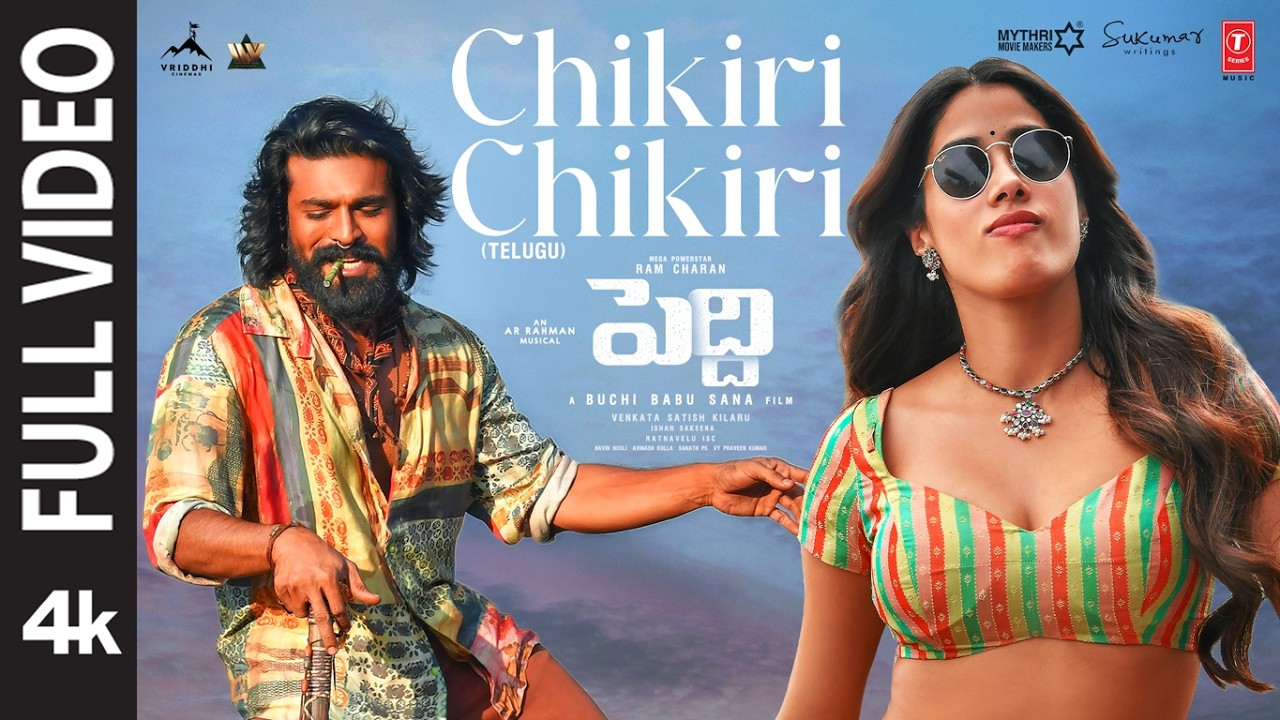
A single track has done what trailers usually take weeks to manage. Chikiri Chikiri, the full-video song from the Telugu film Peddi, landed on YouTube and within hours was sitting near the top of the trending list, pulling millions of plays and a comments section flooded in three or four languages. The combination on the credits explains most of the heat: Ram Charan on screen, Janhvi Kapoor opposite him, AR Rahman on the score, and Mohit Chauhan on vocals, with Buchi Babu Sana directing.
That is a lot of star wattage for one song, and it is the kind of line-up that gets shared before anyone has even finished listening. But the more interesting story is why this particular track is connecting, because it is not built like the usual mass-movie anthem.
What the clip actually shows
The video plays as a mood piece rather than a set-piece. Instead of a synchronised troupe and a glossy set, it leans into rustic texture — open country, earthy colours, and a hero who looks lived-in rather than styled to the hilt. Ram Charan appears stripped of the glossy action-star packaging audiences know from his biggest hits, and that contrast is doing a lot of the talking online.
Janhvi Kapoor's presence is the other magnet. This is her substantial entry into Telugu cinema, a market that watches newcomers from outside the industry very closely. The song frames her as part of the world of the film rather than a guest decoration, and viewers have been quick to note the chemistry and the unforced staging.
Crucially, the track sells a feeling — longing, momentum, a small-town heartbeat — more than choreography. That is a deliberate choice, and it signals the tone the makers want you to expect from the film.
Why the Rahman–Mohit Chauhan reunion matters
The musical pairing is the part die-hard fans latched onto first. AR Rahman and Mohit Chauhan are forever linked in the popular memory for the Rockstar soundtrack, a record that a whole generation treats as a personal milestone. Hearing that voice over a Rahman composition again, this time inside a big Telugu release, carries built-in nostalgia.
Mohit Chauhan's tone has a particular quality — slightly rough, unpolished in a warm way — that suits a song about restlessness and belonging. Rahman uses it sparingly and lets the melody breathe, which is partly why people describe the track as a grower rather than an instant banger.
A few things stand out about the composition:
- The folk-pop hook in the title phrase is repetitive on purpose, the sort of refrain that lodges in your head after one listen.
- The arrangement keeps the percussion rooted and organic instead of reaching for an EDM drop.
- It is pitched as an emotional and narrative song, not a promotional item number, which changes how it is received.
For a composer of Rahman's stature, working on a Ram Charan film also raises the cross-industry stakes, and the early reaction suggests the gamble on restraint is landing.
Peddi, the film behind the song
Peddi is directed by Buchi Babu Sana, the filmmaker who broke through with Uppena, a raw rural love story that connected hard with audiences. His sensibility runs toward grounded, emotionally heavy storytelling rooted in village life rather than urban gloss, and Peddi has been promoted along those lines.
The film is widely reported as a sports drama, with cricket at its centre and a strong streak of social conflict running through it. That positioning is significant. Ram Charan is coming off the global wave of RRR, and the obvious commercial move would have been another high-octane action vehicle. Choosing a rooted, director-driven drama instead is a statement about the kind of role he wants next.
It is worth being careful here: beyond the broad genre and the headline cast, several plot specifics floating around online are unconfirmed. The smart reading is to treat Chikiri Chikiri as a tone-setter — it tells you the film wants emotion and earthiness, and it puts Janhvi Kapoor's character firmly inside that world.
How audiences are reacting
The public response has split along predictable but telling lines. A large chunk of the buzz is pure music-fan enthusiasm — people thrilled to hear Rahman and Mohit Chauhan together again, quoting favourite lines and tagging friends who grew up on Rockstar. Another stream is Ram Charan's fanbase, which treats every release from him as an event and amplifies it across regions.
Then there is the Janhvi Kapoor angle. Her move into Telugu cinema invites comparison with other Hindi-origin actors who have crossed over, and viewers are watching to see whether she feels native to the material. Early comments lean positive on her fit within the song's world, though the real test will be the full film.
Not all reaction is uncritical. Some listeners find the track a slow burn and say it lacks an immediate hook, the kind of remark that always trails a song built on mood over momentum. That debate — instant earworm versus grower — is itself fuelling replays, which is exactly how trending algorithms reward a release.
Why a single song is doing trailer-sized work
In the current film-marketing playbook, a hero song often carries more weight than a teaser. It can be consumed on loop, shared as audio, clipped for reels, and folded into wedding and festival playlists for months. A strong track keeps a film in conversation long after a trailer has been forgotten.
For Peddi, Chikiri Chikiri is doing several jobs at once:
- It establishes the film's emotional register before anyone sees the plot.
- It showcases the Rahman soundtrack as a selling point in its own right.
- It introduces the Ram Charan–Janhvi Kapoor pairing to a mass audience.
- It gives the marketing team a piece of content with a long shelf life.
That is a lot of leverage from one upload, and it explains why the makers chose to drop the full video rather than a teaser snippet.
What comes next
The immediate effect is momentum. A trending song resets attention on the film, and you can expect the team to follow it with more tracks, glimpses and eventually a trailer, each timed to ride the wave the previous drop created. If the rest of the album holds the standard, the soundtrack itself becomes a reason to anticipate the release.
The bigger question is whether Peddi can convert music buzz into theatrical pull. Songs travel fast and cheap; films need audiences to commit to a ticket. Buchi Babu Sana's track record suggests a story with genuine emotional stakes, and Ram Charan choosing a grounded role rather than a guaranteed mass spectacle is the kind of bet that can either deepen a star's range or test his fanbase's patience.
For now, the scoreboard reads clearly enough. Chikiri Chikiri has put Peddi back in the spotlight, reunited two artists fans never tire of hearing together, and given a wide audience its first real feel for the film. Whether that translates into a hit is a story for release day. The viral run is already a fact.