Oklahoma vs North Carolina: The Winner-Take-All College Baseball Final India Tuned Into
A college game, a deciding night, and an Indian audience that wasn't supposed to be there
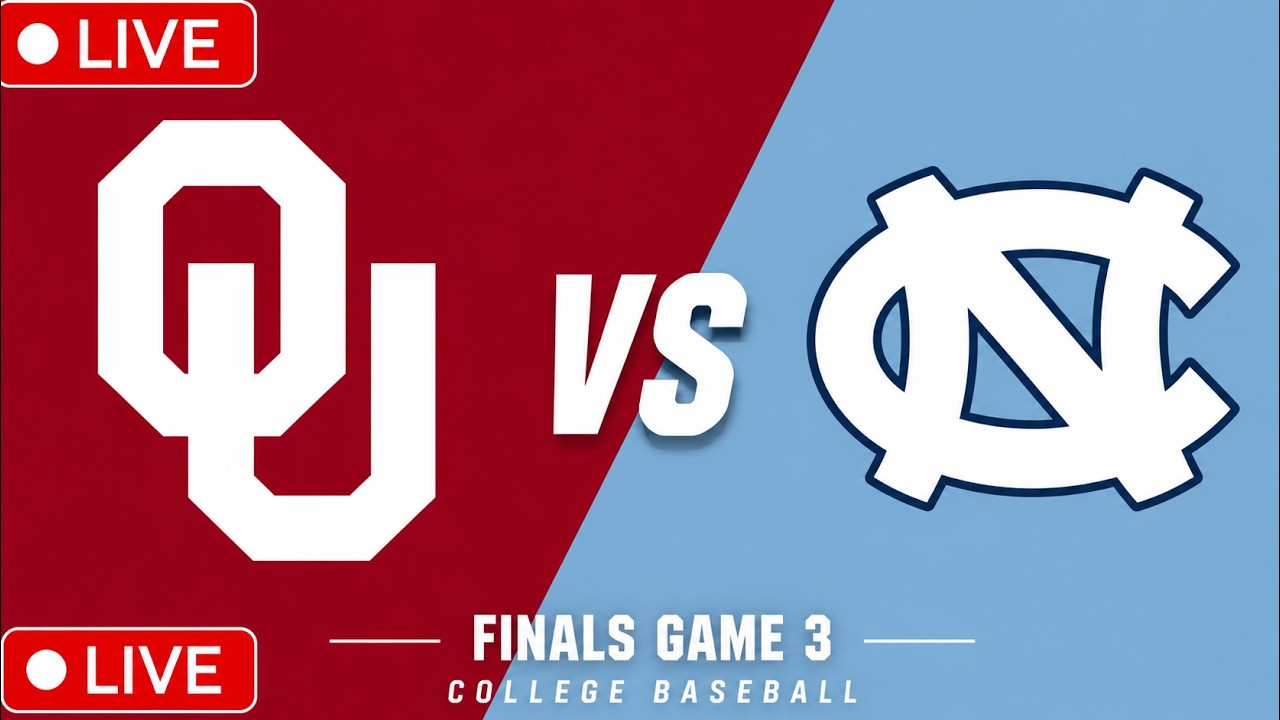
A live stream titled around Oklahoma vs North Carolina in the College World Series final has been climbing on YouTube, and a fair slice of the traffic is coming from India. That is the genuinely odd part. This is amateur college baseball, played by students in Omaha, Nebraska, at a time of night when most of India is asleep. Yet the clip is being shared, clipped and argued over by people who, in many cases, could not name a single rule of the sport a week ago.
The pull is simple once you see the framing. The College World Series final is a best-of-three series, and the stream is built around a Game 3 — a winner-take-all decider. Sport travels fastest when the stakes are obvious without context, and "two teams, one game, season ends tonight" needs no translation.
What the College World Series actually is
For readers meeting it for the first time, the College World Series (CWS) is the climax of the American college baseball season. It is run by the NCAA, the body that governs university sport in the United States, and it has been staged in Omaha for decades. The city has effectively built an identity around it.
The format is the hook. Eight teams reach Omaha after surviving earlier regional rounds. They play a double-elimination bracket, meaning a single loss does not end your run but a second one does. The two teams left standing then meet in a best-of-three final. So a Game 3 is the rarest and tensest outcome — both sides won one, and everything now rests on a single evening.
That structure is why the listing is spreading. A sweep would have ended the series in two games. Reaching the third means the final refused to settle, and that is exactly the kind of sporting cliffhanger that algorithms reward.
Oklahoma, North Carolina and the weight of a school crest
The two names attached to the stream carry real heft in American college sport. The University of Oklahoma and the University of North Carolina are large, storied athletic institutions whose fan bases treat their teams less like a hobby and more like a birthright. In the US, your college allegiance often outlasts the team you support in the professional leagues.
It is worth being precise here, because details on viral streams are not always reliable. The matchup and the Game 3 framing come from the stream's own billing. Independent of that listing, what is certain is the shape of the event: a national final, two well-known programmes, and a decider. Where specific scores or moment-by-moment claims are concerned, treat anything circulating on social feeds as unconfirmed until a recognised broadcaster or the NCAA states it.
The players themselves are unpaid students, though that picture has shifted in recent years. American college athletes can now earn from their name, image and likeness, so the better-known names in Omaha are no longer playing purely for a trophy and a future contract. Many are also draft prospects, which adds a second layer of drama.
Why this is blowing up beyond the United States
Viral sport rarely goes global because of the sport itself. It goes global because of the moment. A few forces are stacking up here.
- A clean, high-stakes premise. Winner-take-all is universally legible. You do not need to understand a squeeze bunt to understand that one team's season ends tonight.
- The streaming free-for-all. A large share of these YouTube links are unofficial restreams of broadcast feeds. They surface, gather a crowd, and often get pulled mid-game. Their very instability — people rushing in before the link dies — can spike engagement.
- The off-season vacuum. With the football World Cup build-up dominating headlines and the IPL done, sports fans scrolling for something live will stop on almost any credible "LIVE FINAL" thumbnail.
- Curiosity about American college culture. Indian viewers who follow US universities for studies, or who have watched the spectacle of American campus sport in films and series, are primed to be intrigued.
None of this means baseball is about to break through in India. It means a specific, well-packaged moment found an audience that was already looking at its phone.
The time-zone problem, and how Indians are actually watching
Omaha is roughly 10 to 11 hours behind Indian Standard Time, depending on daylight saving. A first pitch in the American evening lands deep in the Indian night or the small hours of the morning. That single fact shapes the entire viewing experience here.
Most Indian fans are not watching live. They are catching it in three ways:
- Overnight on a phone, usually via one of the YouTube restreams, with the sound off.
- Next-morning highlights, where the result and the best plays are compressed into a few minutes.
- Through the clips ecosystem — short, shareable moments stripped of context and pushed by recommendation feeds.
For anyone wanting to follow it properly, the honest advice is to seek out official broadcaster or NCAA channels rather than the first "LIVE" link that appears. Unofficial streams are not only legally dubious; they routinely buffer, redirect or disappear at the worst possible moment, which for a Game 3 is a real risk.
Baseball's long, stop-start relationship with India
India keeps almost discovering baseball, then setting it down again. There is a domestic structure — the Amateur Baseball Federation of India has run national championships for years — but the sport sits far behind cricket, kabaddi and football for attention and money. Most Indians' instinct is to map it onto cricket, which is both helpful and misleading.
The "Million Dollar Arm" story, where Indian javelin and cricket prospects were scouted as potential pitchers more than a decade ago, briefly put the idea of an Indian in American baseball into the headlines. It did not build a lasting pipeline. The deeper barrier is infrastructure: baseball needs specific fields, equipment and coaching that simply are not lying around Indian towns the way a cricket pitch effectively is.
So a viral College World Series final is unlikely to change the domestic game. What it can do is something subtler — give a curious viewer a low-stakes, high-drama entry point into a sport they have only ever half-noticed.
What happens after the final whistle — or final out
Once a CWS final ends, the story moves fast in the United States. The winning programme gets a parade and a recruiting boost; the standout players become names to watch ahead of the MLB Draft, where college performers are picked by professional clubs. For the athletes, a strong Omaha showing can reshape a career.
For the Indian corner of the audience, the afterlife is shorter. The clips will circulate for a day or two, the restream links will go dead, and attention will swing back to football and cricket. That is the rhythm of borrowed virality — intense, brief, and gone before most people learn the rules.
Still, the episode says something real about how sport now spreads. A regional American college final, played by unpaid students in a mid-sized city, can find its way onto Indian screens overnight because the internet flattens distance and the format does the storytelling. You did not have to follow the season. You only had to see two words — Game 3 — and understand that someone's year was about to end.