El Salvador vs South Korea Friendly Goes Viral on YouTube
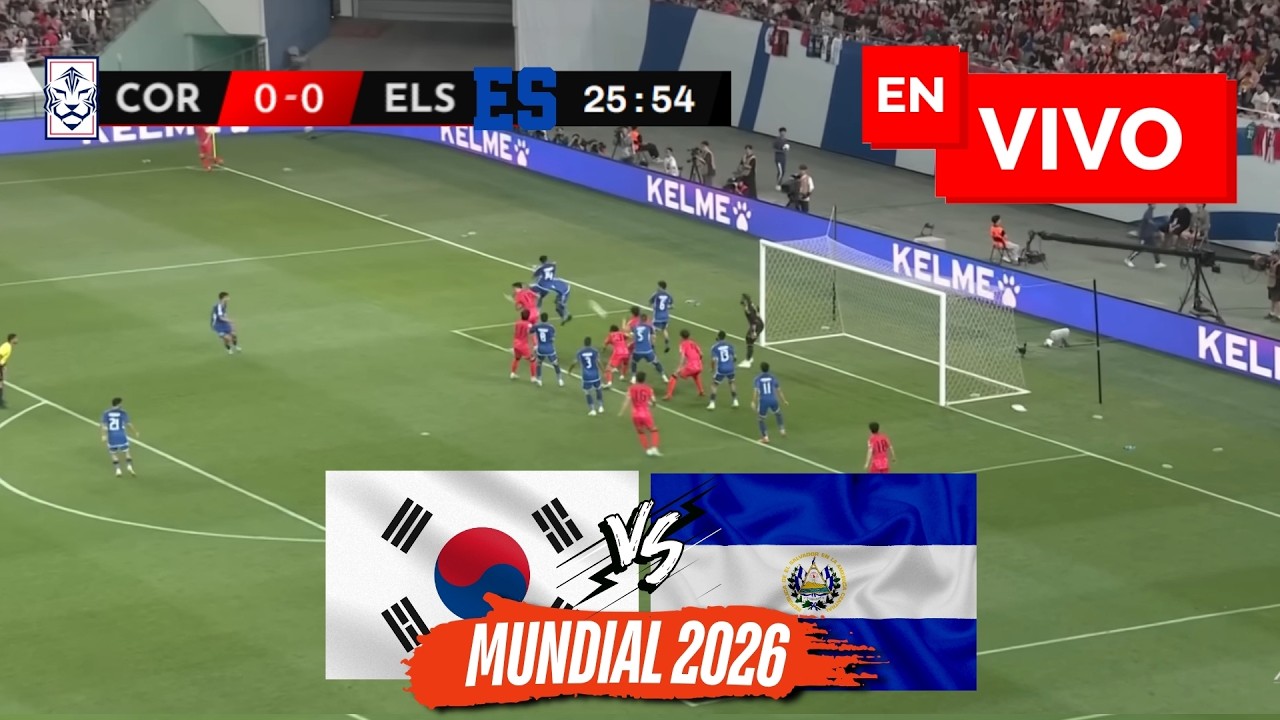
A grainy, free Spanish-language live stream titled around "El Salvador vs Corea del Sur EN VIVO" has quietly become one of the more-watched football links of the week on YouTube. It is not a marquee fixture, not a trophy game, and not even a competitive match. Yet thousands of fans across continents have clicked in to watch a 2026 World Cup build-up friendly between South Korea and El Salvador — and the surge says far more about how people now consume football than about the scoreline itself.
This is, on paper, a mismatch of context. One side is heading to the biggest tournament on earth; the other is watching from the outside. But that gap is exactly what makes the clip interesting, and why it is spreading.
What the viral stream actually shows
The trending link is a live broadcast of an international friendly, packaged in Spanish for a Latin American audience and surfaced to a much wider one through search and recommendations. These streams typically open with a static scoreboard graphic, a commentary feed, and a match clock, rather than the polished studio production of a major broadcaster.
The headline draw is South Korea, one of Asia's most consistent footballing nations and a regular presence at World Cups. Their squad is built around experienced, Europe-based professionals, with captain Son Heung-min the most globally recognised name. Friendlies like this are where coaching staff rotate players, trial formations, and harden match fitness before the real thing.
Facing them is El Salvador, a CONCACAF side that did not make the 2026 finals. For them, a game against a World Cup-bound team is less about the result and more about exposure: minutes against quality opposition, a benchmark of how far the gap really is, and a stage for younger players to be seen.
Why a low-stakes friendly is blowing up
The instinct is to assume virality needs drama. Here, the pull is structural, not sensational. A few forces are stacking on top of each other:
- World Cup fever is early and global. With the 2026 tournament approaching and being hosted across North America, every warm-up involving a qualified team gets extra eyeballs.
- It is free. No paywall, no subscription, no login — the single biggest reason casual viewers click.
- It crosses languages. A Spanish feed travels far beyond Spanish speakers because football needs little translation; the visuals carry the story.
- Algorithms reward live. YouTube actively pushes live content, and a real-time match with a national team in the title is catnip for the recommendation engine.
None of this requires the game to be a classic. The free live stream format has turned previously ignored fixtures into low-effort, high-reach content. A friendly that a decade ago would have aired to a tiny domestic audience can now find a worldwide crowd overnight.
The bigger shift: football's free-stream economy
What is really trending here is a behaviour, not a match. Over the past two years, a wave of free YouTube football streams — friendlies, lower-tier leagues, federation-run channels and unofficial re-broadcasts — has reshaped how fans find live games.
The logic is simple. Premium rights for elite leagues and tournaments are expensive and locked behind apps. But the long tail of football — international friendlies, smaller nations, pre-season tours — is far less tightly controlled. That creates an opening that both official federations and opportunistic uploaders rush to fill.
For viewers, the upside is obvious: instant, free access in a single tap. The catch is that not all of these streams are legitimate. Some are official or federation-sanctioned; many are unofficial mirrors of a licensed feed, operating in a grey zone that can disappear the moment a rights holder objects. A stream that is live and stable at kickoff can be pulled before full time.
A tune-up team vs a proving ground
Strip away the streaming story and the football itself carries a quiet narrative worth watching. This is a meeting of two very different project stages.
South Korea arrive as a side fine-tuning for a major tournament. For a team at that level, a friendly is a controlled experiment: test a high press, give fringe players a run, check how new combinations hold up, and avoid injuries. The result matters less than the information gathered.
El Salvador arrive with something to prove and little to lose. Games against World Cup-bound opponents are precisely how smaller federations measure progress, blood young talent, and build belief for their next qualifying cycle. A respectable performance against a stronger, organised side is itself a kind of win.
That asymmetry — preparation versus aspiration — is the human core of a fixture that the scoreboard alone will never fully capture.
What it means for Indian football fans
For viewers in India, this trend lands at a useful angle. Indian audiences have grown comfortable watching global football, but the spotlight usually falls on the same few leagues and superstars. Free streams of overseas friendlies open a window onto teams and players that mainstream coverage skips entirely.
There are sensible reasons to engage carefully, though:
- Check the rights holder first. For any match, the legal way to watch is via the official broadcaster or streaming partner for that competition in India. That is the safest, most reliable feed.
- Treat unknown channels with caution. Unofficial streams can carry intrusive ads, malware-laden pop-ups, and fake "verify" prompts designed to phish your details.
- Never enter passwords or payment info through links a stream pushes you toward. No genuine broadcast asks you to log in via a pop-up to keep watching.
- Expect instability. Grey-zone streams can buffer, redirect, or vanish mid-match, especially during the most-watched moments.
The broader takeaway is encouraging for the sport in India: appetite for international football is clearly deep enough that even an off-radar friendly finds an audience. That demand is exactly what eventually pulls more legitimate, affordable coverage into the market.
What comes next
Expect more of this, not less. As the 2026 World Cup nears, the calendar will fill with warm-up matches involving qualified nations, and every one becomes potential viral fuel for free-stream channels. The pattern that turned an El Salvador–South Korea tune-up into a trending link will repeat across dozens of fixtures.
For South Korea, the road points toward final squad decisions and sharper tactical identity before the finals. For El Salvador, it is about stacking competitive minutes and planning the next qualifying campaign with lessons learned against better opposition.
And for the rest of us, the real story is the one playing out beyond the pitch: football's audience is fragmenting away from gatekept broadcasts toward whatever is live, free and one click away. A modest friendly going viral is not a fluke. It is a preview of how the world will watch the game from here on — with the obvious reminder to choose legitimate, safe streams over whatever the algorithm serves up first.