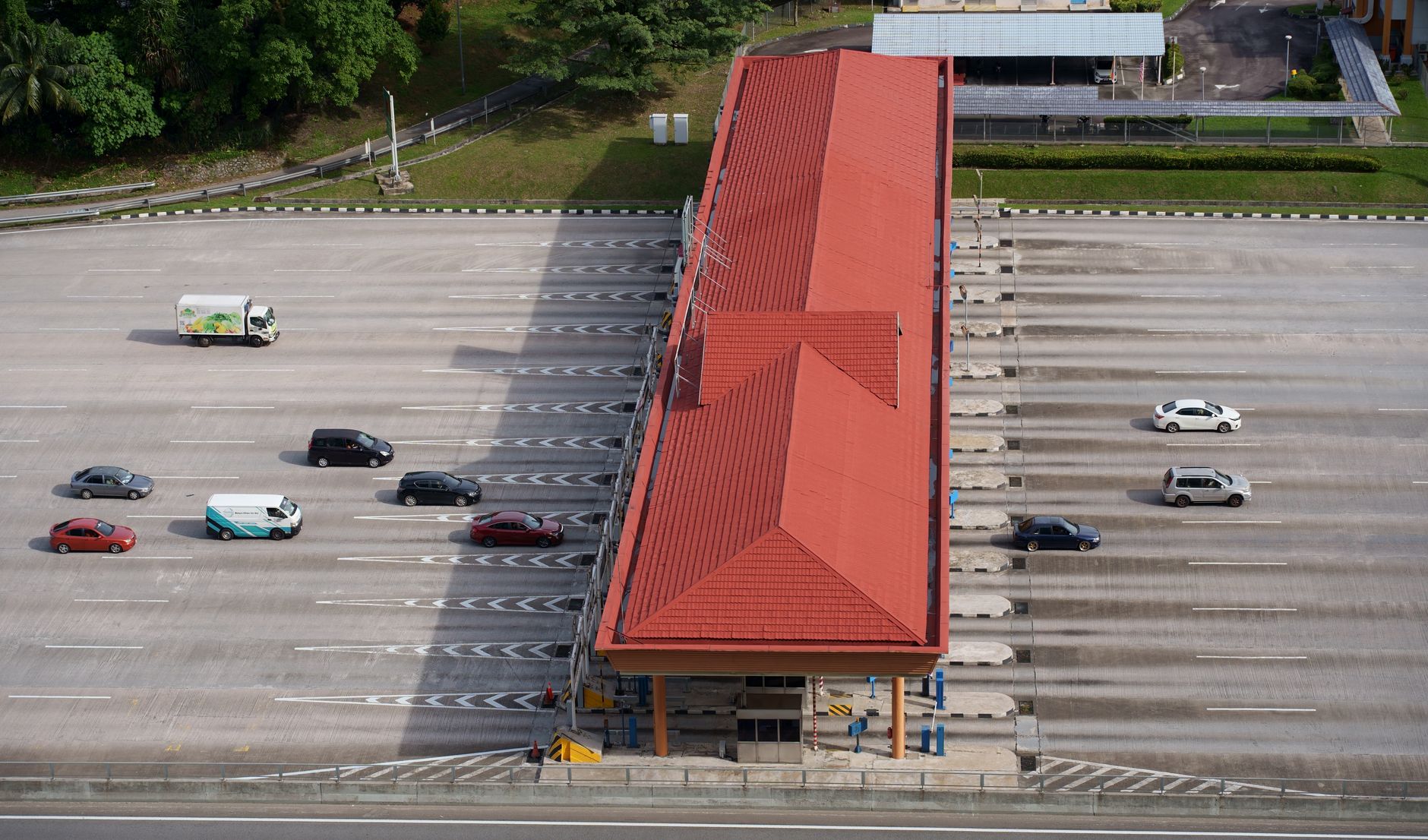
Photo: Md Jawadur Rahman / Pexels
FASTag Annual Pass: Is the ₹3,000 Pass Worth It?
If you drive to the next city even a couple of times a month, the FASTag Annual Pass is quietly one of the best-value things the government has launched for car owners. For a flat ₹3,000, you get 200 toll trips on national highways for a full year — no fumbling for the right balance, no surge at the plaza, no monthly single-route pass that only works at one booth. But like every flat-fee scheme, it pays off brilliantly for some people and barely at all for others. Here is the honest math.

What the FASTag Annual Pass actually is
The FASTag Annual Pass is not a new tag or a separate card. It is an activation layered on top of the FASTag you already have stuck to your windshield. Once switched on, it lets you sail through eligible toll plazas without any per-crossing deduction — until you exhaust either 200 trips or one year, whichever comes first.
Think of it as a prepaid bundle of highway crossings. The moment you hit 200 trips or the 12-month mark, the bundle ends and your FASTag silently goes back to its usual pay-as-you-go behaviour. There is no auto-renewal trap; you simply buy another pass if you want one.
The scheme is aimed squarely at private owners. It applies to cars, jeeps and vans registered for personal use. Commercial vehicles — trucks, buses, taxis with commercial plates — are left out, because the toll economics for them work very differently.
The break-even number nobody tells you
Here is the figure that settles most arguments: ₹3,000 ÷ 200 trips = ₹15 per trip. That is your effective cost per toll crossing if you use the pass fully.
Now compare that to reality. A single one-way crossing on most national highways costs somewhere between ₹60 and ₹150, and longer expressway runs cost a lot more. So every trip where your normal toll would exceed ₹15 — which is essentially all of them — you come out ahead.
That means you do not need 200 trips to justify the pass. You need to clear ₹3,000 in tolls. The break-even point depends only on your average toll:
- If your typical crossing is ₹60, you break even at roughly 50 trips a year — about one round trip a week.
- If it averages ₹100, you break even at 30 trips — say two or three highway round trips a month.
- If you regularly run pricey expressways at ₹150+, you can recover the ₹3,000 in under 20 crossings.
In short: anyone doing weekend getaways, a highway commute, or frequent intercity runs almost certainly saves money. The pass only fails to pay off for people who barely touch national highways all year.
How trips are counted (this is the catch)
The word trip hides an important detail, and misreading it is where people feel cheated. Counting works two different ways depending on the toll system:
- Closed tolling (entry-to-exit), used on access-controlled expressways such as the Delhi-Mumbai Expressway: your entire journey from the entry point to the exit point counts as one single trip, no matter how many internal gantries you pass. This is generous.
- Open tolling, used on most ordinary national highways: every plaza you physically cross is one trip. Drive through three plazas on a route and that route eats three trips off your bundle.
So a long expressway holiday might cost you just a handful of trips, while a short journey through a cluster of open-toll booths can burn through them faster than the distance suggests. If you mostly use one highway with several plazas, count the plazas, not the towns.
Who should buy it — and who shouldn't
The pass is a clear win if you fall into any of these groups:
- Weekend road-trippers who escape the city every few weeks.
- Intercity commuters who cross the same plaza daily or several times a week.
- Families who do regular hometown runs on a highway corridor.
- Anyone who already spends ₹3,000-plus a year on national-highway tolls.
It makes far less sense if you are a pure city driver who almost never leaves urban roads, if most of your tolls are on state highways or private tolled roads (which the pass does not cover), or if you switch cars often — because the pass is locked to one vehicle.
There is also a psychological upside that is easy to undervalue: predictability. One known annual outgo replaces a year of small, irregular deductions, and you stop worrying about whether your FASTag wallet has enough balance before a trip.
What the pass does not cover
Be clear-eyed about the boundaries before you pay:
- Only NH and National Expressway plazas run by the national highway authority qualify. State-government tolls, city tolls and privately operated roads are excluded and bill you as usual.
- It is non-transferable and limited to one pass per vehicle — you cannot share it across the family's two cars.
- Your FASTag must be properly linked to the vehicle registration number and free of any blacklist or KYC dispute, or activation will fail.
- Unused trips have no carry-over. If you used only 120 of 200 trips when the year ends, the remaining 80 simply lapse.
None of these are deal-breakers for the typical buyer, but they explain why two drivers can have wildly different experiences with the same pass.
How to activate it in minutes
You do not visit a toll booth or an office. Activation is fully digital through the official Rajmarg Yatra app, with the option also surfaced on the highway authority's and ministry's web portals.
- Install and open the Rajmarg Yatra app and sign in.
- Find the Annual Pass activation link and select the vehicle whose FASTag you want to upgrade.
- Confirm that your FASTag is active and correctly mapped to the registration number.
- Pay the ₹3,000 fee online.
- Wait for the confirmation — activation typically completes within about two hours, and you get an SMS once the pass is live.
After that, just drive. The plaza reader recognises your tag, the barrier lifts, and no money leaves your wallet until your trips or your year run out.
The bottom line
The FASTag Annual Pass is one of those rare schemes where the maths is refreshingly simple: clear roughly ₹3,000 worth of national-highway tolls in a year and you have already won, with every trip after that effectively free. For frequent highway users it is close to a no-brainer; for pure city drivers it is money better left in the wallet. Tally up your last twelve months of toll deductions, glance at how many of them were on national highways, and you will know in about thirty seconds whether the ₹3,000 belongs on your windshield this year.