IShowSpeed's 'World Cup' Music Video: Why It's Blowing Up
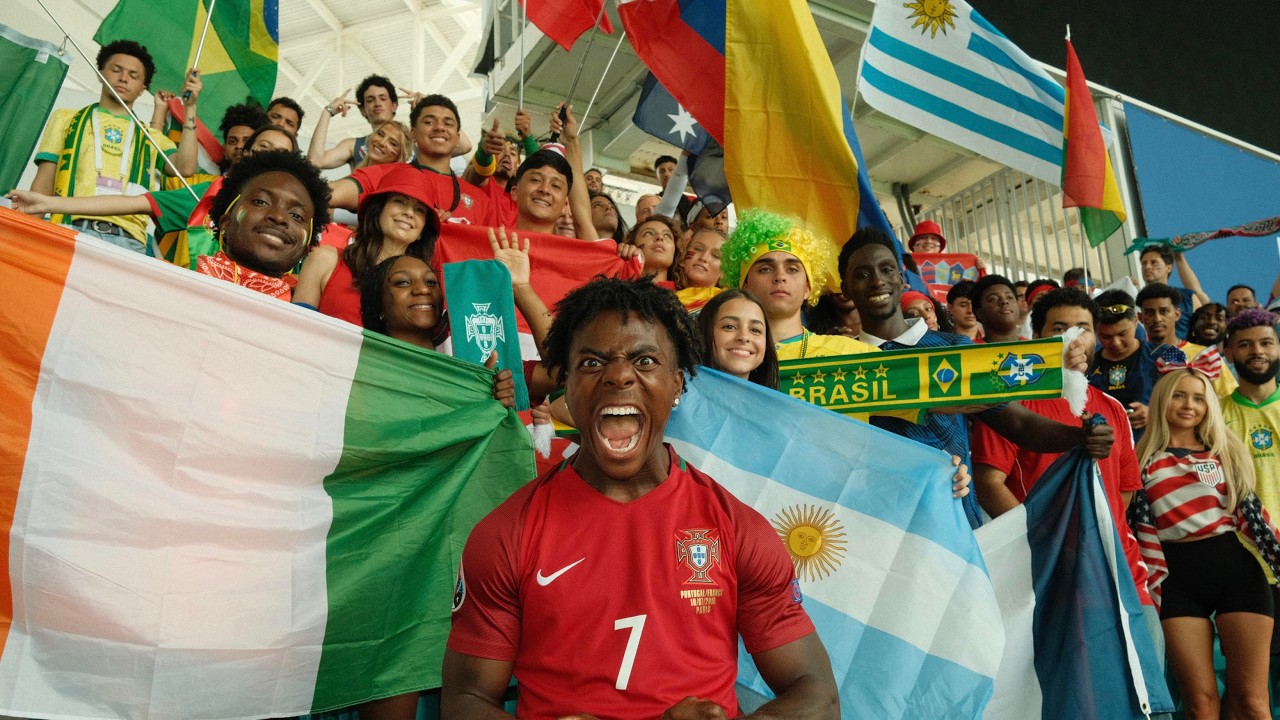
IShowSpeed has done it again. The American streamer's new track, "World Cup (Champions)", landed with an Official Music Video on YouTube and immediately began racking up views, comments and reaction clips — turning a 25-year-old internet personality into one of the loudest unofficial voices of football's biggest year. With the 2026 FIFA World Cup looming on the calendar, the timing is no accident, and the internet has responded exactly as he hoped: loudly, instantly and globally.
For a creator who built his fame screaming at video games and chanting Cristiano Ronaldo's name, a glossy, football-themed music video is both a logical next step and a small cultural milestone. It is worth unpacking what the clip actually represents, why it is spreading so fast, and what it tells us about who gets to soundtrack a World Cup in 2026.
Who Is IShowSpeed, and Why Football?
IShowSpeed is the online name of Darren Watkins Jr., an American YouTuber and live streamer whose audience runs into the tens of millions across YouTube and other platforms. He rose through gaming streams but became a global phenomenon through chaotic in-real-life broadcasts, stunts and an almost theatrical emotional range — the kind of content that travels well without translation.
Crucially, football sits at the centre of his persona. His devotion to Cristiano Ronaldo is a long-running bit that has blurred into genuine fandom, complete with the trademark "SIUUU" celebration. That gives a World Cup song a built-in logic: this is not a random pivot to music, but an extension of an identity his audience already associates with the sport.
That history matters because authenticity, even performed authenticity, is the currency of creator culture. When a streamer who has spent years obsessing over football releases a football anthem, fans treat it as a payoff rather than a cash-grab — and they show up.
What the 'Champions' Video Actually Is
The upload is presented as an Official Music Video for a song titled "World Cup (Champions)". That phrasing deserves a careful read. "Official" here describes the official video release of his own track — it does not, on its own, mean the song has been adopted, licensed or endorsed by FIFA as a tournament anthem.
This distinction is easy to miss and easy to exaggerate. FIFA usually rolls out its own official World Cup music with established global artists, announced through official channels. As of now, there is no confirmed indication that IShowSpeed's track holds that status, and readers should treat any claim that it is "the" World Cup song as unverified unless FIFA says so directly.
What is verifiable is simpler: a hugely popular creator has made a polished, high-energy song about the World Cup and dropped it into the pre-tournament hype window. That alone is enough to dominate trending feeds.
Why It Is Blowing Up Right Now
The virality is a product of several forces stacking at once. None is unique on its own; together they are combustible.
- Scale of reach. With an audience in the tens of millions, even a modest engagement rate translates into massive first-day numbers that the algorithm then amplifies.
- Perfect timing. Releasing in the run-up to a 2026 World Cup co-hosted by the United States, Canada and Mexico taps a wave of football appetite that is only going to grow.
- Reaction-clip economy. Big creator releases spawn thousands of reaction videos, shorts and meme edits, each one a fresh on-ramp back to the original.
- Built-in controversy. Debates over whether a streamer "deserves" to make a World Cup song are themselves engagement — outrage and defence both drive clicks.
The result is a self-reinforcing loop. The more people argue about the song, the more the song trends; the more it trends, the more people feel they must weigh in.
The Public Reaction: Hype Versus Eye-Rolls
Response has split along familiar lines. A large, enthusiastic camp treats the track as a fun, fitting hype song from someone who genuinely loves the sport, and celebrates a creator crossing fully into music and mainstream sport culture.
A more sceptical camp pushes back on the blurring of "official" branding with personal projects, and on the broader idea that streamer culture is colonising spaces once reserved for musicians, athletes and federations. Some football purists simply find the whole thing overblown.
Both reactions are, in a sense, the point. Modern virality rarely requires consensus — it requires volume. A piece of content that half the internet loves and half finds ridiculous is often better positioned to trend than one everybody mildly likes.
The India Angle: Big Audience, No Home Team
For GeneralNews readers, the most interesting thread is how much of this energy is Indian. India did not qualify for the World Cup, yet Indian fandom for both global football and creator culture is enormous, and a meaningful slice of the views, comments and reaction content comes from here.
Three dynamics make India a natural hotbed for this kind of moment:
- Football fandom without a national team in the picture pushes Indian fans toward stars and personalities — Ronaldo, Messi and, increasingly, the creators who orbit them.
- Creator culture is mainstream in India, where YouTube is effectively a primary entertainment platform for a young, mobile-first audience.
- English-language, visually driven content like a music video clears the language barrier instantly, unlike text-heavy media.
In other words, a song does not need to mention India to go viral in India. It only needs to ride two trends Indians are already deeply invested in: global football and the internet figures who perform it.
What This Says About Who Soundtracks Big Events
Strip away the noise and there is a genuine shift here. For decades, the soundtrack to a global sporting event was decided in boardrooms and handed to chart-topping musicians. A solo creator releasing a competing, attention-grabbing World Cup anthem — and arguably out-trending official efforts in the short term — would have been unthinkable a decade ago.
This fits a wider pattern in which individual creators increasingly do the jobs of entire institutions: breaking news, hosting interviews, staging events and now scoring the cultural backdrop to a tournament. They move faster, speak the native language of the feed, and answer to no committee.
The trade-off is the very ambiguity on display here — the gap between "official video" and "official anthem," between fan tribute and brand. As creators wade deeper into territory governed by federations and rights-holders, expect more of these blurred lines, and occasionally more friction over them.
What Happens Next
In the immediate term, watch the numbers and the spin-offs. A release like this typically peaks fast, then sustains on a long tail of reaction videos, live-stream callbacks and event tie-ins as the 2026 World Cup approaches. If IShowSpeed performs the song live or works it into his football-adjacent content, each appearance will re-trigger the cycle.
The key open questions are about status and staying power. Will FIFA or any official body engage with, endorse or distance itself from the track? Will it be remembered as a defining sound of the tournament summer, or as a fast-burning viral moment that fades once the actual football starts?
Either way, the bigger story is already settled. A streamer, not a record label, set the internet's football agenda for a few days — and in 2026, that is exactly the kind of thing that goes viral, in India and everywhere else.