Kalank Title Track Is Climbing YouTube Again, Years On
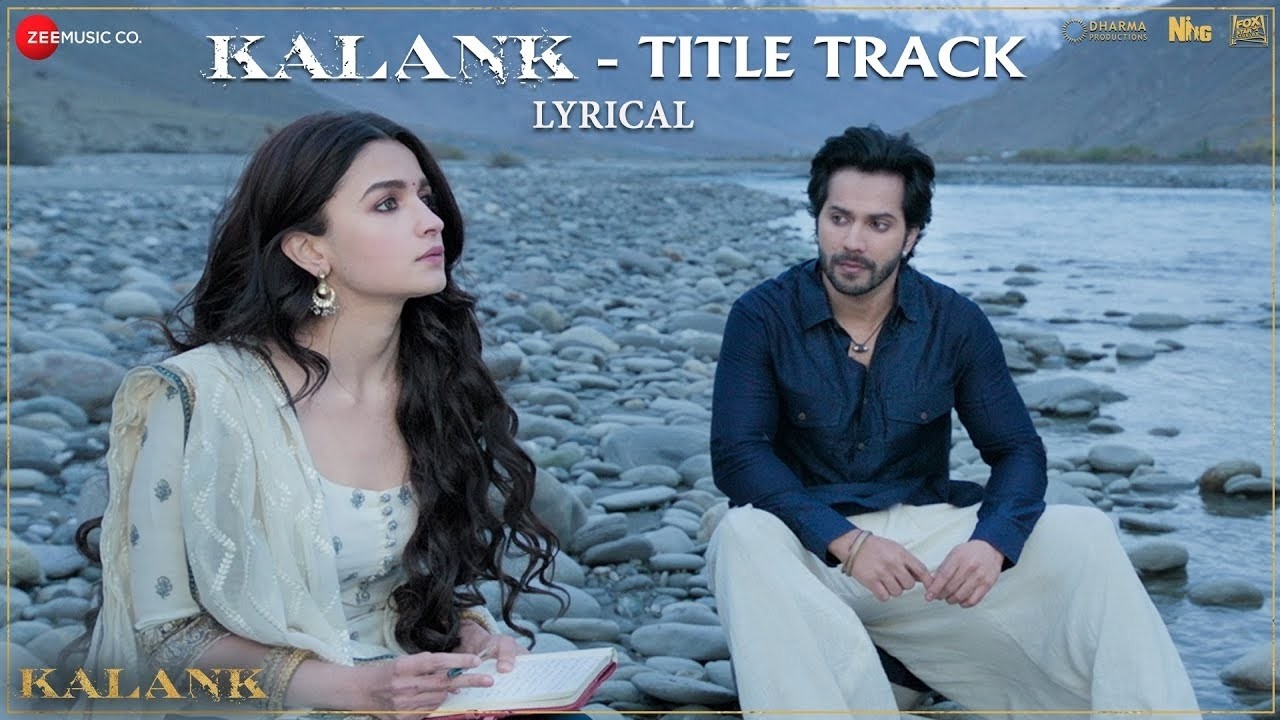
A song from a film that opened to lukewarm box-office numbers in 2019 keeps doing something its movie never managed: it refuses to fade. The Kalank title track, sung by Arijit Singh and composed by Pritam, has been resurfacing near the top of YouTube's music charts again, drawing a flood of comments from listeners who insist they only just discovered it and others who say they never stopped playing it. The lyrical video, which scrolls the words on screen as the song plays, is the version pulling most of the fresh traffic.
This is not a remix, a new release, or a film promotion. It is an old soundtrack quietly winning a second life, and the way it happened says a lot about how Bollywood music actually travels in 2026.
A song that outlived its film
Kalank, directed by Abhishek Varman and backed by Dharma Productions, was one of the most expensive Hindi films of its year. Set in 1945, in the charged months before Partition, it carried a heavyweight ensemble led by Alia Bhatt and Varun Dhawan, alongside Madhuri Dixit, Sanjay Dutt, Sonakshi Sinha and Aditya Roy Kapur. Critics were divided and audiences largely stayed away. The film is remembered, fairly or not, as a commercial disappointment.
The soundtrack had the opposite fate. From the day it dropped, the title track stood out — sweeping, mournful, built around a melody that sounds older than it is. Years later, the film is a footnote in most conversations while the song keeps gathering plays. That gap between a forgotten movie and an evergreen track is one of Bollywood's oldest patterns, and few recent examples illustrate it as cleanly.
Why this particular song refuses to die
Strip away the visuals and the reasons for its staying power become clear. The composition leans on a slow, circling tune that rewards repeat listening rather than wearing out. Pritam's arrangement gives it the texture of a classic ghazal dressed in modern production, which lets it sit comfortably next to both old film songs and new releases on a shuffle.
Then there is the voice. Arijit Singh remains the most-streamed Indian artist of his generation, and a large share of his catalog behaves like this — songs that trend long after their films are gone. A new listener who arrives through one Arijit track is one tap away from a dozen others, and the algorithm knows it.
The lyrics carry the rest of the weight. Written by Amitabh Bhattacharya, they are dense with Urdu imagery, and the word kalank itself — a stain, a blemish, a mark of shame — is turned into something tender. The song frames a forbidden love as a beautiful disgrace, a wound the singer chooses to wear. That kind of poetry rewards readers who want to know what the words mean, which is exactly what a lyrical video delivers.
The quiet power of the lyrical video
It is no accident that the version climbing the charts is the lyric edition rather than the film clip. Lyrical videos have become one of the most durable formats on Indian YouTube for a few practical reasons:
- They invite singing along. Listeners who half-remember a chorus can finally learn the full verse, which keeps them watching to the end.
- They strip out the film. Without the movie's scenes, the song stands on its own merit and escapes the baggage of a flop.
- They are Shorts-friendly. A striking couplet on screen is easy to clip, caption and reshare, feeding the song back into the discovery loop.
- They travel across languages. Non-Hindi speakers can read transliterations in the comments and follow along, widening the audience.
For a song this lyric-heavy, the format is almost a perfect match. The poetry was always the strongest part; the lyrical video simply puts it front and centre.
How an old track climbs the charts again
The more interesting question is why now. There is rarely a single trigger for these resurgences, and it is worth being honest that the exact spark is hard to pin down. Usually it is a combination of forces rather than one viral moment.
A few things tend to be at work:
- A Shorts or Reels trend. A snippet gets attached to a popular short-video template, and millions of new listeners hear a few seconds before seeking out the full song.
- Algorithmic resurfacing. Streaming platforms increasingly treat catalog music like new music, sliding older tracks into recommendation feeds when engagement ticks up.
- A seasonal or emotional fit. Wedding season, heartbreak playlists and nostalgia waves all push melancholic love songs back into rotation.
- A nudge from the artists' fanbase. Renewed attention on Arijit Singh, Alia Bhatt or Varun Dhawan can spill over onto their back catalog.
What matters is the compounding effect. Once a song crosses a threshold of fresh plays, the platform reads that as a signal and serves it to even more people, and the climb becomes self-sustaining for a while.
What the comments reveal about the audience
Scroll the responses under the video and a split is visible. One group treats the song as a rediscovery, writing as if they have stumbled on a hidden gem. Another group has clearly been around since 2019 and uses the comment section to mark time — noting how the song followed them through different phases of life. This mix of new and returning listeners is exactly the engagement pattern that keeps a track trending.
There is also a steady stream of comments praising the writing specifically, pulling out individual lines and debating their meaning. That kind of close reading is unusual for a pop track and signals why this song behaves more like a standard than a hit single. People do not just listen to it; they sit with it.
The bigger shift this points to
The Kalank title track is one example of a broader change in how Hindi film music earns its keep. For decades, a song's life was tied to its film's theatrical run and the radio cycle that followed. A flop dragged its soundtrack down with it. That link has loosened.
Today a song lives or dies on streaming long after the film leaves theatres, and the two outcomes have fully decoupled. A movie can vanish while its music compounds quietly for years, occasionally spiking back into relevance with no new marketing behind it. For composers and singers, this changes the math — a strong soundtrack is now a long-term asset, not a one-week promotional tool.
For labels, it is an argument to keep investing in lyrical videos, clean audio masters and catalog upkeep, because an old track can suddenly become this month's biggest earner.
What may happen next
Resurgences like this rarely last forever. The most likely path is a few weeks of elevated plays before the song settles back into its usual steady baseline — which, for this track, is already healthier than most new releases manage. If a Shorts trend is genuinely driving it, expect a wave of covers, dance edits and language reworks to follow, each extending the tail a little further.
There is also a fair chance the attention spills onto the rest of the Kalank soundtrack, whose other songs share the same composer and lyricist and have their own quiet followings. Whatever the exact cause of this moment, the lesson is the familiar one: a great song outlasts the film that introduced it, and on today's platforms it gets as many second chances as listeners are willing to give.