Photo: Bonaventure Fernandez / Pexels
The Groom in Pastel: How Sherwanis Got a 2026 Makeover
For two generations, the Indian groom had basically one job: turn up in maroon, gold and as much weight as his shoulders could carry. That script is finally being rewritten. The big shift in men's wedding sherwani and Indo-western dressing for 2026 is not louder embroidery or a flashier dupatta — it's restraint. Grooms are choosing softer colours, lighter fabrics and sharper cuts, and treating the wedding wardrobe the way brides have for years: as a set of looks, not a single costume.
Part of this is practical. Weddings have spread across more functions — haldi, sangeet, the main day, a reception, sometimes a cocktail night — and no one wants to sweat through five kilos of zardozi at each one. Part of it is taste catching up. The modern groom has seen enough red-carpet menswear to know that a clean line reads as more confident than a busy one. Here's how that thinking is showing up on the racks this season.

Maroon steps aside for a softer palette
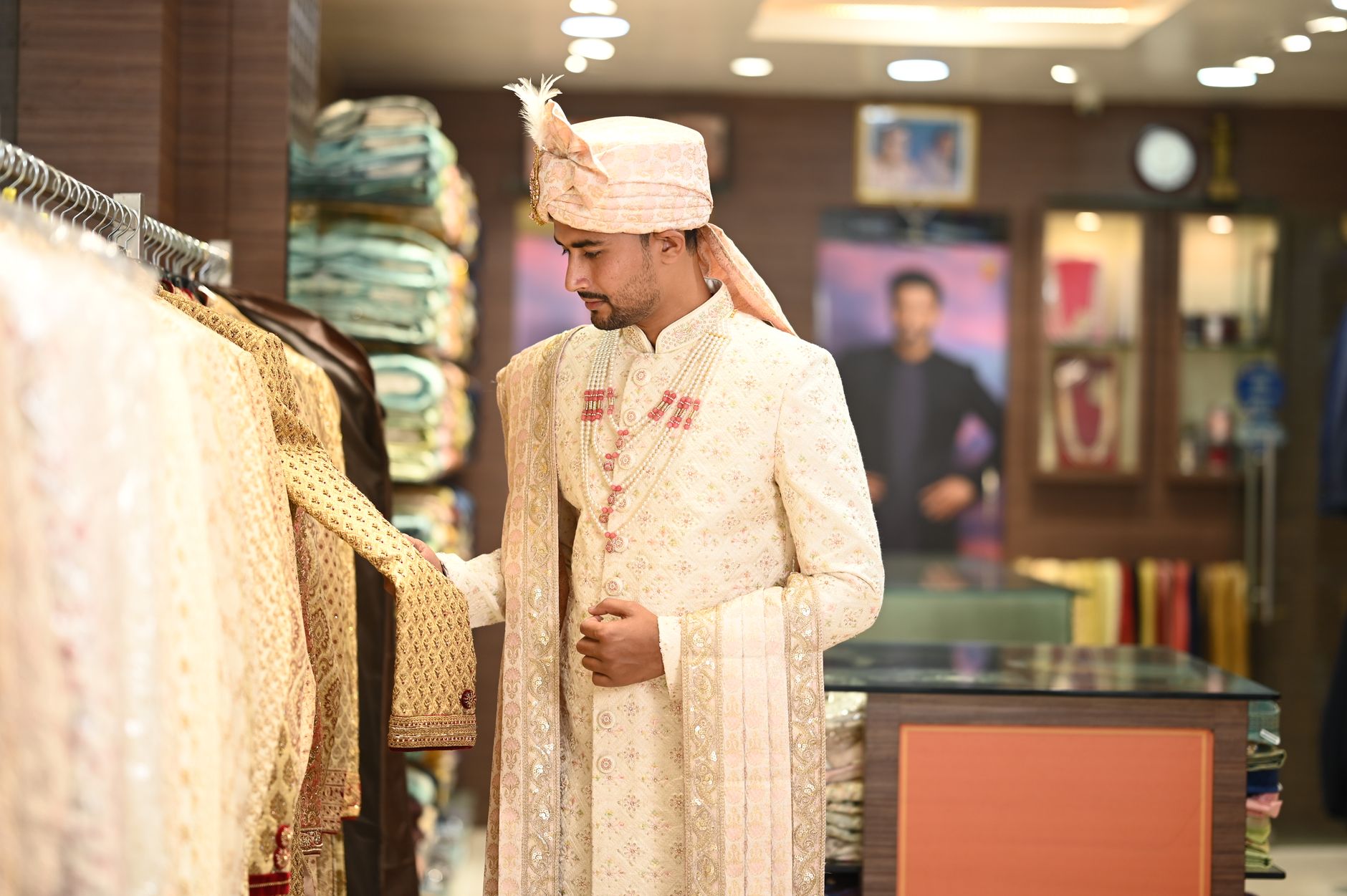
The single clearest signal of 2026 is colour. Pastels have moved from the bride's side of the family to the groom's. Ivory, cream, sage green, powder blue, mint, peach and dusty pink are the shades stylists keep pulling first, especially for daytime and outdoor ceremonies where strong colour can look heavy in natural light.
That doesn't mean dark tones are gone. They've simply been reassigned to the evening. Deep jewel shades — emerald, midnight blue, burgundy and forest green — now read as the dressier, after-dark choice, often in velvet for winter weddings. The smarter grooms are building a two-tone plan: a pastel for the day function and a richer tone for the reception, so the photographs from each event look distinct rather than repetitive.
Metallics have also calmed down. Instead of full gold groomzilla shine, you see bronze, champagne and antique-silver accents used sparingly on collars and cuffs. The effect is jewellery for the outfit, not armour.
The bandhgala is having its moment
If one garment defines the season, it's the bandhgala — the closed-neck jacket, and its close cousin the Jodhpuri. After years where the full-length sherwani dominated, the bandhgala is back as the sharp, grown-up alternative. It suits the man who wants to look polished without looking like he's wearing a tent.
What's changed is the construction. The 2026 bandhgala is cut leaner, made in lighter cloth like linen and cotton-silk blends, and dressed down with minimal embellishment. A floral boota on a suede base, a single contrast button line, a textured weave — that's often the whole story. It pairs naturally with straight trousers or churidars, and crucially it works far beyond the wedding day, which is the kind of cost-per-wear logic younger grooms increasingly think about.
Indo-western goes draped and asymmetric
The most fashion-forward grooms are skipping the traditional silhouette altogether and reaching for Indo-western cuts. The headline ideas here are drape and asymmetry. Expect:
- Draped kurtas with fabric pulled and pinned across the body, inspired by Mughal-era angrakha styling
- Asymmetric hemlines that cut diagonally rather than sitting straight
- Layered jackets worn open over a kurta, sometimes sleeveless
- Detachable elements — a panel or cape that comes off to change the look mid-event
These are usually paired with dhoti trousers, tapered pants or churidars rather than the classic straight pajama. The whole point is movement and a silhouette that doesn't look like every other groom's. For sangeets, cocktails and destination weddings, this is now the default for men who care about standing out.
Lighter fabrics, smarter layering
The fabric conversation has quietly become the most important one. Raw silk and Chanderi are everywhere because they carry embroidery well while staying relatively light and breathable. Banarasi and tissue silks hold their place for grand, heavily worked outfits. And linen and handloom blends have surged for morning ceremonies and beach or palace destination weddings where comfort decides everything.
Velvet stays in the picture, but as a winter specialist — best in those deep jewel tones for evening functions. The broader trick of the season is functional layering. Grooms are building outfits around removable pieces: a stole or shawl for the pheras that comes off for the dancing, a sleeveless jacket over a breathable kurta, a structured drape that can be unpinned. One base outfit, several looks, far less sweating.
Embroidery dials down to detail
The embellishment story mirrors the colour story: less, but better placed. Heavy all-over work is giving way to fine threadwork, subtle zardozi and small mirror detailing concentrated where it counts — the collar, the cuffs, the placket, the shoulder. The idea is that the eye should catch a beautiful detail up close, not be hit with shine from across the lawn.
Prints are the sleeper trend inside this. Floral block prints, Mughal-inspired jaals and heritage stripes are appearing on rich fabrics as an alternative to embroidery entirely. For a groom who wants visual interest without bling, a well-printed bandhgala does the job at a fraction of the weight and often a fraction of the price.
A practical buyer's guide
If you're shopping for your own wedding, a few rules cut through the noise:
- Match the outfit to the hour. Pastels and linen for day; jewel tones and velvet for night. Don't buy one outfit and force it across every slot.
- Start fittings early. A slim, structured cut only flatters if it's tailored to you. Book at least six to eight weeks ahead for alterations, longer for fully custom work.
- Plan for layers. A detachable shawl or jacket gives you two looks from one base and saves a second purchase.
- Coordinate, don't clone, the groomsmen. A shared colour family in bandhgalas or Nehru jackets looks intentional; identical outfits look like a uniform.
- Budget honestly. Solid ready-to-wear bandhgalas and Indo-western sets start in the lower tens of thousands; established designer and couture pieces run far higher. Decide whether you're buying a heirloom or a one-night look before you fall for a price tag.
The through-line for 2026 is confidence over excess. The groom who reads best this year isn't the one wearing the most — it's the one whose colour, cut and single good detail all agree with each other. That's a far easier brief to pull off than another kilo of gold, and it tends to age better in the photographs too.