Photo: Bonaventure Fernandez / Pexels
Wedding Sherwani Trends 2026: Pastels, Bandhgalas & Indo-Western
For a decade, the Indian groom's brief was simple: glitter harder than the last guy. Heavier zardozi, more sequins, a maroon-and-gold uniform so standard it practically came with a receipt. In 2026, that script has flipped. Walk into any winter wedding this season and you'll spot grooms in dusty lavender, structured bandhgalas and draped Indo-western jackets — outfits built to be photographed, danced in and, increasingly, worn again.
The big story in men's wedding sherwani and Indo-western trends isn't a single colour or cut. It's a change in attitude: today's groom wants to look intentional, not loud. Here's what's actually driving the 2026 wardrobe, and how to use it whether you're getting married, standing as best man, or just tired of renting the same beige number every cousin's shaadi.

Quiet Luxury Reaches the Groom
The loudest trend of 2026 is restraint. Designers have pulled back from wall-to-wall embroidery and leaned into what the fashion world calls quiet luxury — richness you feel rather than see. Think raised threadwork, geometric quilting, tone-on-tone zardozi and embossed velvet, where the embellishment is the same colour as the base fabric.
The effect is a sherwani that reads expensive in person and elegant in photos, instead of a mass of reflective gold that flares under videographer lights. It's the menswear version of the minimalist bridal lehenga: better tailoring, fewer fireworks.
This matters because the groom is no longer a supporting character standing politely beside the bride. With reels, pre-wedding shoots and dedicated groom entries, his outfit now has to carry its own frame — and a clean, well-cut silhouette travels far better on camera than a crowded one.
Pastels Take Over the Day Wedding
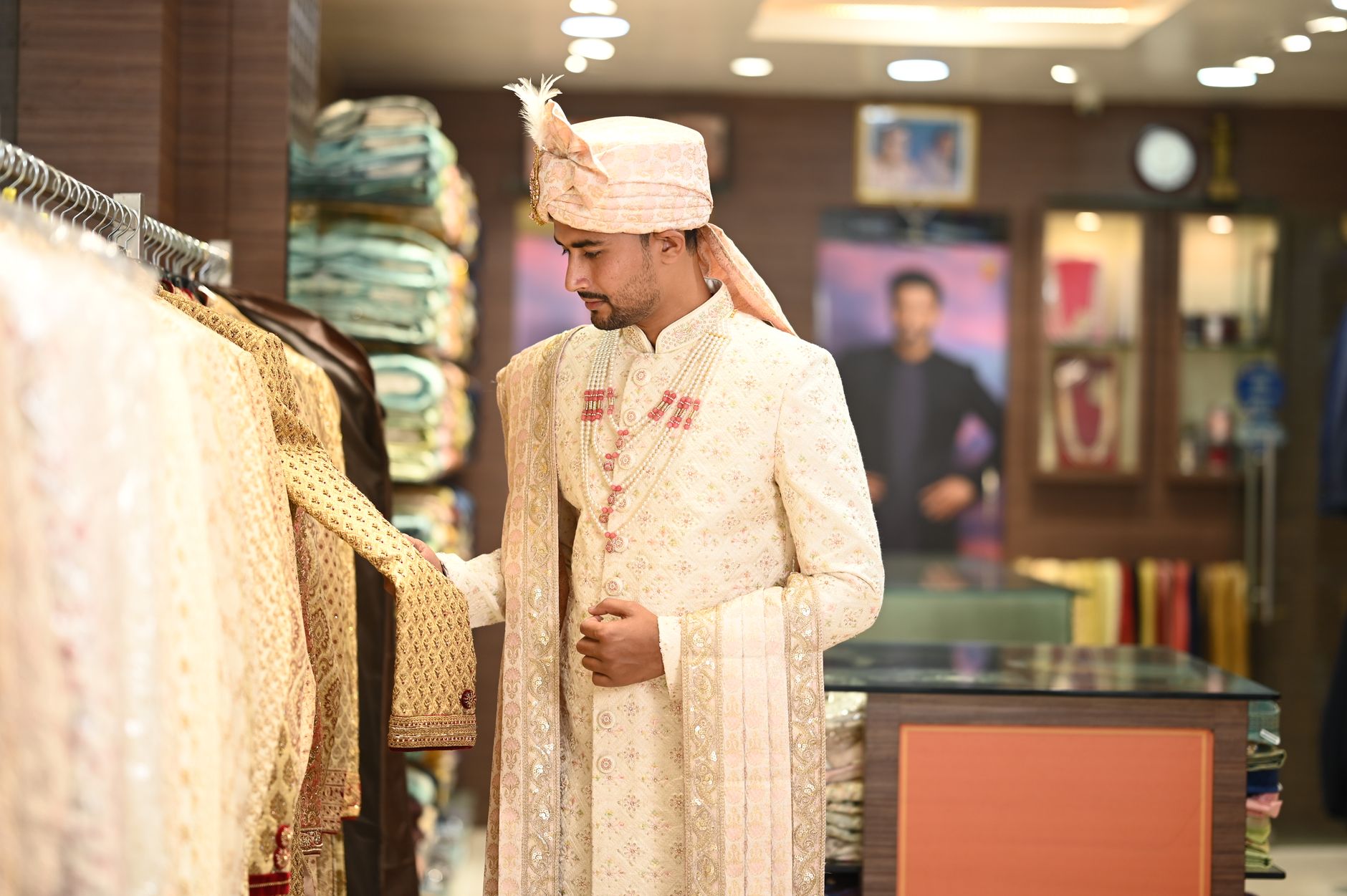
If one colour family defines 2026, it's the pastel. Once considered too soft for a groom, shades like powder lavender, mint green, pistachio, champagne, butter yellow and powder blue are now the default for daytime ceremonies, mehendi, haldi and destination weddings.
The logic is practical as much as aesthetic. Pastels photograph beautifully in natural daylight, suit beach and palace backdrops, and read as fresh and modern next to jewel-toned bridal wear. They also let the groom stand apart from a sea of cream-and-gold guests without trying too hard.
A few styling rules grooms are following this year:
- Anchor a pastel with one contrast. A lavender sherwani with a deep emerald or wine dupatta, or a brooch and buttons in antique gold, adds depth so the look doesn't go flat.
- Match your metals. Rose-gold buttons with champagne, oxidised silver with grey or mint — consistency reads as deliberate.
- Keep the footwear earthy. Tan or bronze mojaris ground a pale outfit better than stark white.
For evening and winter functions, the palette swings the other way — rich wine, emerald, midnight blue, royal maroon and forest green, often in velvet — proving the pastel wave is a daytime story, not a replacement for drama.
Indo-Western: Where the Real Experiments Live
The sherwani still owns the main ceremony, but the sangeet, cocktail and reception are where Indo-western fashion is exploding. This is the playground, and 2026 grooms are using it.
The headline silhouettes:
- Asymmetric jackets worn over a simple kurta or shirt, with angled hems and overlapping panels.
- Draped kurtas with cowl folds and side ties that bring movement without heavy fabric.
- Structured bandhgalas — the closed-neck Jodhpuri jacket — in textured silk, linen blends and jewel tones, dressed up for a reception or down for a daytime do.
- Jacket-kurta sets and sherwanis with detachable elements, so one base outfit can shift between two functions.
The bandhgala deserves a special mention. It's having a genuine moment because it solves a real problem: it looks sharp like a Western suit but stays unmistakably Indian, works for a court marriage or a black-tie reception, and flatters almost every body type thanks to its clean vertical line. Enamel buttons, storm flaps and a high Mandarin collar are the details to look for.
Fabric Is the New Status Symbol
With embroidery dialled down, the fabric now does the talking. The standout of 2026 is lightweight velvet — engineered as a blend so it drapes richly for winter weddings without the suffocating weight of older versions. Tone-on-tone embossing and a sliver of metallic thread give it texture under low light.
But the more interesting shift is toward heritage and breathable cloth. Raw silk, Tussar, Banarasi brocade, jacquard and khadi-silk are back, partly because they age well and partly because they align with the sustainability conversation younger grooms increasingly care about. For destination and summer weddings, linen-cotton and silk-linen blends are winning simply because nobody wants to sweat through their own pheras.
The takeaway for buyers: ask about the blend, not just the look. A 'velvet' sherwani that's pure heavy velvet may look great on the hanger and feel unbearable by the third hour of a December reception.
Rent, Resell, Repeat: The Outfit Economics Shift
Here's the trend nobody photographs but everyone is quietly adopting. A designer wedding sherwani can run from tens of thousands to several lakh rupees — for a garment worn once and then exiled to a cupboard. In 2026, more grooms are refusing that math.
Premium rental and resale platforms now stock designer groomwear, letting you wear a high-end reception or sangeet look for a fraction of the price. The common strategy: buy the one main-ceremony piece you'll keep for sentiment, and rent the two or three supporting outfits you'll never wear again.
It's a sensible move on three fronts — it frees up budget for the looks that matter most, it cuts the waste of single-use luxury clothing, and it lets a groom wear a label he could never justify buying outright. Expect this to become the default for the cost-conscious, fashion-forward groom rather than a fringe choice.
How to Build Your 2026 Groom Wardrobe
If you're a groom staring down four or five functions, here's the practical shortlist that captures the year's mood without chasing every micro-trend:
- Main ceremony: A tonal, lightly textured sherwani in a colour you'll still like in ten years — ivory, sage, deep emerald or classic maroon.
- Sangeet/cocktail: An Indo-western jacket-kurta set or a jewel-tone bandhgala you can actually move in.
- Mehendi/haldi: A pastel kurta set in breathable fabric — this is where butter yellow and mint earn their keep.
- Reception: A sharp bandhgala or a lightweight velvet ensemble, the one place a little drama still pays off.
The through-line for 2026 is confidence over clutter. The most stylish grooms this season aren't the ones wearing the most embroidery — they're the ones whose outfit looks chosen, fits properly, and lets them, not the fabric, hold the room. That, more than any single colour, is the trend worth copying.
Why This Shift Matters
Men's wedding fashion in India was, for years, an afterthought — a few interchangeable templates while bridal couture got all the innovation. The 2026 wave signals that the groom market has finally grown up, with its own colour stories, silhouettes, fabrics and even its own rental economy.
For grooms, that means more freedom and less pressure to conform to the maroon-and-gold default. For the industry, it's a fast-growing category that rewards good tailoring and original thinking over sheer bling. Either way, the next time you're at a wedding, watch the groom — for the first time in a long time, his outfit is worth a second look.