Photo: Aadil Mehraj / Pexels
12 Mind-Blowing Facts About India Most People Don't Know
India is the kind of country where the more you think you know it, the more it surprises you. Beyond the Taj Mahal and Bollywood lies a land of door-less villages, floating post offices, skeleton lakes and cricket pitches carved into the Himalayas. Here are 12 mind-blowing facts about India that even many Indians have never heard — each one true, verifiable and genuinely strange.

A village with no doors — and almost no crime
In the Ahmednagar district of Maharashtra sits Shani Shingnapur, a village where homes are traditionally built without doors. No front doors, no locks, sometimes just a curtain to keep out dust. Villagers believe the deity Lord Shani watches over the place and punishes any thief instantly, so locks were considered both unnecessary and disrespectful.
For generations, recorded thefts were almost unheard of. The faith runs so deep that in 2011, UCO Bank opened a 'lockless' branch here — believed to be the first of its kind in India, though it kept symbolic glass doors to satisfy banking rules. In recent years a few petty crimes have been reported, usually blamed on outsiders, but the village's reputation endures.
The wettest place on Earth is in India
Forget rainforests in the Amazon. Mawsynram, a town in Meghalaya's East Khasi Hills, is widely described as the wettest inhabited place on the planet, soaking up an average of roughly 11,800 millimetres of rain a year. To put that in perspective, that is more than ten times what cities like Delhi or London receive.
The nearby town of Cherrapunji once held the title and still trades records with its neighbour. Locals here have invented their own monsoon survival kit, including full-body grass-and-bamboo umbrellas called knups. Two towns in Colombia dispute the global crown on paper, but in popular imagination, the rainiest spot on Earth remains firmly Indian.
The world's largest postal network — including a floating one
India runs the largest postal network on Earth, with roughly 165,000 post offices stitching together cities, deserts and remote Himalayan hamlets. On average, a single post office serves several thousand people, reaching places no private courier would bother with.
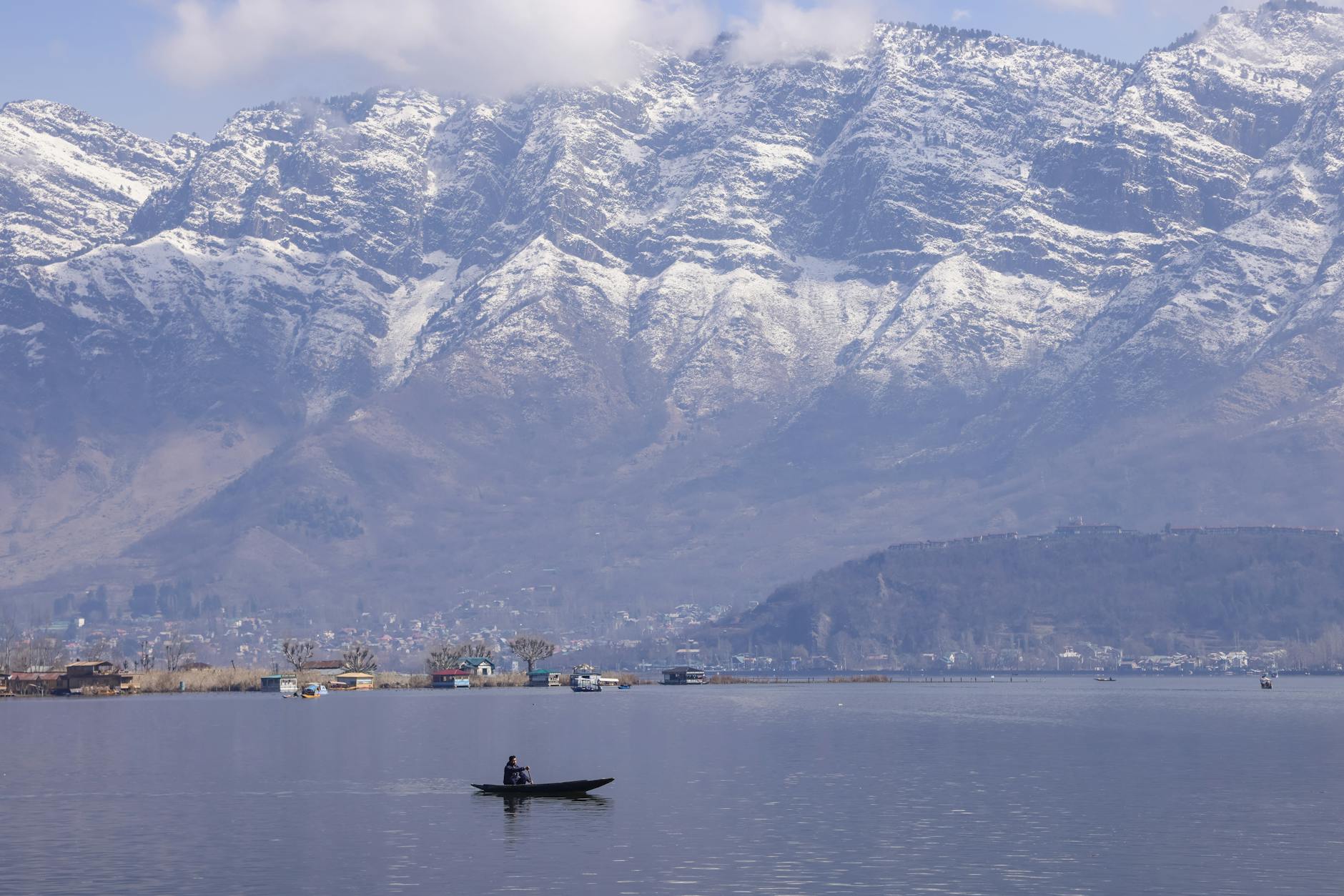
The most charming of them all bobs on water. In August 2011, India Post opened a floating post office on a houseboat on Dal Lake in Srinagar — believed to be the only one of its kind anywhere. It sells stamps, postmarks letters and even doubles as a small museum, all while gently rocking against a backdrop of snow-clad Kashmiri mountains.
The world's highest cricket ground
Cricket is a religion in India, so it is fitting that the country also owns the sport's most vertiginous shrine. The Chail Cricket Ground in Himachal Pradesh sits at about 2,444 metres above sea level — the highest cricket ground in the world.
It was built around 1893 by the Maharaja of Patiala, who reportedly had an entire mountaintop flattened to create it. Today it lies within a military school, ringed by towering deodar and pine forests, with the Himalayas peeking over the boundary. Hitting a six here genuinely means launching the ball into thin mountain air.
A road so high the air is half as thick
India is also home to some of the highest drivable roads on the planet. For years, Umling La in eastern Ladakh held the record as the world's highest motorable road, perched at a dizzying 19,024 feet (about 5,799 metres) near the village of Demchok.
Built by the Border Roads Organisation in extreme conditions — winter temperatures plunge to around −40°C and oxygen levels are roughly half those at sea level — the road is an engineering marvel. India has since pushed even higher with another road over Mig La, meaning the country now holds both the first and second spots for the highest roads on Earth.
More languages than most continents
India's diversity isn't just a slogan. The 2011 Census recorded 121 languages spoken by more than 10,000 people each, drawn from over 1,300 distinct mother tongues that people actually reported. Only 22 of these are 'scheduled' — officially recognised — yet together those 22 are spoken by the vast majority of the population.
What this means in practice is staggering. Cross a state border in India and the script on the road signs can change entirely, the greetings change, the food changes. A trader in Tamil Nadu and a farmer in Assam may share a country, a flag and a cricket team, yet not a single common everyday word without English or Hindi as a bridge.
A frozen lake full of ancient skeletons
High in the Uttarakhand Himalayas lies Roopkund, better known as Skeleton Lake. When the ice melts in summer, the shallow glacial water reveals the remains of hundreds of people — bones, skulls and even preserved hair — scattered around its edge.
For decades nobody knew who they were or how they died. DNA studies have since revealed something even stranger: the dead belonged to different groups across different centuries, including some whose ancestry traced surprisingly far from India. The leading theory for many of the deaths is a sudden, brutal hailstorm, but the lake still guards plenty of its secrets.
Three more facts to blow your mind
India keeps a few more aces up its sleeve. Quick-fire, but no less astonishing:
- The concept of zero as a number was formalised in ancient India, with mathematicians like Brahmagupta laying down rules for it as far back as the 7th century — the foundation of all modern computing and mathematics.
- The Kumbh Mela is regularly described as the largest peaceful human gathering on Earth, with tens of millions of pilgrims converging on the riverbanks — crowds so vast they are visible in satellite imagery from space.
- India's space programme had famously humble beginnings: in the 1960s, rocket parts were once ferried on bicycles and bullock carts to the launch site at Thumba — the same nation that would later land near the Moon's south pole.
Why these facts matter
It is easy to reduce a country of 1.4 billion people to a handful of postcard clichés. But the door-less village, the floating post office and the high-altitude cricket pitch all point to something deeper: India is less a single place than a continent's worth of stories crammed under one flag.
The next time someone claims to know India, remember that the country contains a lake of skeletons, the rainiest town on the planet and a bank with no locks — all at once. The most mind-blowing fact about India may simply be that no single fact can ever sum it up.