Photo: Tauseef Khaliq / Pexels
11 Mind-Blowing India Facts Most People Don't Know
India is a country where a hill appears to pull parked cars uphill, where a single religious gathering can be picked out from space, and where you can post a letter while floating on a lake. For a place this old and this vast, the most surprising mind-blowing India facts aren't in the tourist brochures — they're hiding in plain sight. We checked the details so you don't have to, and rounded up eleven that genuinely make people say wait, that's real?
Think of this as a quick tour of the strange, the record-breaking and the quietly astonishing. Some you may half-remember from school; others will be brand new. Every one is verified.

Nature broke its own rules here
Start with the wildlife, because India pulls off something no other nation on the planet can.
- The only country with wild lions and tigers. Bengal tigers prowl dozens of Indian reserves, while the last truly wild Asiatic lions survive only in and around Gir in Gujarat. No other country has both big cats living free — making India the world's only "land of the lion and the tiger."
- The wettest place on Earth. Mawsynram in Meghalaya's East Khasi Hills soaks up an average of about 11,871 mm of rain a year. Locals there have long woven grass into knup raincoats and built homes braced for relentless monsoon.
- Bridges that are still growing. Also in Meghalaya, the Khasi and Jaintia people train the roots of rubber fig trees across rivers to form living root bridges. They take 15 to 30 years to mature — and unlike steel, they get stronger with age.
That combination of extremes — desert, rainforest, high desert and coastline — is part of why India packs so much biodiversity into one map.

Engineering that defies gravity (and belief)
India's landscape has pushed its engineers to build things that sound impossible.
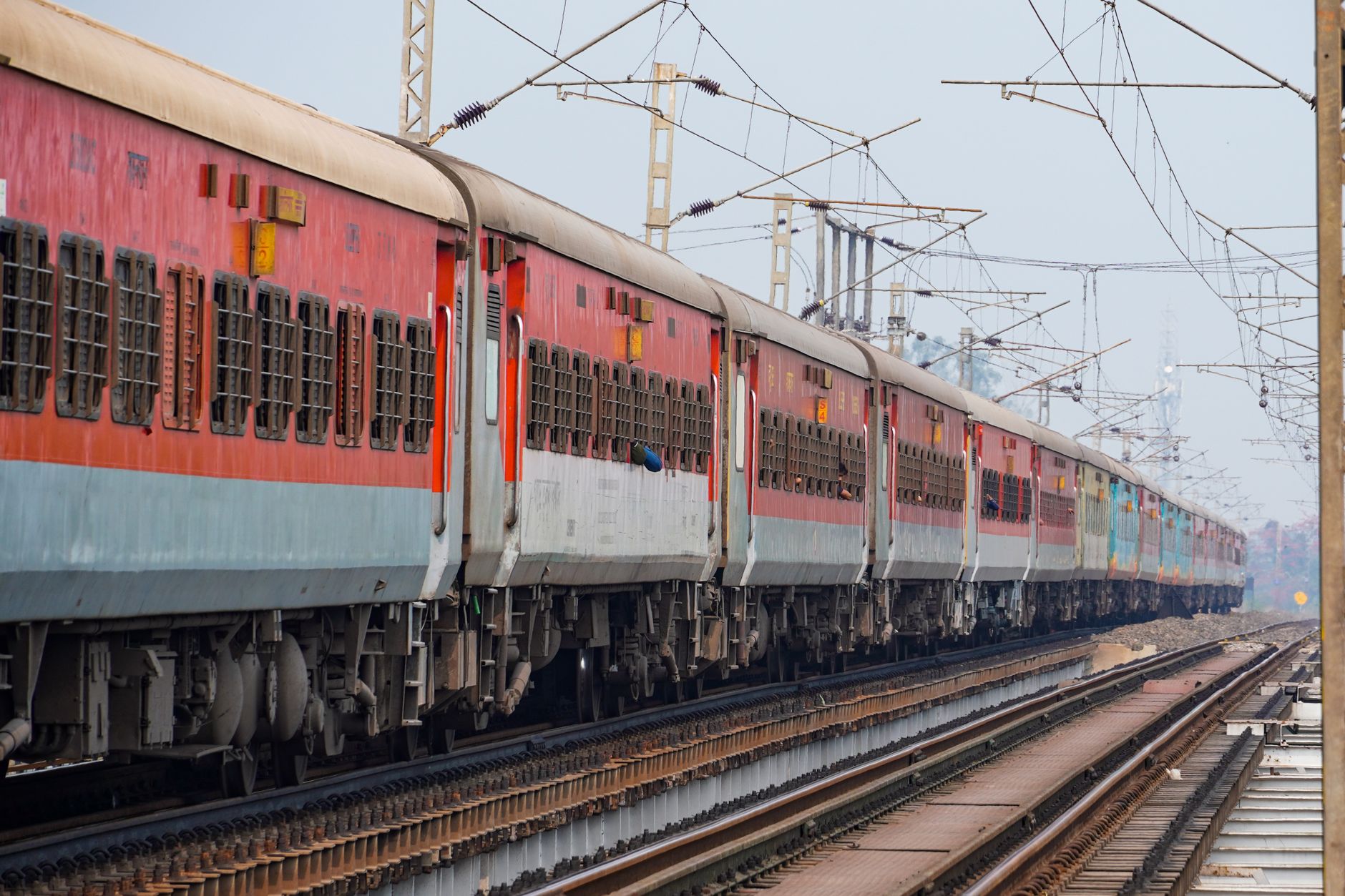
The headline act is the Chenab Bridge in Jammu and Kashmir, inaugurated in June 2025. Its deck sits 359 metres above the river below — taller than the Eiffel Tower, which makes it the world's highest railway arch bridge. Trains now glide across a valley that was, until recently, almost unreachable.
High in Ladakh, the Border Roads Organisation keeps redrawing the limits of altitude. For years Umling La, at roughly 19,024 feet, was celebrated as the world's highest motorable road. In 2025 the BRO topped even that with a new road over the higher Mig La pass — meaning India holds the record and then beats itself.
And then there's the one that breaks your brain at ground level: Magnetic Hill near Leh. Put your car in neutral on a marked stretch and it appears to roll uphill. There's no magic and no magnet — it's a gravity hill, an optical illusion created by the slope of the surrounding land that fools the eye into misreading what is actually a gentle downhill.
A post office that floats, a gathering you can see from space
Some of India's most charming facts are about scale and sheer originality.
On Dal Lake in Srinagar sits the country's only floating post office, officially inaugurated in August 2011. Run from a decorated houseboat, it offers regular postal services plus a philately museum, and letters mailed from it carry a special design. For the lake's houseboat families and shikara owners, it has been a lifeline far longer than the official date suggests.
At the opposite end of the scale is the Kumbh Mela, the Hindu pilgrimage that periodically draws crowds so enormous they have been identified in satellite imagery — a human gathering visible from space. Recent editions have drawn hundreds of millions of pilgrims over their weeks-long span, making it arguably the largest peaceful gathering humanity stages.
Keeping all those letters and people connected is the world's largest postal network: India runs roughly 1.5 lakh (around 155,000) post offices, reaching villages where almost nothing else official does.
India quietly handed the world its maths
Here's a fact that underpins almost everything you do on a screen: much of modern mathematics traces back to the Indian subcontinent.
Indian mathematicians developed the decimal place-value system and treated zero not just as a placeholder but as a number you can calculate with. In the 7th century, the scholar Brahmagupta set down rules for arithmetic using zero and negative numbers — ideas that travelled through the Arab world into Europe and became the foundation of the numbers we all use today.
Without that conceptual leap, there's no easy arithmetic, no algebra as we know it, and certainly no computing. It's not an exaggeration to say a piece of ancient India lives inside every calculator and smartphone on Earth.
Records, rooftops and a cricket pitch in the clouds
India loves a superlative, and a few of them are delightfully specific.
- The highest cricket ground in the world. The Chail Cricket Ground in Himachal Pradesh sits at over 2,000 metres, carved out of a hilltop in the 1890s. Hit a six there and the ball really can sail off a mountain.
- A village that speaks Sanskrit. In Karnataka, the village of Mattur is famous for keeping conversational Sanskrit alive in everyday life — shopkeepers, students and grandparents using a language most people assume exists only in textbooks.
- A spotless reputation. Mawlynnong in Meghalaya has long been celebrated as one of Asia's cleanest villages, with community-run waste segregation and bamboo dustbins that predate most cities' recycling drives.
Each of these is small in size but outsized in the way it rewrites your mental image of the country.
Why these facts actually matter
It's tempting to file all this under trivia, but there's a thread running through it. India's astonishing facts are usually the product of two forces colliding: extreme geography and deep history.
The Himalayas force record-breaking roads and bridges. The monsoon creates the wettest places and the root bridges that survive them. Thousands of years of unbroken culture preserve a Sanskrit-speaking village and gave the world its number system. The diversity that makes lions and tigers share one country also makes India one of just a handful of "megadiverse" nations on Earth.
In other words, these aren't random curiosities — they're symptoms of a place that is genuinely, structurally unusual.
The takeaway
The best mind-blowing India facts stick because they pass a simple test: they sound invented, but they hold up. A car rolling uphill, a post office bobbing on a lake, a bridge taller than the Eiffel Tower, a crowd you can see from orbit — none of it is myth.
Next time someone says they "know India," ask them which is the only country where wild lions and tigers share the map. The answer, every time, is the same one that gave the world zero.