Minecraft's 'Trillionaire Villager City' Videos Are Quietly Owning Kids' Screen Time
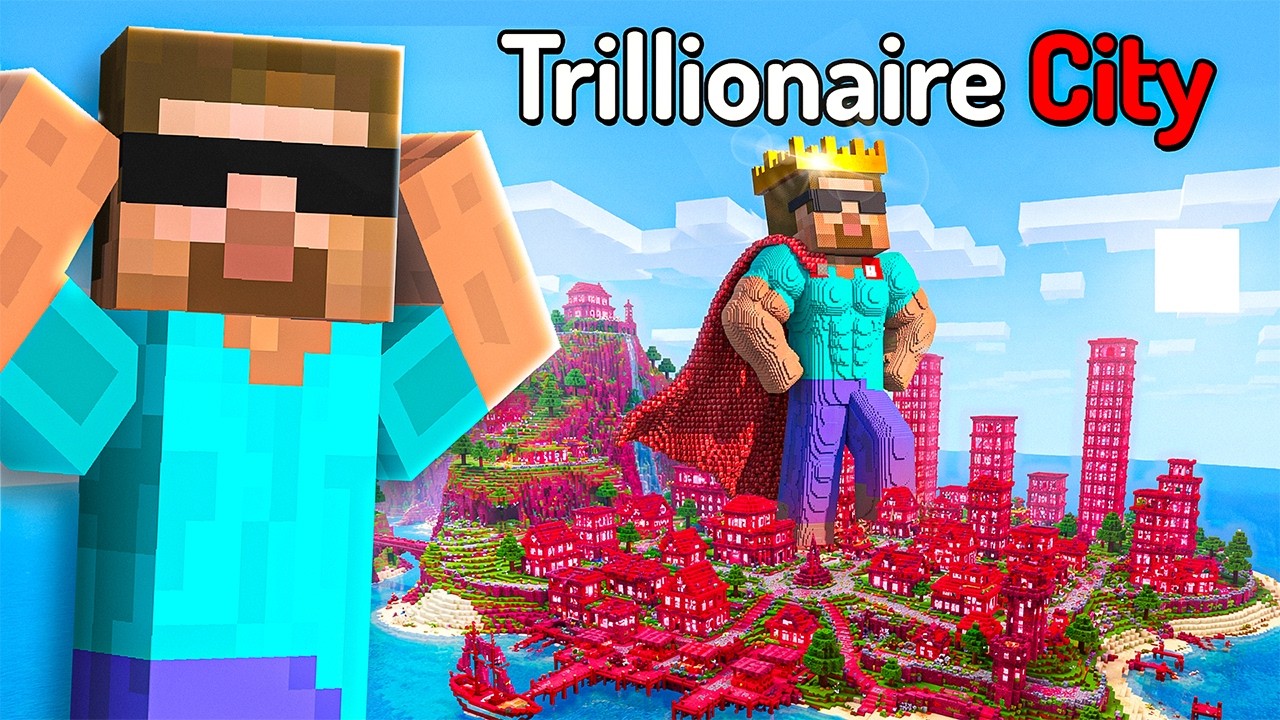
A YouTube video with a title built almost entirely from hooks — a trillionaire city, talking villagers, and a player who ends up crowned KING — is exactly the kind of thing that makes adults raise an eyebrow and makes a nine-year-old hit play instantly. "How I Became the KING of this Trillionaire Villager City in Minecraft!" is the latest in a genre that quietly dominates children's screen time across India and the world, and it is worth understanding what these videos actually are, why they spread so fast, and what they tell us about how kids consume media now.
This is not a normal walkthrough where someone mines coal and builds a dirt hut. It belongs to a fast-growing style of scripted roleplay-survival content where the creator invents a story — a poor outsider arrives in a fabulously wealthy fictional city, climbs the ranks, and eventually rules it. The gameplay is the stage. The story is the product.
What a 'trillionaire villager city' actually is
In ordinary Minecraft, villagers are simple non-player characters who trade goods for emeralds, the game's green gem currency. They do not deal in trillions of anything, and there is no built-in city ruled by a king. So the premise itself is invented.
To build worlds like this, creators lean on a toolkit that most casual players never touch:
- Mods and data packs that add custom NPCs, currencies, shops and jobs
- Command blocks that trigger scripted events, dialogue and rewards
- Custom maps designed in advance so the 'city' already exists before filming
- Heavy editing that cuts hours of play into a tight, fast story
The "trillionaire" framing is a number chosen for shock value, the same way thumbnails scream RICHEST or POOREST. None of it reflects real game mechanics, and that distinction matters: a child watching may genuinely believe these systems exist in the version of Minecraft they own.
Why it blows up
The success of these videos is not an accident. It is the result of a format refined over years to win the one thing YouTube rewards above all else: watch time.
The rags-to-riches arc is one of the oldest stories humans tell, and it works on kids instantly. There is a clear goal, visible progress, and a satisfying payoff when the underdog finally wears the crown. Each episode ends with a hook that points to the next, so a single video becomes a doorway into a whole series.
The packaging does the rest. Thumbnails use exaggerated faces, gold, glowing text and a sense of before-and-after transformation. Titles front-load the most dramatic words. Once a viewer clicks and stays, the recommendation engine reads that as a signal and pushes the video — and the channel — to more people just like them.
Minecraft is the engine under all of it
It helps that the game itself is a phenomenon. Since its release in 2009 and acquisition by Microsoft in 2014, Minecraft has sold hundreds of millions of copies and become one of the most-watched games on YouTube year after year. Its blocky, low-detail look is easy to render, easy to mod, and instantly recognisable to children who already play it at home.
For creators, that familiarity is gold. A new viewer does not need any setup to understand the world. They already know what a villager is, what an emerald does, and what it feels like to build something from nothing. The creator can spend their energy on story and spectacle instead of explaining the basics.
India sits right in the middle of this wave. The country is one of the largest audiences for gaming content on YouTube, and a generation of Indian Minecraft creators has built massive followings with exactly this kind of high-concept, story-driven survival content, often in Hindi and regional languages. A trillionaire-city video sits comfortably inside that ecosystem whether the channel is Indian or not.
The economics behind the crown
There is a real business reason these videos look the way they do. Children's gaming content can pull enormous view counts, and views translate into ad revenue, sponsorships and merchandise. A channel that lands on a winning format will repeat it relentlessly, swapping the theme — trillionaire city this week, secret kingdom the next — while keeping the underlying recipe intact.
That is why so many of these titles feel templated. Richest, poorest, king, trillionaire, secret, forbidden — the vocabulary is a tested set of triggers. It can feel cynical to adults, but it is simply what survives in an attention market where the next video is one swipe away.
It is also worth being clear-eyed rather than alarmist. Most of this content is broadly harmless fun: creative, imaginative and far gentler than a lot of what is online. The concern is less about any single video and more about volume, pacing and the blurring of game fiction with reality.
What parents and teachers should keep in mind
The sensible response is supervision, not panic. A few practical steps go a long way:
- Watch an episode together. You will quickly judge the channel's tone, language and ad load.
- Use the right tools. YouTube Kids, supervised Google accounts and built-in screen-time limits give you real control over what plays next.
- Talk about what is real. Explain that the trillionaire city is made-up, built with mods, and not part of the game they play. This builds media literacy that lasts.
- Watch the autoplay trap. The biggest risk is not one video but the endless chain of them. Set limits before the binge, not during it.
- Redirect into making, not just watching. Kids who love these worlds often enjoy building their own, which turns passive viewing into a genuinely creative hobby.
Where this is heading
Expect more of it, not less, and slicker too. As editing tools get cheaper and AI helps with thumbnails, voiceovers and even world-building, the production gap between a hobbyist and a studio keeps shrinking. The trillionaire-city trend will burn through its current phrasing and reinvent itself with a fresh set of magic words, because the underlying psychology does not change.
The lasting story here is not one Minecraft video. It is how completely the grammar of children's entertainment has shifted to short, scripted, algorithm-shaped serials inside games kids already love. Understanding that — rather than dismissing it — is the most useful thing any parent or educator can do. The crown in the thumbnail is fake. The attention it captures is very real.