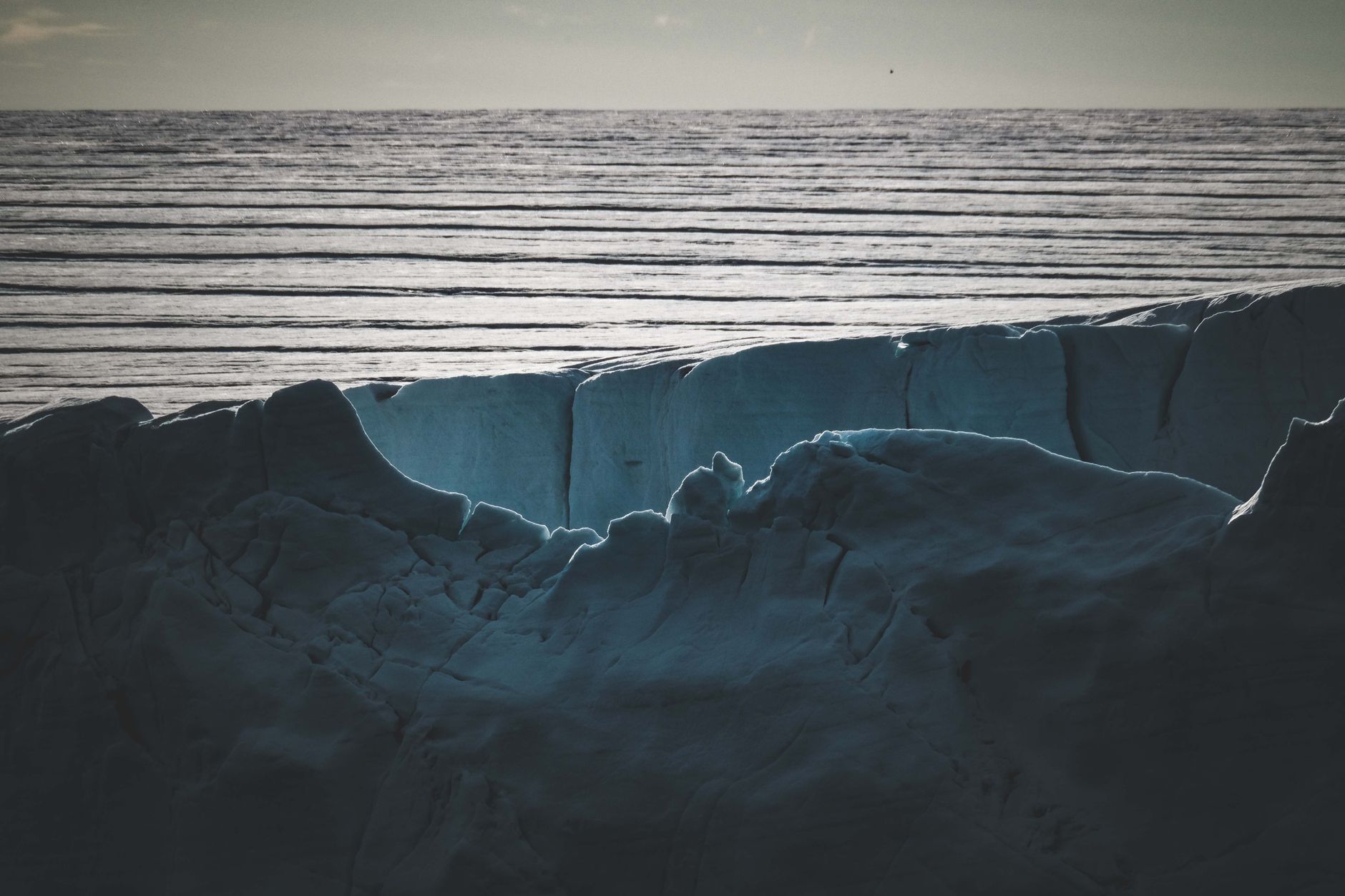
Photo: Benjamin Farren / Pexels
15 Ocean Facts So Strange They Sound Made Up
We treat the ocean like a backdrop for beach holidays and shipping lanes, but it is the largest, strangest and least-understood place on our own planet. Cover more than 70% of Earth's surface, plunge it into total darkness and crushing pressure, and you get a world that behaves more like an alien planet than anything on land. Here are 15 ocean and deep-sea facts that sound invented — and are all completely real.
We know our own ocean worse than we know Mars
Start with the most humbling fact of all: large stretches of the deep seafloor are mapped at far lower detail than the surfaces of Mars, the Moon and Venus. Radar and laser mapping work brilliantly across dry planets, but they cannot punch through kilometres of seawater, so charting the deep ocean means slowly criss-crossing it with sonar ships and robots.
The result is that scientists often say humans have explored only a small fraction of the ocean in any meaningful way — figures under 10% get quoted regularly. An entire planet's worth of mountains, valleys and creatures sits beneath us, still essentially unvisited.

The deepest point could swallow Mount Everest
The deepest known spot on Earth is the Challenger Deep, at the southern end of the Mariana Trench in the western Pacific. The most precise modern sonar surveys put it close to 10,994 metres deep — give or take a few dozen metres.
Drop Mount Everest (about 8,849 m) into that trench and its peak would still be more than two kilometres underwater. The Mariana Trench stretches over 2,500 km long but averages only about 69 km wide, a thin, dark scar far deeper than any mountain is tall.
At the bottom, the pressure is almost unimaginable
What keeps people out is hydrostatic pressure. Every metre you descend, the weight of water above you grows, and at the bottom of the Challenger Deep it reaches well over a thousand times the pressure at the surface — roughly the load of a heavy truck pressing on every fingernail-sized patch of your body.
That is why this zone has been visited by humans only a handful of times, and why most exploration there is done by remotely operated vehicles built like deep-sea tanks.
A fish lives 8,336 metres down
Life, astonishingly, refuses to give up even here. In 2023, researchers filmed a young snailfish (genus Pseudoliparis) at about 8,336 metres in the Izu-Ogasawara Trench near Japan — the deepest fish ever caught on camera.
These ghostly, translucent fish have no scales and partly soft, flexible bones. Their bodies are chemically tuned to keep cells from being crushed, letting them thrive at depths that would instantly flatten almost anything from the surface.
The octopus named after a cartoon elephant
The deepest-living octopus on Earth is the dumbo octopus, found at nearly 7,000 metres. Its nickname comes from two large fins that stick out above its eyes and flap like the ears of Disney's flying elephant.
It has never survived in an aquarium, because no tank can recreate the pressure it depends on. To study it, scientists have to go to it — not the other way around.
Most deep-sea animals make their own light
In a place with zero sunlight, life invented its own. More than 75% of deep-sea animals are estimated to be bioluminescent, producing light through chemical reactions in their bodies or with the help of glowing symbiotic bacteria.
This living light does serious work:
- Hunting — anglerfish dangle a glowing lure to draw prey into their jaws.
- Hiding — some animals light their undersides to erase their silhouette against faint light above.
- Talking — flashes act as signals to find mates or startle predators.
Down there, light is not decoration. It is language, camouflage and a weapon all at once.
A jellyfish that may cheat death
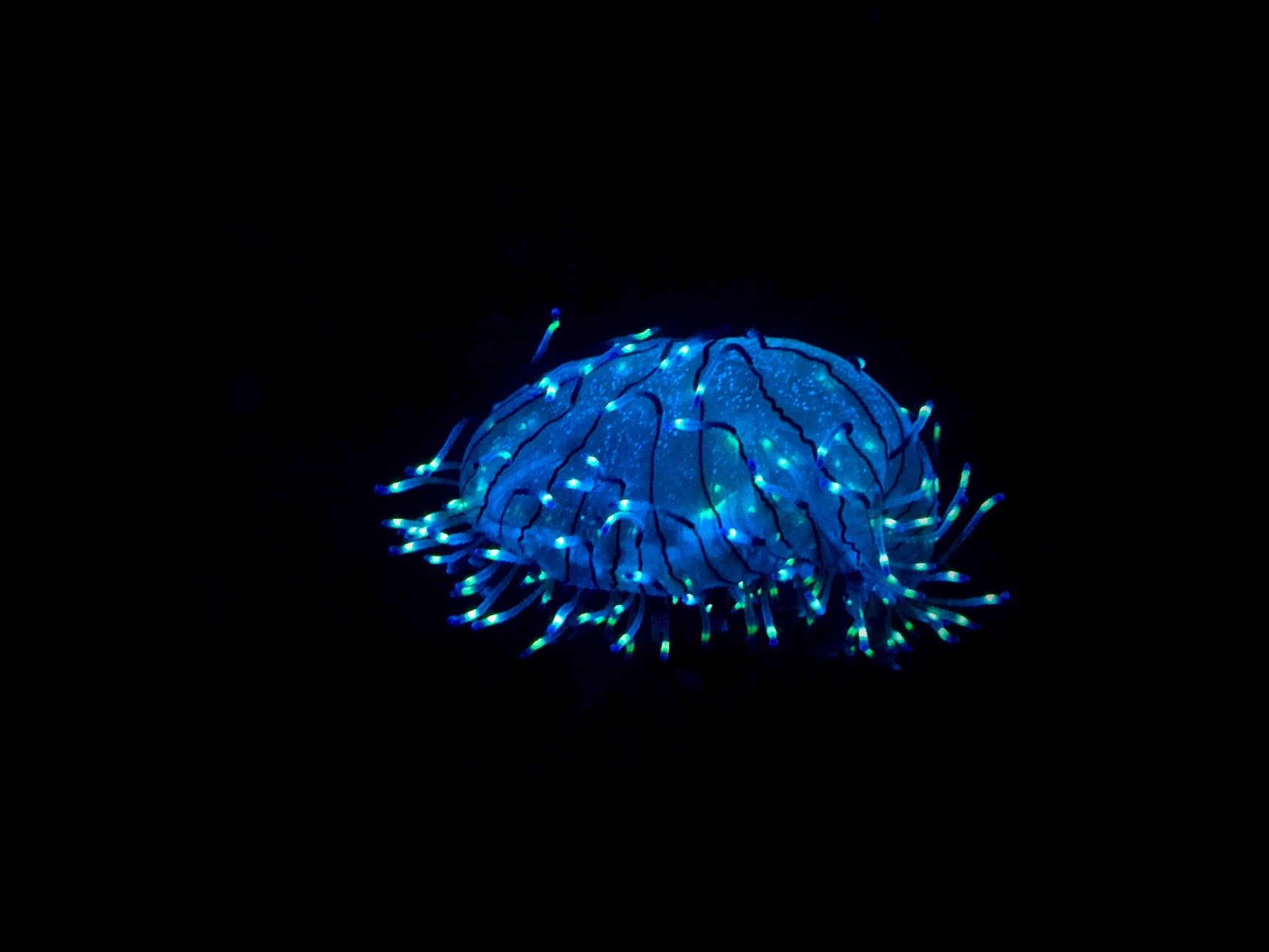
The immortal jellyfish (Turritopsis dohrnii) is the closest thing nature has to a reset button. When injured, starving or simply old, it can transform its cells back into an earlier life stage and start growing again, instead of dying.
In theory it can repeat this loop endlessly, which is why it earned the "immortal" tag. In practice it can still be eaten or killed by disease — but left alone, biology gives it no fixed expiry date.
Earth's longest mountain range is underwater
Ask most people to name the world's longest mountain range and they will say the Himalayas or the Andes. The real answer is hidden beneath the waves: the mid-ocean ridge, a volcanic seam that winds around the globe for nearly 65,000 km.
More than 90% of this gigantic range lies in the deep ocean, where fresh crust is constantly created as tectonic plates pull apart. It is the planet's biggest geological feature, and almost no one has ever seen it.
The sea makes the oxygen you are breathing
Forests get the credit, but a huge share of our air comes from water. Microscopic ocean plants called phytoplankton photosynthesise near the surface and are responsible for a massive amount of the planet's oxygen — commonly estimated at about half of what we breathe.
That makes the health of the ocean a direct, personal matter for every land-dwelling human, including those far from any coast.
There are lakes and rivers at the bottom of the sea
It sounds like a contradiction, but the deep ocean has its own underwater "lakes" and "rivers." These brine pools are pockets of water so salty and dense that they don't mix with the seawater around them, forming shimmering pools complete with their own shorelines on the seafloor.
They are often toxic to most life, yet rings of specially adapted mussels and microbes crowd their edges, living off the chemistry seeping up from below.
Whole ecosystems run without the sun
For most of history, scientists assumed life needed sunlight. Then deep-sea hydrothermal vents were discovered — cracks where superheated, mineral-rich water gushes from the seafloor. Around them, bacteria perform chemosynthesis, building food from chemicals instead of light.
Those microbes feed tube worms, crabs and clams in thriving communities far beyond the reach of the sun. It reshaped our idea of where life can exist — and where it might exist on other worlds.
The biggest animal ever lived here, not in the dinosaur age
The blue whale is the largest animal known to have ever lived — bigger than any dinosaur. It can stretch beyond 30 metres, and its heart alone is famously enormous, roughly the size of a small car.
This colossus survives almost entirely on krill, tiny shrimp-like creatures, gulping enormous mouthfuls of water and filtering its food through plates of baleen.
Why it matters, and what comes next
These facts are fun, but they point to something serious: we are making decisions about deep-sea mining, fishing and carbon storage in a place we have barely seen. New tools — autonomous underwater drones, cheaper sonar and AI-assisted mapping — are finally racing to chart the seafloor in detail within the coming years.
For a country like India, with a long coastline and a deep-ocean exploration programme of its own, the stakes are concrete: minerals, fisheries, climate and weather all begin in the water. The ocean's strangest secret may simply be how much of it is still secret — and how much of our future is quietly tied to the dark.