Photo: Krishnendu Biswas / Pexels
Reusing Cooking Oil: How Many Times Is Actually Safe?
Most Indian kitchens run on a quiet rule of thumb: fry the pakoras, let the leftover oil cool, pour it back into a steel tin, and use it again tomorrow. Nobody wants to throw away half a litre of good oil. The honest answer to how many times you can safely reuse cooking oil is two to three rounds at most, and even that depends entirely on how hot you took it and how you stored it. Past that point, you are no longer cooking with oil so much as cooking with a slowly accumulating mix of broken-down fats your body did not sign up for.
This isn't kitchen folklore or fear-mongering. There's measurable chemistry behind it, and a clear regulatory line drawn by FSSAI. Once you understand what actually happens to oil each time it hits a hot kadhai, you can make a sensible call instead of either wasting oil or quietly poisoning the household dal-fry.
What heat actually does to oil
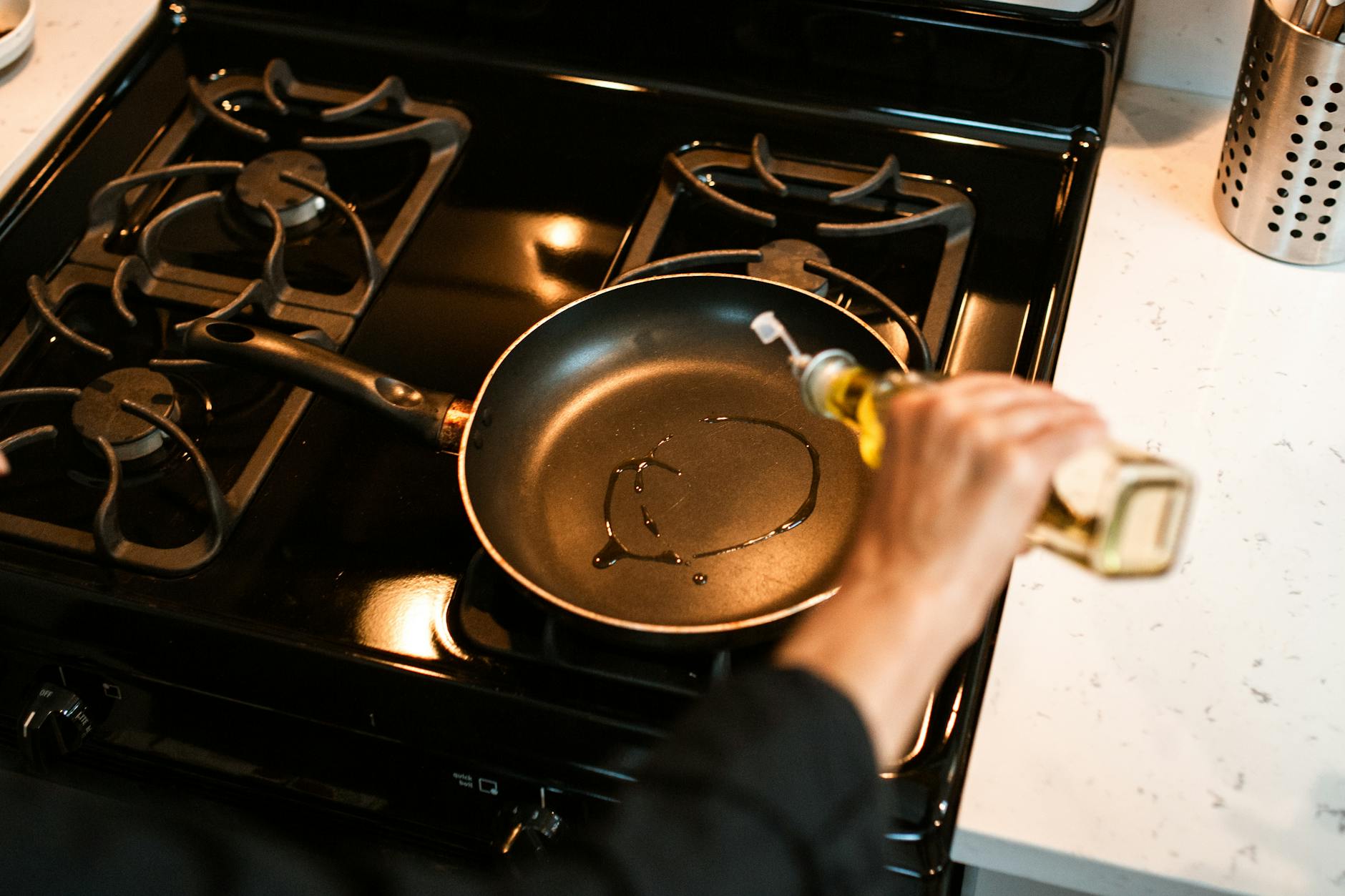
Every time oil is heated past its smoke point, it starts to break apart. Three things happen at once. It oxidises, reacting with air to form peroxides and aldehydes. It hydrolyses, splitting into free fatty acids when food moisture hits it. And it polymerises, with fat molecules clumping into larger gummy compounds — that sticky brown varnish on an old frying pan is exactly this.
The collective name for the junk left behind is Total Polar Compounds, or TPC. Fresh oil has very little. Each frying session pushes the number up, and it climbs fastest when oil is overheated, used for long stretches, or reheated again and again with bits of batter still floating in it.
The trouble is that some of these breakdown products are linked to real harm. Repeatedly heated oil is associated with higher trans fat content, oxidative stress, inflammation and, in animal studies, raised blood pressure and markers tied to heart disease. You won't taste most of this. The oil can look passable and still be chemically tired.
The 25% rule you've probably never heard of
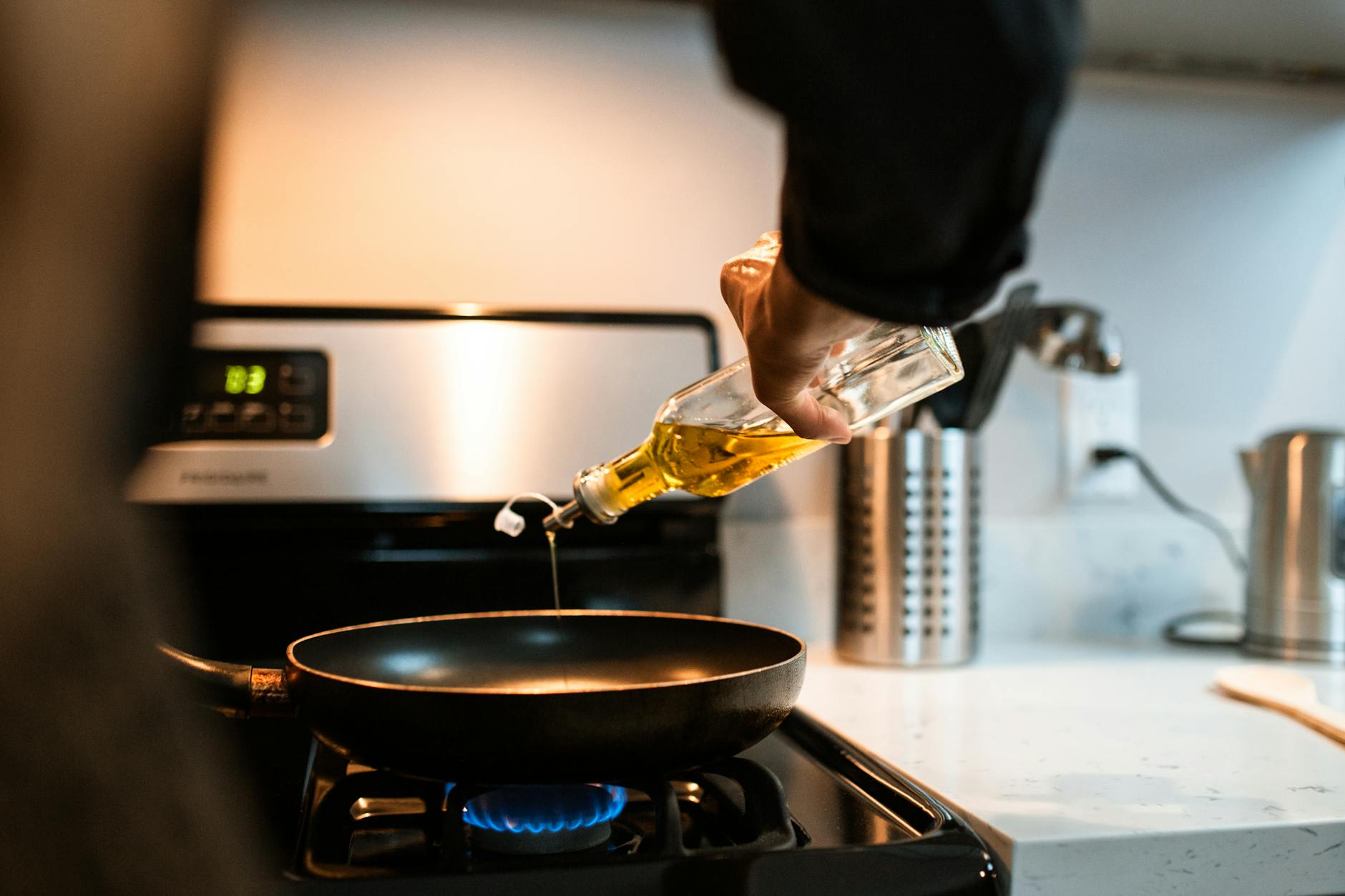
Here's the number worth remembering. FSSAI has set a regulatory ceiling: cooking oil with Total Polar Compounds above 25% is unfit for use and must be discarded. Commercial kitchens and large food businesses are expected to monitor this, and there are cheap dip-stick testers and digital TPC meters that fryers in restaurants use to check it on the spot.
At home you obviously aren't running a polar-compound test on your Sunday samosa oil. But the same chemistry is ticking away in your kadhai. The 25% line is useful as a mental anchor: it's the point where regulators decided oil has degraded too far to be safe, and your repeatedly reused tin is travelling steadily towards it.
The variables that decide how fast you get there:
- How hot you went. Deep-frying at a rolling, smoking heat degrades oil far quicker than a gentle shallow fry.
- What you fried. Battered, wet, starchy or salty foods speed up breakdown. Crumbs left behind keep charring on every reheat.
- The oil type. Oils high in polyunsaturated fats break down faster than more stable ones.
- How you stored it. Light, air and warmth keep the oxidation going even after the stove is off.
Trust your senses — they're surprisingly good
You don't need a lab. Oil that has crossed the line gives itself away, and learning these signs is the single most useful habit here.
- Colour. Good reusable oil stays golden to light amber. Once it turns dark brown or murky, it's done.
- Foam. Persistent frothing or a layer of fine bubbles that won't settle means the oil has degraded.
- Smell. A sharp, rancid, paint-like or just plain off odour is a hard stop. Fresh oil smells neutral.
- Texture. Thick, sticky, syrupy oil that coats the spoon has polymerised. Throw it.
- Smoke point dropping. If oil that used to fry calmly now starts smoking almost immediately, it has broken down and its smoke point has fallen.
That last point matters more than people realise. Every reuse lowers the smoke point, which means the oil starts burning at a lower temperature than before, which means it generates more harmful compounds faster — a downward spiral that accelerates with each round.
How to actually reuse oil without wrecking it
If you're going to reuse — and most of us will — do it properly so those two or three rounds stay genuinely safe.
- Don't overheat in the first place. Keep frying temperatures moderate. Smoking oil is already cooking itself.
- Strain while warm. Once the oil cools a little, pass it through a fine sieve or muslin to remove every crumb and batter fleck. Those bits burn and contaminate the next fry.
- Cool fully, then store airtight. Use a clean, dry, opaque or steel container with a tight lid. Keep it in a cool, dark cupboard, not next to the stove and not in sunlight.
- Keep frying oil and tadka oil separate. Oil used for deep-frying fish or onion bhajia carries flavour and residue you don't want in your morning poha.
- Top up, don't endlessly recycle. Mixing a little used oil into fresh oil is far better than running the same batch into the ground.
- Match the oil to the job. Save your more delicate, low-smoke-point oils for dressing and light cooking; use sturdier oils for the high-heat frying you intend to reuse.
A simple home rule: if you can't remember how many times you've used a tin of oil, that's your answer. Bin it.
What to do with the oil you throw out
Don't pour used oil down the kitchen sink. It congeals, clogs pipes, and on a city scale chokes drains and sewage systems. The cleaner route is to let it solidify or soak it into newspaper or an absorbent before binning, so it goes out as solid waste rather than liquid.
There's also a bigger system at work. FSSAI runs an initiative called RUCO — Repurpose Used Cooking Oil — which encourages collection of used cooking oil from restaurants and food businesses and its conversion into biodiesel. The aim is partly environmental and partly to stop the genuinely dangerous practice of degraded oil being filtered, recoloured and sold back into the street-food chain. As a home cook you're unlikely to hand over a litre a week, but it's worth knowing that the oil you correctly discard has a legitimate second life that doesn't involve your arteries.
The bottom line for your kitchen
Reusing cooking oil isn't reckless. Frugality in an Indian kitchen is sensible, and oil isn't cheap. The mistake is treating the same tin as infinitely renewable. Two to three careful rounds, strained and stored well, with your eyes and nose making the final call — that's the safe zone.
The real villain is the dark, foaming, much-reheated oil that lives on the back of the stove for weeks and gets topped up but never replaced. That oil has quietly crossed the line the regulators warn about, and no amount of saving money justifies what it does over years of daily meals. When in doubt, the cheapest insurance in your kitchen is a fresh pour.