Photo: Nikolett Emmert / Pexels
20 Everyday Science Facts That Sound Fake but Are True
Some facts feel like they were invented to win a bet at a chai stall — and yet they are textbook-true. The natural world is stranger than fiction, and a good list of science facts that sound fake but are true is the kind of thing you read once and quote forever. We've gathered 20 of the most jaw-dropping ones, checked them against the actual science, and explained why each is real — not just that it is.
No myths, no "forwards" wisdom. Every entry below is genuinely accepted by scientists. Read on, then go ruin a few conversations.

Facts about Earth and the sky that sound fake but are true
Start by looking up — and down. Our own planet hides some of the most counter-intuitive truths going.
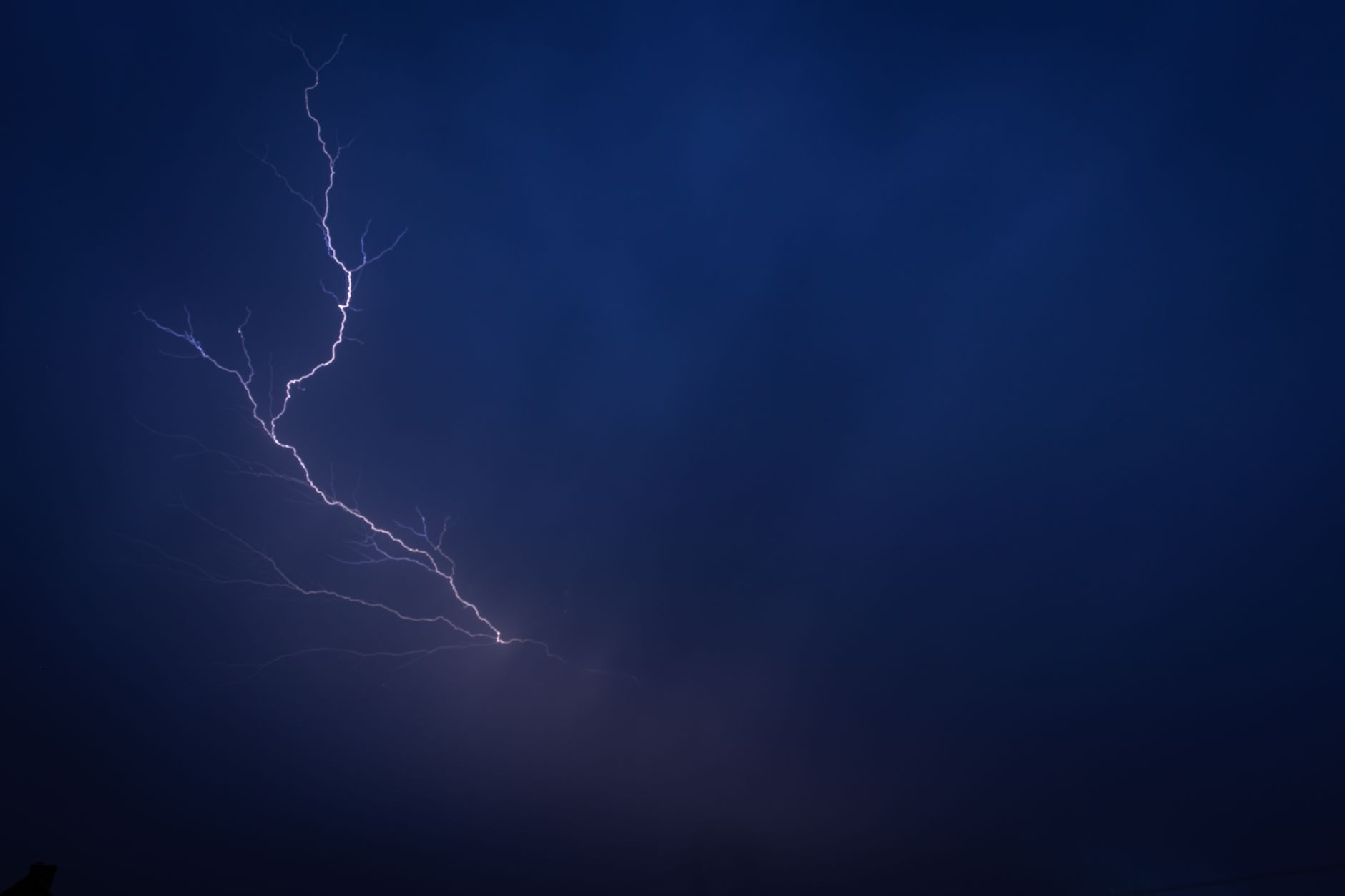
- Lightning is roughly five times hotter than the Sun's surface. A bolt can heat the surrounding air to about 30,000 Kelvin, while the Sun's visible surface is a comparatively cool 5,500 Kelvin. The Sun's core is far hotter, but its glowing face loses the contest.
- The Eiffel Tower grows in summer. Iron expands when heated, so on a hot day the tower can stand about 15 cm taller than on a cold one. Every metal bridge and railway track in India does the same — which is exactly why tracks have small expansion gaps.
- There is enough gold in the oceans to give everyone a share. Seawater holds dissolved gold, but it's so diluted — a few parts per trillion — that nobody has found a profitable way to harvest it.
- Hot water can sometimes freeze faster than cold water. Known as the Mpemba effect, it has been observed repeatedly, though scientists still argue about exactly why it happens.
These aren't loopholes or trick statements. They're ordinary physics behaving in ways our intuition simply isn't wired to expect.
Space facts that break your brain
Leave Earth and the weirdness scales up fast. Distances, densities and timescales out there make everyday logic useless.
- Saturn would float in water. Its average density is about 0.69 g/cm³, lower than water's 1 g/cm³, because the planet is mostly hydrogen and helium. Find a bathtub bigger than a planet and Saturn would bob like a beach ball.
- A day on Venus is longer than its year. Venus takes about 243 Earth days to spin once but only around 225 Earth days to orbit the Sun. So one Venusian day outlasts one Venusian year — and, oddly, Venus spins backwards compared with most planets.
- A spoonful of a neutron star would weigh billions of tonnes. Neutron stars are so dense that a teaspoon of their material would outweigh a mountain range here on Earth.
- In space, two clean pieces of the same metal can weld together on contact. It's called cold welding. On Earth, a thin layer of oxidised gunk keeps metals apart; in a vacuum, that layer never forms, so the atoms simply join as if they were one piece.
The lesson from space is humbling: "normal" is just whatever our particular corner of the universe happens to allow.
Body and biology facts you won't believe
Now look inward. Your own body is running quietly bizarre processes every second you ignore it.
- Your stomach gets a fresh lining every few days. Stomach acid is corrosive enough to harm tissue, so the lining constantly regenerates to avoid digesting itself.
- You are, very faintly, glowing. The human body emits a tiny amount of visible light through metabolic reactions — far too weak for our eyes, but real and measurable with sensitive instruments.
- Stretched out, the blood vessels in one adult body would wrap around the Earth several times. Capillaries are microscopically thin but staggeringly numerous, adding up to tens of thousands of kilometres.
- Your bones are, gram for gram, remarkably strong. Healthy bone can withstand large loads before breaking — one reason a relatively light skeleton can carry you, plus a heavy bag, up a flight of stairs.
We walk around assuming the body is simple plumbing. In reality it is a self-repairing, faintly luminous chemistry lab.
Animal facts that sound made up
The animal kingdom didn't read the rulebook either. Some creatures run on biology that looks borrowed from science fiction.
- Octopuses have three hearts and blue blood. Two hearts pump blood through the gills and one sends it round the body. The blood is blue because it uses a copper-based protein called haemocyanin instead of our iron-based haemoglobin — and copper turns out to be better at moving oxygen in cold, low-oxygen water.
- Sharks are older than trees — and older than Saturn's rings. Sharks have prowled the oceans for hundreds of millions of years, predating the first forests.
- A cashew is related to poison ivy. Cashews grow inside a shell containing irritant chemicals from the same family, which is why raw cashews are roasted or steamed before they reach your kitchen.
- Wombats produce cube-shaped droppings. Their intestines shape the waste into neat cubes that don't roll away — useful for marking territory.
Evolution, it turns out, is far more creative — and far weirder — than any design committee would dare to be.
Everyday science facts that hide in your kitchen
You don't need a telescope or a lab. Some of the best mind-benders are sitting in your pantry right now.
- Honey never spoils. Archaeologists have found pots of honey in ancient Egyptian tombs over 3,000 years old and still edible. Its low moisture and natural acidity make it nearly impossible for bacteria to grow.
- Bananas are slightly radioactive. They're rich in potassium, and a fraction of that is potassium-40, a naturally radioactive isotope. The dose is so tiny and predictable that scientists use the "banana equivalent dose" to explain radiation in everyday terms — eating one is completely safe.
- Glass is not a slow-flowing liquid. The old story that medieval windows are thicker at the bottom because glass "sags" over centuries is a myth; glass is an amorphous solid, and those panes were simply made unevenly.
- Water can boil and freeze at the same instant. At a precise mix of low temperature and low pressure called the triple point, water exists as solid, liquid and gas together — a sight that genuinely looks fake when filmed.
Why these facts matter more than party trivia
It's tempting to file all this under "timepass." But there's a deeper payoff. Each of these truths is a small reminder that intuition is a poor guide to reality — the universe doesn't owe us facts that feel comfortable.
That habit of asking "wait, is that actually true?" is the engine of science itself. The same scepticism that makes you double-check whether Saturn floats is what protects you from WhatsApp health myths, miracle-cure forwards and confident-sounding nonsense.
So the next time something sounds too strange to be real, do what scientists do: check it. Sometimes the forward is fake. And sometimes — as with glowing bodies, blue octopus blood and a planet that would float in your bathtub — the truth is the most unbelievable part of all.