Photo: Engineer John / Pexels
Umpire's Call in DRS: Why One Ball Gives Two Answers
Umpire's Call: the rule that splits cricket fans in two
Few phrases trigger a stadium groan quite like Umpire's Call. The replay shows the ball clipping leg stump, the bowler is already celebrating, and then the big screen flashes the on-field decision — unchanged. The batter survives. The bowler fumes. And somewhere on social media, a thousand arguments begin.
The confusion is real, but the logic is not random. Umpire's Call is the single most misunderstood part of the Decision Review System (DRS), and once you understand what it is actually protecting against, the rage usually softens into grudging acceptance. This is how it works, why it exists, and why the very same ball can be out for one batter and not-out for another.
What Umpire's Call actually means
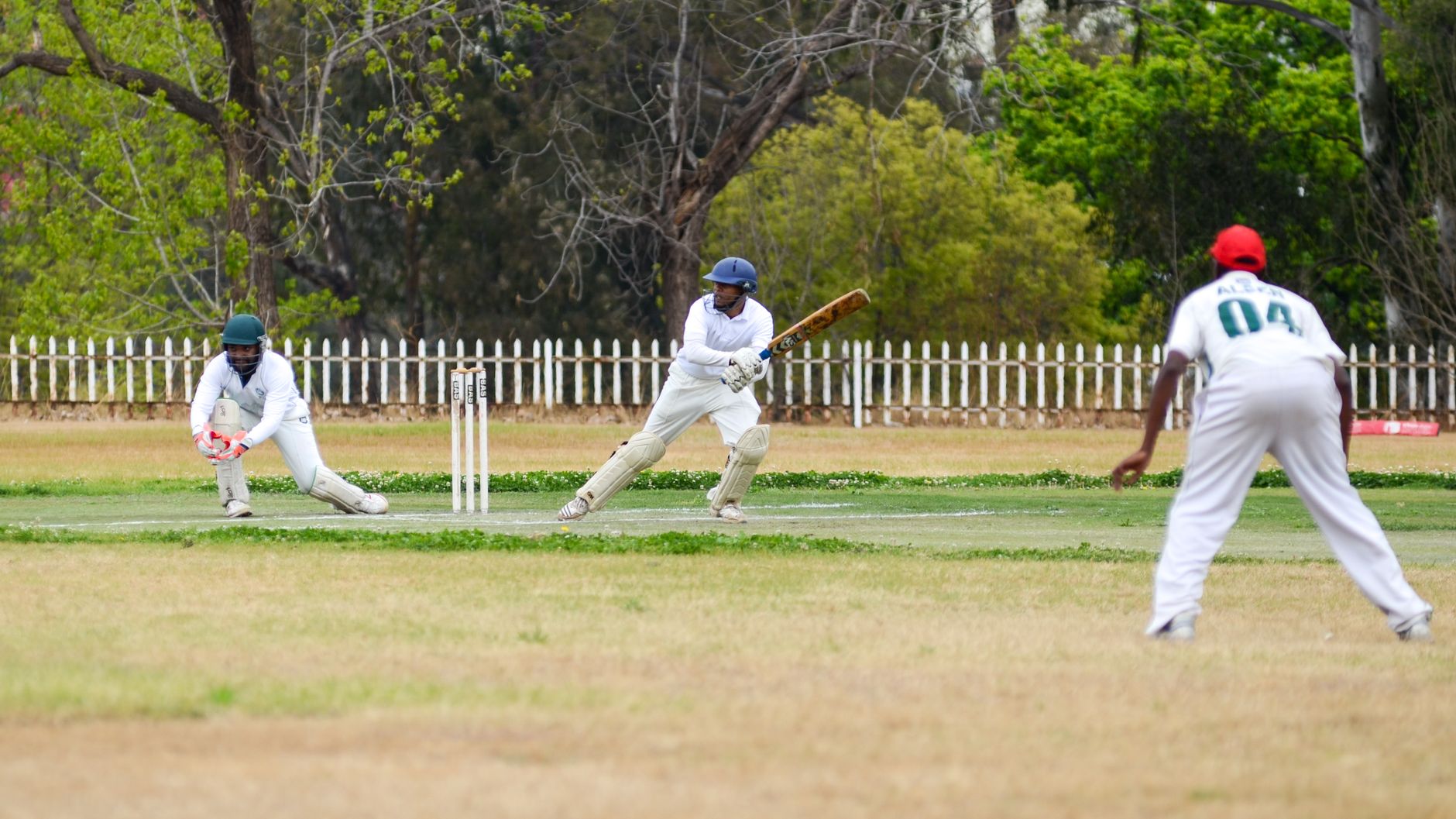
When a team reviews an LBW decision, the third umpire runs through a fixed checklist using ball-tracking and replays. Three of those checks — where the ball pitched, where it struck the pad, and whether it would go on to hit the stumps — each have a small zone of uncertainty built around them. Umpire's Call is what happens when the result falls inside that zone of uncertainty.
In plain terms: if ball-tracking shows the answer is too close to call with confidence, the technology refuses to overrule the human. The decision reverts to whatever the on-field umpire originally signalled. Gave it out? It stays out. Gave it not-out? It stays not-out.
That is the crucial twist most fans miss. Umpire's Call is not a verdict of its own. It is the system saying I'm not sure enough to change your mind, and handing the call back to the person standing 22 yards away.

Why the same ball gives two different answers
Here is the scenario that breaks people's brains. Two balls follow an identical path and both are shown clipping the top of leg stump. One batter is given out, the other not-out. Both review. Both results read "Umpire's Call." The first stays out, the second stays not-out.
Nothing is broken. Because the trajectory was marginal in both cases, the system deferred to the original decision — and the two umpires had made opposite original decisions. The ball didn't decide; the umpire did. The technology merely declined to interfere.
This is by design. The ICC has repeatedly defended the principle that the on-field umpire should remain the primary decision-maker, with DRS there only to fix clear mistakes, not to relitigate every borderline call. Umpire's Call is the mechanism that enforces exactly that philosophy.
The 50% rule that decides everything
For the "is it hitting the stumps" check, the threshold is specific and worth memorising. To overturn a not-out into an out, ball-tracking must show more than 50% of the ball striking the defined wicket zone — broadly the area covered by the stumps. If only half the ball or less is clipping that zone, the result is Umpire's Call and the original not-out survives.
Flip it around and the same threshold protects a batter given out. If the predicted path shows the ball just grazing the zone, an out decision will also stand on Umpire's Call — but a clearly missing ball will be overturned cleanly.
So two margins matter:
- The wicket zone — the target area around the stumps. The ball must impact it by more than half to flip a not-out.
- Impact and pitching margins — small tolerance bands for where the ball landed and struck the pad, again to absorb tracking uncertainty.
The upshot is that a ball flush into middle stump is always out on review, and a ball missing by a clear margin is always not-out. The drama only ever lives at the edges.
Why the margin exists at all: Hawk-Eye is a prediction
The single fact that resolves most arguments is this: ball-tracking does not show what happened — it predicts what would have happened. Once the ball hits the pad, its real journey ends. Systems like Hawk-Eye use the cameras' footage of the ball before impact to calculate where it would have travelled next.
Any prediction carries a margin of error. The tracking is extremely good — accurate to within a few millimetres in ideal conditions — but it is not infinite precision, especially with little distance between pitching and impact, or in poor light. Umpire's Call is, in effect, an honesty mechanism: it admits that a few-millimetre forecast clipping a stump is not solid enough to overturn a trained official's naked-eye judgement.
Remove Umpire's Call entirely and you would be treating a predicted sliver of a ball on leg stump as gospel — granting the technology a certainty it does not actually possess.
The India connection and the long road to acceptance
No cricket board fought DRS harder than the BCCI. After early trials around 2008, India spent years sceptical of ball-tracking, often refusing to use the full system in bilateral series and questioning its reliability. For a long stretch, India were the lone major holdout while the rest of world cricket adopted it.
That resistance only thawed in the late 2010s, and India eventually became a regular DRS user across formats. Ironically, some of the loudest modern critics of Umpire's Call have been Indian captains — Virat Kohli among them argued that a ball shown hitting the stumps should simply be out, margins or not. The ICC heard the complaints and, after its 2021 review, chose to retain Umpire's Call while tweaking the system.
What changed in 2021, and what didn't
The key 2021 adjustment was to the wicket zone itself. The ICC raised the height of the zone to the top of the stumps, so the same Umpire's Call margin applied to both the height and the width of the stumps. Previously the upper boundary sat lower, around the base of the bails, which created an inconsistency between how the top and the sides were judged.
A few other refinements arrived alongside it:
- A batter or fielder can now ask the umpire whether a genuine attempt was made to play the ball before deciding to review an LBW.
- The third umpire checks replays of any short run and corrects it before the next ball.
- The core principle — preserve the on-field umpire, correct only clear errors — was explicitly reaffirmed.
What did not change is the part fans wanted gone: the marginal ball still belongs to the standing umpire.
How to watch a review like an expert
Next time a DRS LBW unfolds, run the same checklist the third umpire does and you'll predict the result before the screen does:
- First, recall the on-field signal. Out or not-out? That is the tiebreaker for everything marginal.
- Pitching: outside leg stump means instantly not-out, full stop.
- Impact: outside the line while playing a shot also means not-out.
- Wickets: look at how much of the ball overlaps the stumps. Smashing into them is out; a thin clip is Umpire's Call.
Once you internalise that the ball-tracking graphic is a forecast and not a photograph, Umpire's Call stops looking like a glitch and starts looking like the system's conscience. It is cricket's quiet admission that some decisions are genuinely too close for a machine to settle — so it gives them back to the human in the white coat. Frustrating? Often. But it may be the most intellectually honest rule in the sport.