Xerxes Desai: The Titan Man Whose Other Dream Was Cities
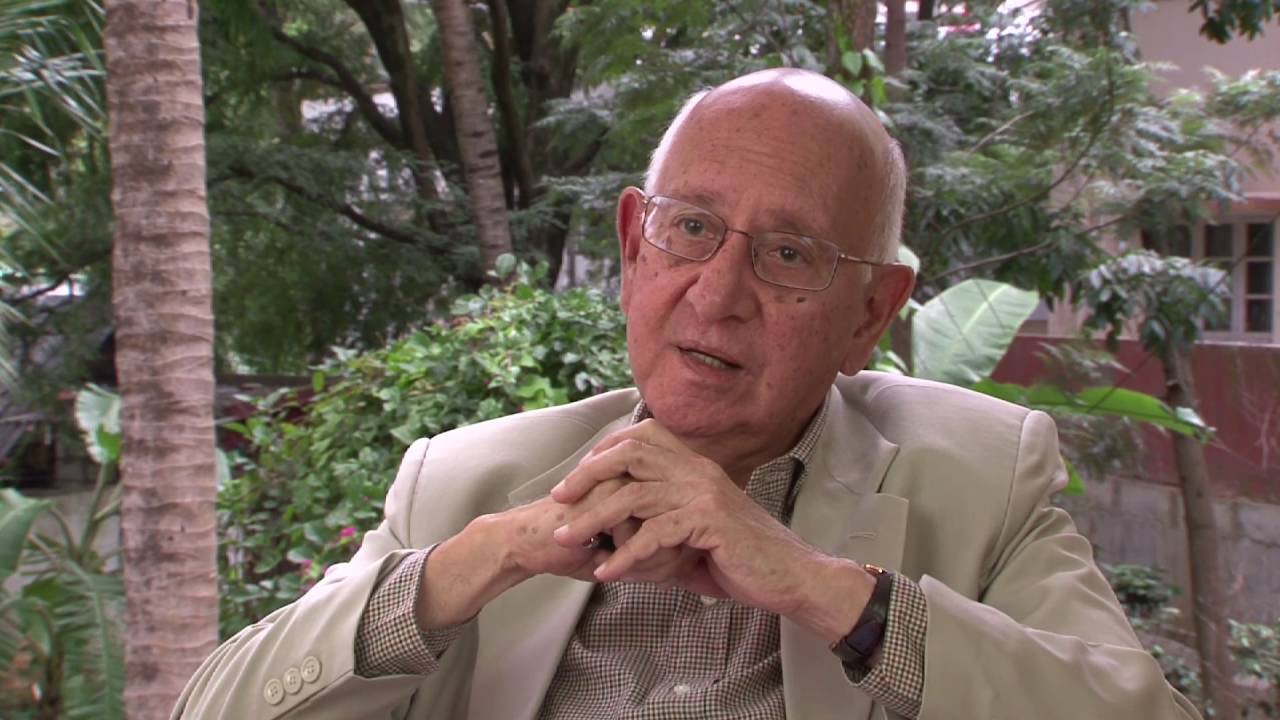
A quiet, decade-old conversation is finding a fresh audience online, and it is reintroducing many viewers to a name they thought they already knew. Xerxes Desai is, to most Indians, the man behind the watch on their wrist and the gold in their locker — the founding force of Titan and Tanishq. But the clip now circulating, an interview filmed for the Indian Institute for Human Settlements (IIHS), frames him by a different title entirely: Vice-Chairperson. It is a small detail that opens up a much larger, less-told story.
Why an old clip is finding new viewers
The footage is archival. Desai died in June 2016, and the conversation was recorded in his capacity at IIHS, where he sat as a founding board member rather than as a corporate chieftain. What makes it resonate now is the gap it exposes between the public memory of the man and the fuller reality.
Most people filed him under “watches.” The video shows someone who spent a serious part of his life thinking about Indian cities — how they grow, who plans them, and why they so often fail their residents. For viewers raised on Titan jingles, watching that same person speak with conviction about urbanisation is a genuine surprise, and surprise is what travels online.
There is also a generational pull. A wave of younger founders and design students treat Desai as a case study, and a calm, articulate elder statesman talking about building things that last lands very differently from the usual hustle content.
The man who made India tell time differently
To understand why the clip carries weight, you have to remember what Desai actually pulled off. An Elphinstone College and Oxford graduate who joined the Tata Administrative Service in 1961, he spent years inside the group before staking everything on an unfashionable idea: that India could make world-class watches.
The company that became Titan launched in 1986 as a joint venture backed by the Tatas and a Tamil Nadu state development body, with manufacturing rooted near Hosur. At the time the market was dominated by staid, government-era timepieces. Desai's bet was not really about engineering — it was about taste.
A few things set his approach apart:
- He treated a watch as a fashion accessory and a gift, not a utilitarian device, decades before that framing was obvious in India.
- He pushed design and branding to the centre, famously adopting a classical Mozart symphony as the brand's signature sound.
- He chased technical statements for their own sake, challenging his engineers to build extraordinarily slim movements to prove the company belonged in the global top tier.
The result reshaped an entire category. Titan turned a domestic manufacturer into an aspirational name, and it did so by insisting that Indian consumers deserved good design rather than tolerating whatever was available.
How Tanishq rebuilt trust in gold
If Titan was a triumph, Tanishq was arguably the harder, braver move. Entering the jewellery business in the 1990s meant taking on a vast, unorganised market built on personal relationships and, too often, on quietly impure gold.
Desai's instinct was again about trust and identity. The widely repeated origin of the brand name credits him personally: starting from a word linked to an old gold coin, he reworked the spelling and stitched in the Tata identity to arrive at Tanishq. It was a small act of branding that signalled a bigger promise.
That promise became concrete when Tanishq leaned into purity as its core pitch. By inviting customers to actually test the gold they already owned — a pointed demonstration in a market where under-caratage was an open secret — the brand turned honesty into a competitive weapon. It was uncomfortable for the trade and reassuring for buyers, and it helped build what grew into one of India's largest jewellery businesses.
The urban dream most people missed
Here is the thread the viral clip pulls on. Long before and alongside the brand-building, Desai cared deeply about how Indians live in their cities — and that is the side IIHS preserved on camera.
His civic engagement was not a late-life hobby. By documented accounts he was involved with the ambitious New Bombay planning effort in the early 1970s, working alongside leading architects of the day. In the 1980s he served on the National Commission on Urbanisation set up under Prime Minister Rajiv Gandhi, a landmark attempt to think seriously about India's urban future.
That lineage is what makes his IIHS role coherent rather than ornamental. The institute exists to advance knowledge and practice around human settlements — the unglamorous machinery of land, housing, transport, water and governance that decides whether a city is livable. Desai bringing his obsession with quality and detail to that arena is, in retrospect, perfectly on-brand.
What the conversation actually says about leadership
Strip away the products and a single sentiment runs through both halves of his life: the conviction that India should not settle. A country can make the world's best watches; a city can be planned for its people; a customer deserves to know exactly what they are buying.
That is the unifying idea viewers are responding to. The watch tycoon and the urbanist are not two different men — they are the same person applying the same standard to wildly different problems. In an era of fast scaling and faster exits, the patience of someone who spent decades building institutions reads almost like a quiet rebuke.
It also reframes how we measure legacy. Titan and Tanishq are easy to count in revenue and stores. His urban work is harder to tally, because it lives in commissions, committees, ideas and the institutions he helped seed. The clip's value is that it refuses to let the second kind of contribution disappear behind the first.
Why it matters now, and what comes next
The timing helps. India's cities are straining under heat, traffic, flooding and a housing crunch, and the questions Desai engaged with — how to plan, who decides, what quality of life is acceptable — are sharply current. A founder-era voice making the case for taking settlements seriously feels less like nostalgia and more like a prompt.
Don't expect a single clip to change policy. What it is doing is smaller and real: nudging a new audience toward the IIHS archive, toward the history of Indian urbanisation, and toward a fuller picture of a man usually reduced to a logo. Expect more of his interviews and writing to circulate, more design and business students to cite him, and more of the “wait, the Titan guy did that?” reaction that powers this kind of resurfacing.
For a figure who built brands around lasting value, it is a fitting second act — proof that the most interesting thing about Xerxes Desai may be the part of his life that never came with an advertising jingle.