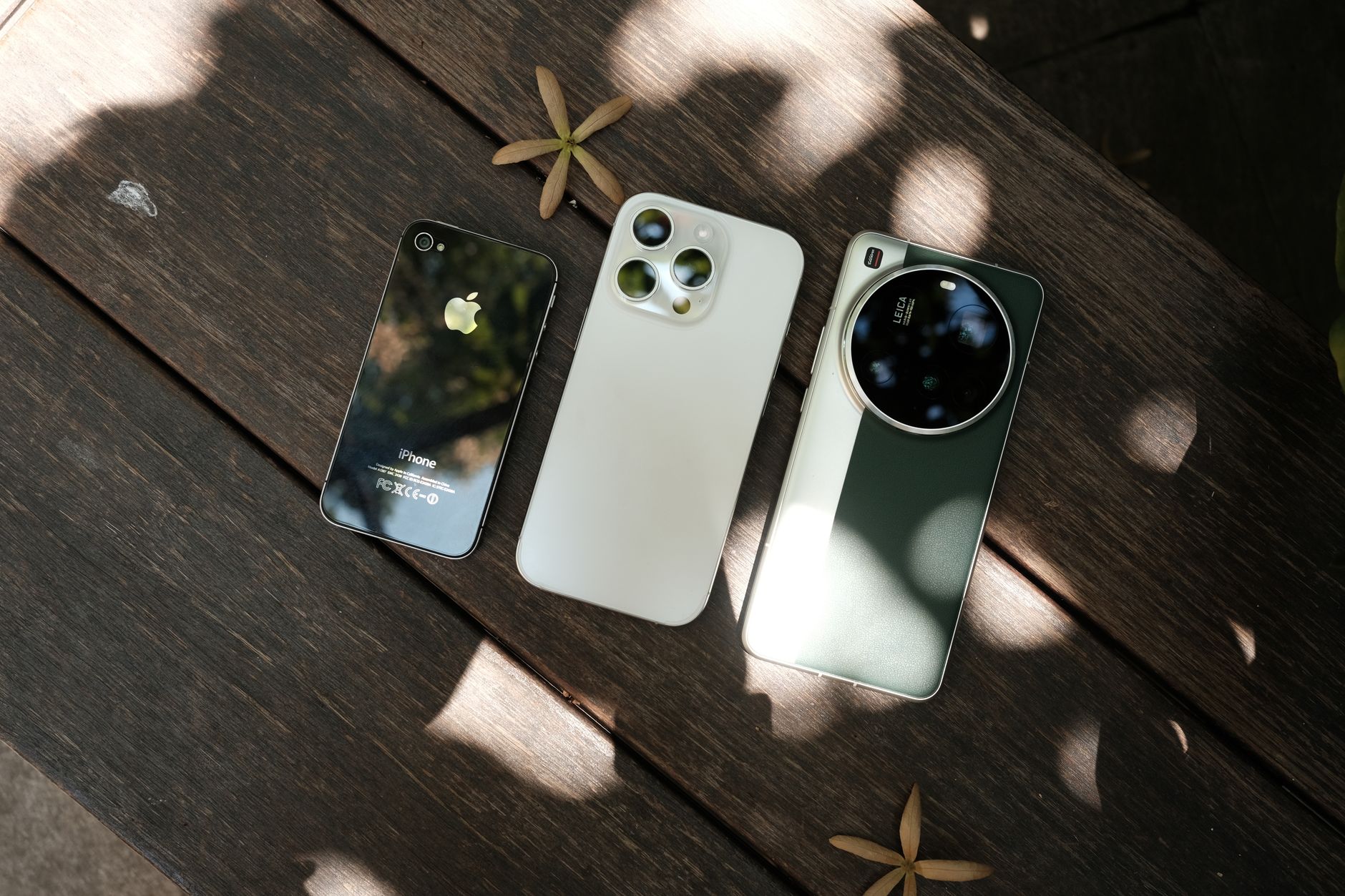
Photo: Phong Thanh / Pexels
The 2026 Smartphone War: Who's Actually Winning
If you ask who is winning the smartphone war in 2026, you will get a different answer depending on who is counting and where they are counting it. Strip away the marketing and a strange picture appears: the two giants everyone argues about are locked in a statistical tie at the top of the world, yet in India — the market both crave most — neither one is actually number one.
This is a year where the contest split into two separate fights. One is the global shipment race between Apple and Samsung. The other is the messy, price-sensitive scrap below them, where Chinese brands and a resurgent value crowd are quietly eating the middle. Here is how it really stacks up, with the specs and prices that matter.

The global picture: a photo finish
The headline number for early 2026 is how close it is. IDC placed Samsung just ahead in the January-to-March quarter with roughly 21.2% of global shipments, against Apple on about 21.0%. Counterpoint Research ran the same period and reversed it, handing Apple the lead at 21% with Samsung a point behind.
That disagreement is the story. When two of the biggest tracking firms can't agree on the order, you are not looking at a winner and a loser — you are looking at two companies separated by a rounding error. Samsung tends to lead on sheer units because it sells everything from ₹8,000 phones to ₹1.6 lakh foldables. Apple wins comfortably on the metric that funds everything else: revenue and profit, where it still takes the lion's share of the industry's money from a fraction of its volume.
Below them, the gap is brutal. Xiaomi held third place but saw shipments slide by close to 19%, hurt by leaning too heavily on sub-$200 phones that buyers are increasingly skipping. Only Samsung and Apple, among the global top five, managed year-on-year growth at all.
India tells a completely different story
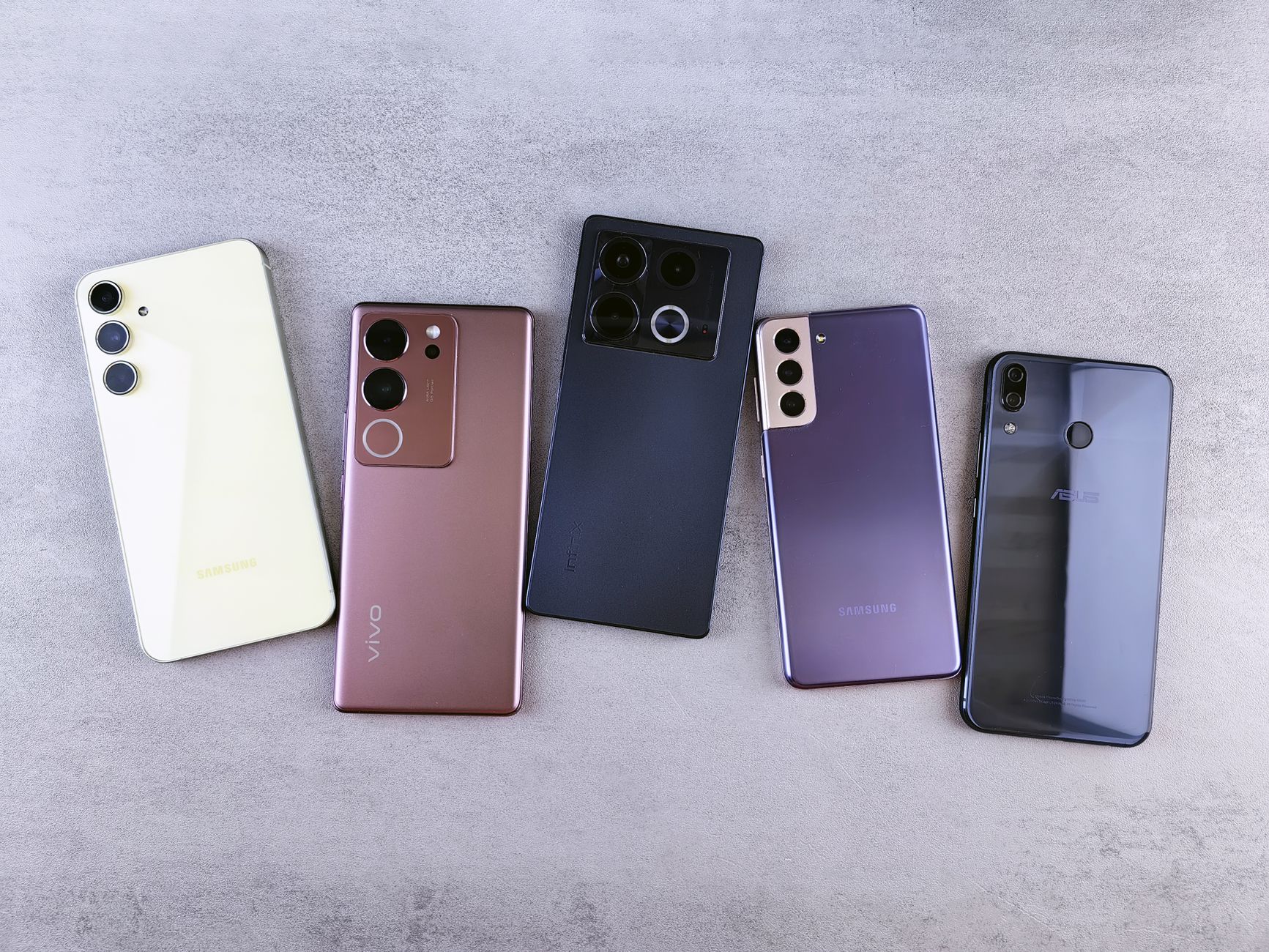
Now zoom into India, and the league table flips. The brand that has owned this market is not on most Western radars: vivo sat at the top with around 19.6% share, its seventh straight quarter in first place, carried by aggressive offline retail and the V-series. Samsung held second at roughly 16-17%, and OPPO was the fastest-growing big name, up about 21% to take a 15% slice.
Apple's India position is more nuanced than the hype suggests. By volume it sat around 9.4%, well outside the top three — but Q1 2026 marked its first-ever first-quarter appearance in the country's top five, a genuine milestone for a brand that was a rounding error here a decade ago. Made-in-India iPhones and easy EMIs have turned the iPhone from an aspiration into a realistic purchase for far more people.
One sour note hung over the whole market: India's smartphone shipments actually fell about 4-5% year-on-year. A global memory shortage, driven by AI servers gobbling up RAM, pushed component costs up and dragged budget phone prices with them. The sub-₹10,000 segment was hit hardest, and that is where India's volume has always lived.
The flagships, head to head
Most buyers don't care about market share charts — they care which phone to actually buy. So here is where the 2026 premium money goes, comparing the two marquee flagships against the value disruptor that keeps spoiling their party.
| Spec | iPhone 17 Pro Max | Galaxy S26 Ultra | OnePlus 15 |
|---|---|---|---|
| Starting price (India) | ₹1,49,900 (256GB) | ₹1,39,999 (256GB) | ₹72,999 (12/256GB) |
| Chip | Apple A19 Pro | Snapdragon (flagship) | Snapdragon 8 Elite Gen 5 |
| Display | 6.9" OLED, up to 120Hz, 3,000+ nits | 6.9" AMOLED 2X, QHD+, 120Hz | ~6.8" LTPO, up to 165Hz |
| Main camera | 48MP triple system | 200MP quad system | 50MP triple system |
| Zoom | 4x optical | 5x periscope | Up to 3.5x |
| Battery | ~4,832mAh | 5,000mAh | 7,300mAh |
| Wired charging | ~40W | 60W | 120W |
| Stylus | No | Yes (S Pen) | No |
A few things jump out. The Galaxy S26 Ultra undercuts the iPhone 17 Pro Max by about ₹10,000 at the entry storage tier while beating it on paper almost everywhere — bigger battery, faster charging, longer zoom, a 200MP sensor and a built-in stylus. On raw benchmarks the S26 Ultra also posts higher multi-core scores.
The OnePlus 15 is the uncomfortable third guest. For roughly half the price of an Ultra, it brings the same top-tier Snapdragon silicon, a colossal 7,300mAh battery and 120W charging that refills in minutes. It won't match Apple's video pipeline or Samsung's zoom, but for most people most of the time, it does 90% of the job for half the outlay.
So who actually wins?
It depends entirely on what "winning" means to you.
- If winning means money, Apple wins and it isn't close. It earns the bulk of the industry's profit from around a fifth of its phones, and its India momentum is the best it has ever been.
- If winning means volume, it is a coin toss between Samsung and Apple globally, and vivo outright in India.
- If winning means the best hardware in your hand for the price, Samsung's Ultra leads the ultra-premium tier and OnePlus owns the value-flagship crown.
There is no single champion this year, and pretending otherwise would be dishonest. The market has fragmented by use case. Apple buyers are paying for an ecosystem, resale value and a software support window that still outlasts everyone. Samsung buyers want a do-everything toolbox with a stylus and the longest zoom. OnePlus and the Chinese brands win the spec-per-rupee argument outright.
What the rest are doing right
The most interesting movement in 2026 isn't at the very top — it's the brands learning to climb out of the budget trap that is hurting Xiaomi. OPPO, Motorola and Nothing all grew by pushing buyers gently upmarket rather than chasing the collapsing sub-₹10,000 floor. As component costs rise, the cheapest phones make almost no money and increasingly fail to sell, so the smart play is to add a little polish and charge a little more.
That shift is good news for buyers in the ₹20,000-40,000 band, which is now the most competitive it has ever been. The phones that lose the headline flagship war are often the ones quietly winning the war for what people actually buy.
What to watch next
Two forces will shape the back half of 2026. The first is memory pricing — if the AI-driven RAM shortage eases, budget phones get breathing room and India's shipment slump could reverse. If it doesn't, expect prices to keep creeping up across every tier.
The second is the late-year flagship wave. OnePlus, Xiaomi and others typically refresh in November with the next Snapdragon generation, and a fresh foldable cycle from Samsung will test whether folding phones can finally move past being a niche. For now, the verdict is unromantic but true: there is no king of the 2026 smartphone war, only winners of different battles. Buy for the fight you care about.