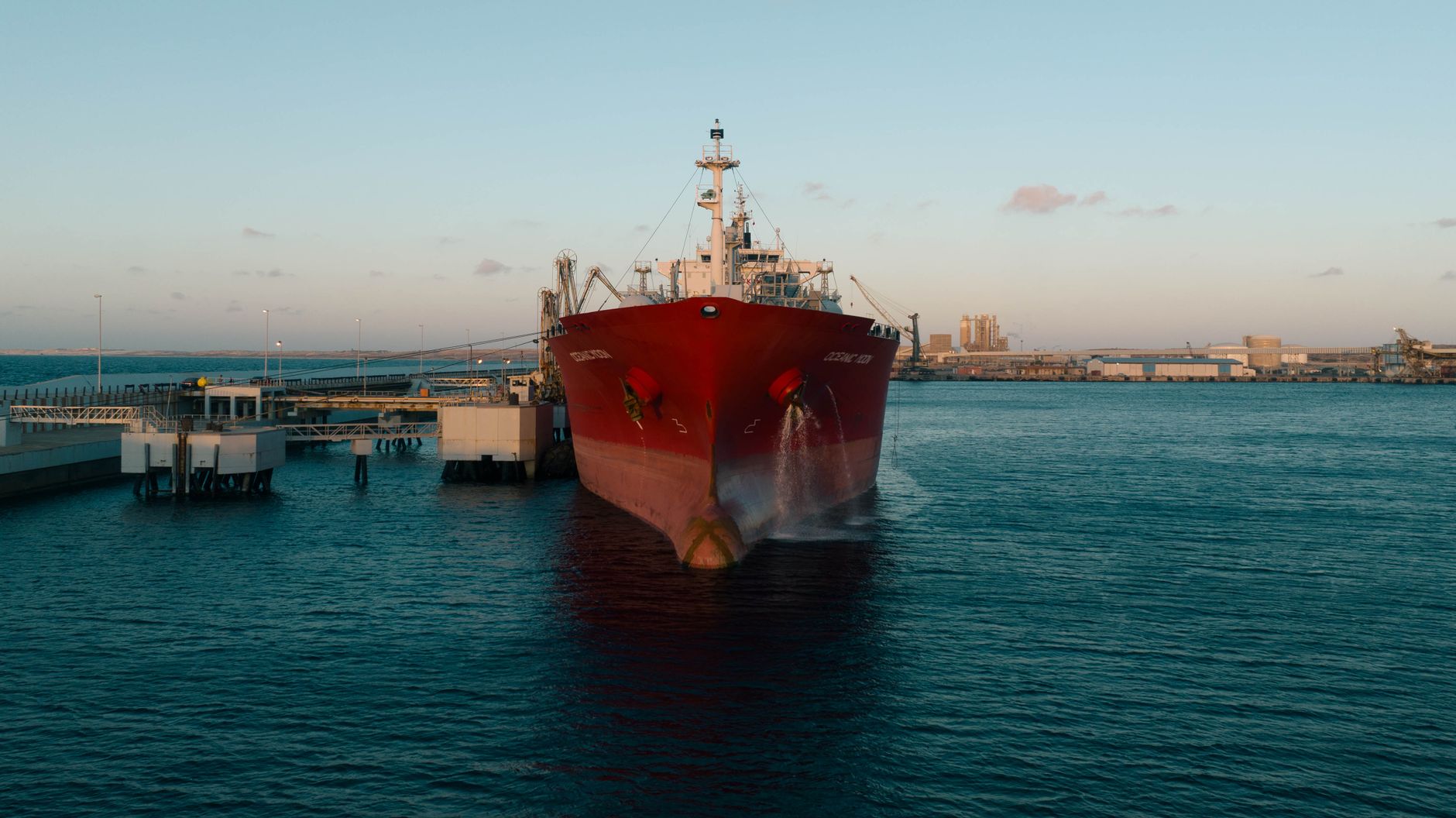
Photo: abdo alshreef / Pexels
India's Oman Bet Looks Timely as the Hormuz Crisis Deepens
When India and Oman quietly switched on their free-trade pact on 1 June 2026, it read like routine diplomacy. Days later it looked like foresight. With the Strait of Hormuz effectively shut and oil tankers stranded, India's long, patient courtship of a small Arabian Sea sultanate has turned into one of the most timely energy bets New Delhi has made in years.
This is the story of how geography, a trade agreement and a decades-old pipeline dream suddenly aligned — and why India's Oman bet looks so well-timed as the Hormuz crisis deepens.

The chokepoint that decides India's fuel bill
The Strait of Hormuz is a 21-mile-wide gap between Iran and Oman through which a fifth of the world's seaborne oil moves. For India it is not an abstraction. Roughly two-thirds of India's LNG and an estimated 85-90% of its LPG imports squeeze through this single waterway, along with a heavy share of crude.
In early March 2026, Iranian forces declared the strait "closed" and began threatening ships that tried to pass. Tanker traffic reportedly collapsed by more than 90% within days. Brent crude vaulted past $126 a barrel, and India absorbed its first cooking-gas price hike of the year.
The damage was not only at the pump. Indian state-run oil marketing companies are estimated to have run up under-recoveries of nearly Rs 62,500 crore in roughly six weeks, as the gap between what they paid for fuel and what they could charge consumers blew open. When a chokepoint this narrow closes, an economy this dependent feels it almost instantly.

Why Oman is the one Gulf neighbour outside the trap
Here is the quirk of map-making that suddenly matters enormously. Almost every major Gulf exporter — Saudi Arabia, Kuwait, Qatar, the UAE — must ship through Hormuz to reach the open ocean. Oman does not.
Muscat's long coastline runs along the Arabian Sea, on the outside of the strait. Its three deep-water ports — Duqm, Salalah and Sohar — can keep receiving and dispatching cargo even when the chokepoint is paralysed. For a country like India, sitting just across the water, that single geographic fact transforms Oman from a mid-tier trade partner into a strategic lifeline.
Analysts at the Global Trade Research Initiative (GTRI) have made exactly this point: because Oman's coast lies beyond Hormuz, it can stay a reliable energy and trade gateway for India even through regional conflict and disruption. In a Gulf where almost everyone is hostage to the same narrow passage, Oman is the rare exception — and India spent years building the relationship before it was urgently needed.
The CEPA that landed at exactly the right moment
The legal scaffolding arrived with uncanny timing. The India-Oman Comprehensive Economic Partnership Agreement (CEPA) was signed on 18 December 2025 and came into force on 1 June 2026 — the very week the strait's closure was biting hardest.
The headline numbers tell a lopsided but deliberate story:
- India liberalised tariffs on about 77.79% of tariff lines, covering roughly 94.81% of its imports from Oman by value, while protecting sensitive sectors.
- In return, Indian exporters won duty-free access across 98.08% of Oman's tariff lines, covering nearly the entire value of what India sells there.
That asymmetry is the point. India was willing to open its market wide for one prize above all: secure, predictable access to Omani energy and a friendly logistics base outside Hormuz. Trade between the two already leans heavily on hydrocarbons — India's imports from Oman recently surged by about 246% to nearly $1.5 billion, driven by crude oil and urea, with LNG and fertilisers close behind.
The CEPA does not magically replace Hormuz volumes. But it lowers friction, deepens the partnership and gives Indian firms a treaty-backed reason to route more of their Gulf business through the one neighbour the crisis cannot easily strangle.
The pipeline that may finally get built
The boldest part of India's Oman bet runs under the seabed. New Delhi is reviving a long-dormant proposal for a deep-sea gas pipeline linking Oman directly to Gujarat — sometimes called the Middle East-India Deep-Water Pipeline.
The vision is audacious: a roughly 2,000-km undersea line beneath the Arabian Sea, carrying gas straight to India's west coast while completely sidestepping the Strait of Hormuz. The price tag floated in reports is around Rs 40,000 crore, or close to $4.7-4.8 billion.
The idea has been studied on and off for years, repeatedly stalling on cost, depth and engineering risk. What is different now is motive. A pipeline that bypasses the chokepoint entirely is no longer a nice-to-have efficiency play; in a world where Iran can close the strait at will, it starts to look like national insurance. A crisis has a way of unfreezing budgets that calm years could not.
A hedge, not a force field
It would be a mistake to treat Oman as an invincible back door. In March 2026, drones struck Duqm and Salalah, reportedly damaging at least one fuel-storage tank. The message was blunt: if you build an alternative to Hormuz, someone may try to put that alternative under threat too.
There are practical limits as well. Ports outside the strait can take ships, but the pipelines and terminals feeding those ports often still draw on infrastructure tangled up in the wider Gulf. And even Indian-flagged carriers — two LPG tankers, Shivalik and Nanda Devi, transited the strait carrying a combined 92,000 tonnes in mid-March — show that India is still partly running the gauntlet, not avoiding it entirely.
So Oman is best understood as a hedge, not a force field. It widens India's options, buys breathing room, and reduces the share of national energy security riding on a single 21-mile gap. That is meaningful. It is not immunity.
Why the bet matters beyond this crisis
Strip away the headlines and a longer pattern emerges. For two decades India has been slowly diversifying its energy lifelines — Russian crude when sanctions reshaped the market, US LNG cargoes, strategic petroleum reserves, and now a deeper tilt toward the one Gulf partner that sits outside the danger zone.
The Hormuz crisis has simply compressed years of strategy into a few vivid weeks. It has shown households why a faraway sultanate appears on the evening news, and shown policymakers why the boring work of trade pacts and pipeline feasibility studies is, in fact, frontline security.
What comes next is the real test. If the strait reopens quickly, the urgency may fade and the undersea pipeline could slide back into the "someday" file. If the disruption drags on, expect India to accelerate Omani port deals, push the pipeline toward decisions, and lean harder on the CEPA framework. Either way, the lesson is already banked: in an age of weaponised chokepoints, the smartest energy move is often the unglamorous one made years before the crisis arrives. India's Oman bet was placed early. It is paying off exactly when it counts.