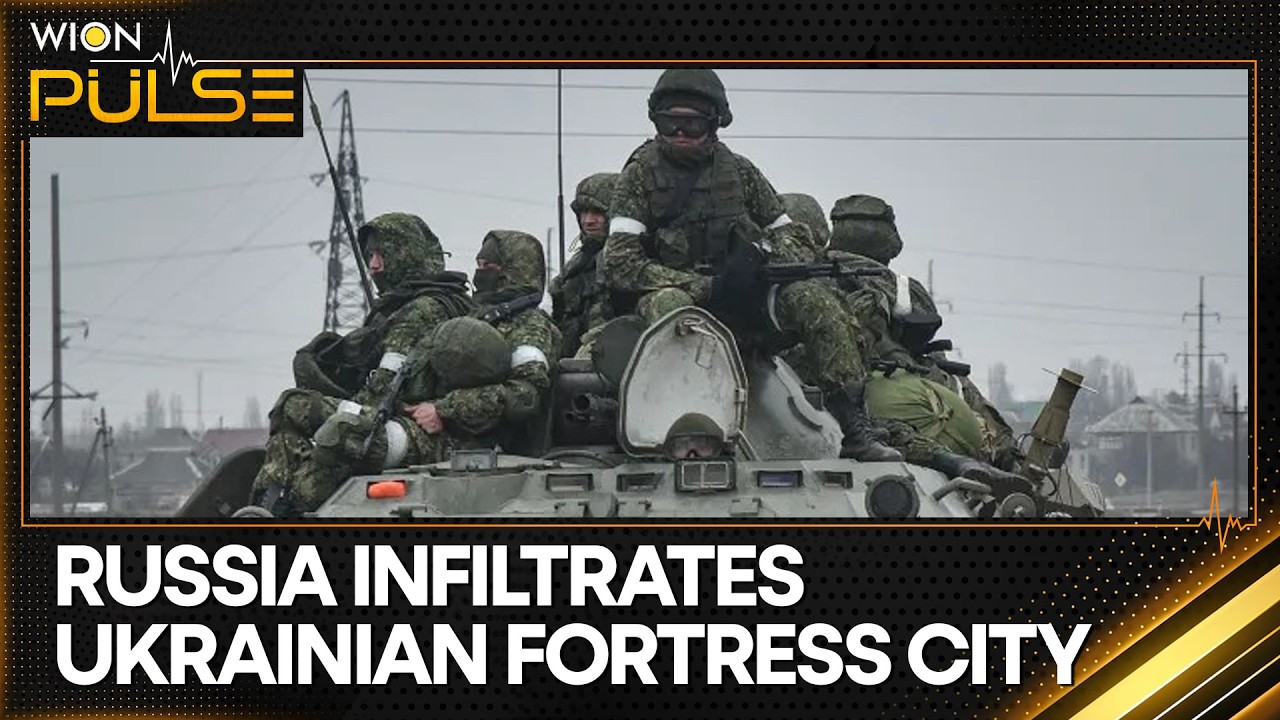
Photo: Jo Kassis / Pexels
Israel-Lebanon Renew Ceasefire, Vow Hezbollah-Free Zones
After weeks of cross-border fire, funerals and frayed nerves, Israel and Lebanon have agreed to renew their fragile ceasefire and, for the first time, to carve out pilot Hezbollah-free security zones inside southern Lebanon. The announcement, made in a joint statement after a fourth round of US-mediated talks at the State Department, is being splashed across Indian and global media as a possible turning point in a war that has dragged the entire region to the edge.
But read past the headline and the picture is more delicate. The deal is studded with conditions, Hezbollah itself is not at the table, and it sits inside a much larger and more dangerous confrontation between the United States, Israel and Iran. For Indian readers watching petrol pumps and Gulf job markets nervously, the Lebanon truce is less the main event than a fragile sideshow that could either calm the region or unravel it.

What exactly was agreed
The core of the agreement is simple to state and hard to deliver. Israel and Lebanon said they would renew the ceasefire and establish a set of "pilot" security zones in the south from which Hezbollah operatives and weapons would be excluded. The Lebanese army is meant to take full control of those areas, gradually replacing the patchwork of militia presence that has defined the border for decades.
Crucially, the renewed truce is contingent, not automatic. The joint statement made it conditional on a complete cessation of Hezbollah fire and the evacuation of all the group's fighters from areas south of the Litani River — the natural line, a few kilometres north of the border, that has long served as the unofficial frontier of any buffer zone.
The two sides also agreed to reconvene their political and security tracks the week of June 22, with the stated aim of reaching a comprehensive peace and security agreement. The United States said it would keep facilitating communication between the parties in the meantime. In other words, this is a framework and a timeline, not a finished settlement.
Why the Litani River keeps coming up
If one geographic feature dominates this story, it is the Litani. Lebanon's largest river runs roughly parallel to the Israeli border, and pushing Hezbollah's arms and personnel north of it has been the holy grail of every ceasefire attempt since the 2006 war and UN Security Council Resolution 1701.
The logic is straightforward: distance buys reaction time. If rockets, launchers and trained fighters sit well back from the frontier, a surprise barrage on northern Israeli towns becomes harder, and Israel in turn has less reason to keep troops inside Lebanese soil. The earlier 2026 ceasefire, which took hold in mid-April, built in a transition period for Israel to withdraw, the Lebanese army to deploy, and Hezbollah to relocate its heavy weapons northward.
The problem is enforcement. Monitoring such a zone has historically fallen to the Lebanese army alongside UNIFIL, the UN peacekeeping force whose mandate is set to expire at the end of 2026 after nearly half a century. With that umbrella closing, the new "security zones" are an attempt to answer a hard question: who actually polices the south once the blue helmets go home?
The catch: Hezbollah is not in the room
Here is the fault line running through the entire deal. The negotiations are between the Lebanese state, Israel and the US — but Hezbollah, the armed movement that controls much of the south and holds seats in Lebanese politics, is not a signatory. The statement itself acknowledged that these steps are meant only to "enable progress" toward a fuller agreement.
That means the ceasefire's most important condition — a total halt to Hezbollah fire — depends on a party that did not sign it. A government in Beirut can promise the world in Washington, but if the militia decides a strike serves its interests, the paper guarantees buckle fast. This is precisely why every report describes the truce as "fragile," and why earlier rounds saw repeated violations even as diplomats spoke of progress.
The optics around the deal have also been turbulent. President Donald Trump has openly leaned on Israeli Prime Minister Benjamin Netanyahu, reportedly venting frustration that Israeli strikes in Lebanon were complicating the bigger prize: ending the war with Iran. That tension between an ally pressing for de-escalation and a government pursuing military aims is a recurring theme.
The bigger war this is part of
The Lebanon track cannot be understood in isolation. It is a single front in the wider 2026 Iran war, a conflict that has pulled in the United States directly and rattled the entire Gulf. Even as officials describe the US–Iran ceasefire as holding, there have been continued exchanges of fire, including an Iranian strike reported on Kuwait's international airport that killed at least one person.
Senior US figures have at times declared the war effectively "over," while strikes and counterstrikes continued — a gap between rhetoric and reality that captures how unsettled the situation remains. Stabilising Lebanon is partly an attempt to remove one flashpoint so the harder Iran negotiations have room to breathe.
For a sense of how interlinked the pieces are, consider the moving parts:
- Israel–Lebanon: a renewed but conditional ceasefire and proposed Hezbollah-free zones.
- US–Iran: a shaky truce, intermittent strikes, and on-again, off-again talks.
- The Gulf states: caught in the crossfire, with airports and shipping at risk.
- The Strait of Hormuz: the chokepoint whose status sets the price of oil worldwide.
Pull any one thread and the others tighten.
Why India should care
Lebanon may feel far away, but the war it belongs to lands squarely on Indian household budgets. India imports roughly half its crude from the Middle East, and a huge share of the country's LPG and LNG passes through the Strait of Hormuz. When that chokepoint was disrupted earlier in the crisis, Brent crude spiked dramatically, at one point surging past $120 a barrel.
New Delhi has already shown how seriously it takes the threat. The government cut excise duty on petrol and diesel to shield consumers, leaned harder on Russian oil to plug Gulf shortfalls, and adjusted export duties to keep fuel at home. Cooking-gas supply chains, where imports meet a large slice of demand, were among the first to feel the squeeze.
There is also a human dimension. Millions of Indians live and work across the Gulf, and their remittances are a pillar of the economy. Anything that widens the war — or shuts Hormuz for an extended stretch — threatens jobs, flights and the money flowing home. A calmer Lebanon, even a fragile one, marginally lowers the odds of the kind of escalation that hurts India most.
What to watch next
The immediate test is behaviour on the ground before the next round of talks resumes around 22 June. Three signals will tell us whether this ceasefire is real or rhetorical:
- Does Hezbollah fire actually stop? A sustained quiet south of the Litani would be the clearest proof of good faith.
- Can the Lebanese army deploy? Real control of the pilot zones, not just paper authority, is the make-or-break detail.
- Does the wider Iran track ease? If US–Iran tensions cool and Hormuz fears recede, oil markets — and Indian fuel prices — should follow.
For now, the honest verdict is cautious. A renewed ceasefire and the promise of Hezbollah-free zones are genuinely better than open war, and the diplomacy is real. But with the chief armed actor absent from the agreement, a peacekeeping mandate winding down, and a volatile regional war still simmering, this is a truce to watch closely rather than celebrate. India, more than most, has reason to hope it holds.