Photo: Pixabay / Pexels
NASA's Mars Rock and the Strongest Hint of Ancient Life Yet
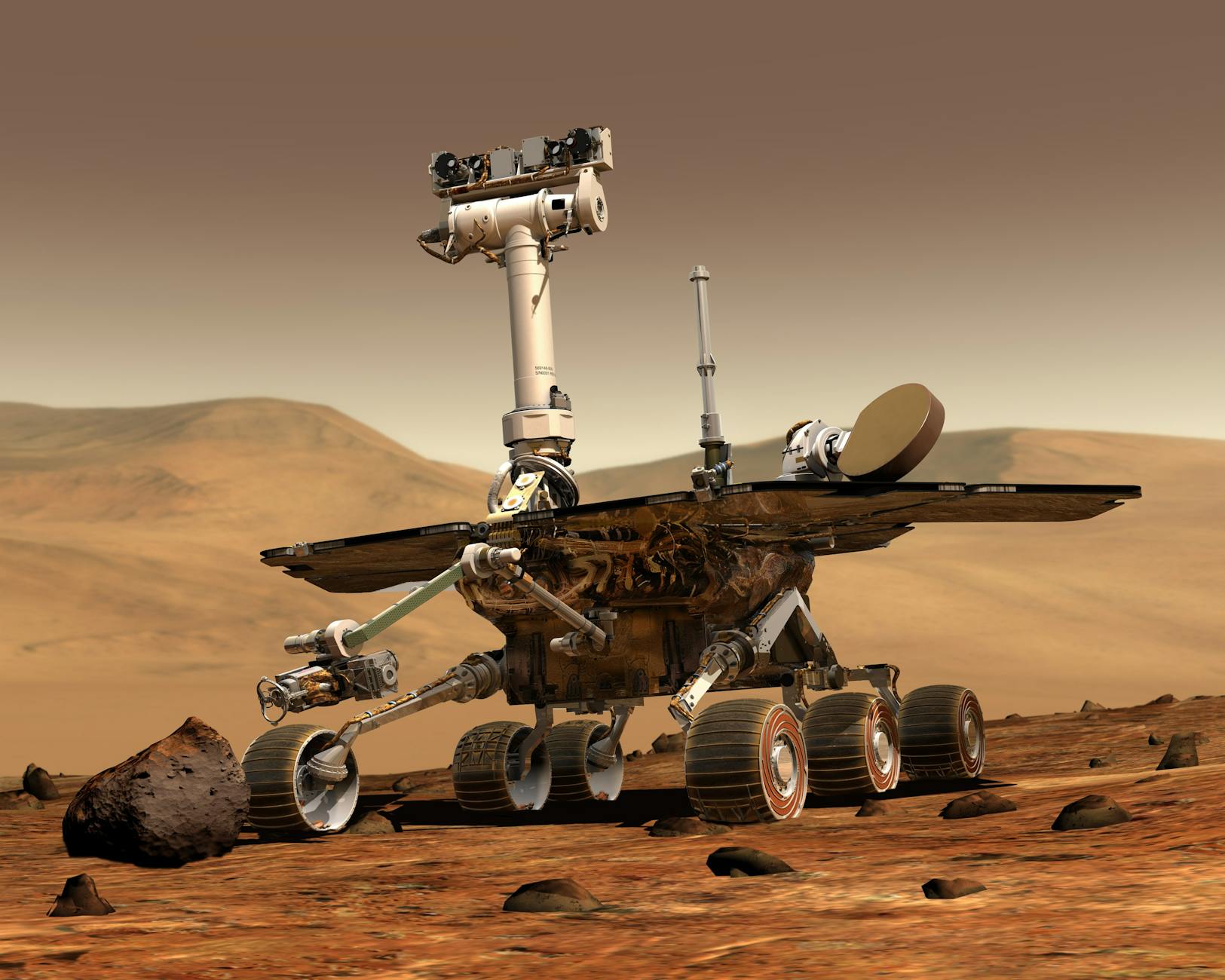
A robot the size of a small car drilled into a dusty red rock on Mars, and inside it scientists found a chemical pattern that, on Earth, is often left behind by microbes. That single rock has now been called the clearest sign of possible ancient life on Mars that NASA has ever reported.
The rock has a name out of a science-fiction script: Cheyava Falls. On 10 September 2025, NASA announced that a sample drilled from it carries what researchers carefully label a potential biosignature — a feature that could have been produced by living things, but could also have formed through ordinary chemistry. It is a deliberately cautious phrase for a genuinely jaw-dropping find.
The rock that stopped the science team in its tracks
NASA's Perseverance rover studied Cheyava Falls in July 2024, in a region of Jezero Crater called the Bright Angel formation. This sits along the edge of Neretva Vallis, a dried-up river valley that once funneled water into the crater more than 3 billion years ago. Back then, this was not desert. It was a wet, muddy floodplain.
The rock itself is a mudstone — fine clay and silt. That matters more than it sounds. On Earth, these are exactly the kinds of fine-grained, water-laid sediments that can trap and preserve traces of past microbial life for enormous stretches of time. If Mars ever hosted life, mud like this is one of the best places to go looking.
What caught the team's eye was the rock's surface texture. Scattered across it were small dark dots the scientists nicknamed "poppy seeds," alongside larger, irregular markings they called "leopard spots." Those spots are the heart of the whole story.

What 'leopard spots' actually are
Using two onboard instruments — PIXL, which maps the chemistry of a rock down to tiny spots, and SHERLOC, which hunts for organic molecules — Perseverance read the fine print inside those markings.
The spots turned out to be chemical reaction fronts: zones where one type of mineral gives way to another, driven by reactions that shuffle electrons around. Within them, the rover identified two minerals that made astrobiologists sit up.
- Vivianite, a hydrated iron phosphate. On Earth it shows up in waterlogged sediments, peat bogs and around decaying organic matter.
- Greigite, an iron sulfide. Certain microbes on Earth actively produce greigite as part of how they live.
Neither mineral proves life on its own. But the way they sit together, paired with organic carbon and formed through energy-releasing electron-transfer reactions, lines up uncomfortably well with the chemical leftovers some microbes produce. Those reactions are precisely the kind of process a tiny organism could tap for energy — effectively a meal.
Three ingredients for life, in one place
The reason scientists are excited goes beyond a couple of unusual minerals. Cheyava Falls brought together, in a single rock, the three things life as we understand it needs:
- Liquid water — written into the rock by the river valley and white mineral veins where water once flowed.
- Organic molecules — carbon-based building blocks, detected by SHERLOC.
- An energy source — the chemical reactions preserved in those leopard spots.
The research behind the announcement was published in the journal Nature, in a peer-reviewed paper titled "Redox-driven mineral and organic associations in Jezero Crater, Mars," led by scientist Joel Hurowitz. Crucially, the team tested the non-biological explanations they could think of and reported that none of them offered a particularly strong alternative. That does not mean biology won the argument. It means the boring explanations did not comfortably win either.
Why NASA refuses to say 'we found life'
This is where a careful reader earns their stripes. NASA did not announce alien life. It announced a potential biosignature, and the distinction is the entire point.
A potential biosignature is a substance, structure or pattern that might have a biological origin but still needs more evidence before scientists can separate living chemistry from lifeless chemistry. Vivianite and greigite can both form without any life involved, under the right geological conditions. The minerals are suggestive, not conclusive.
At the press conference, acting NASA Administrator Sean Duffy captured both the thrill and the caution, calling it potentially the clearest sign of life ever found on Mars while stressing how exciting — not settled — that is. The science community has echoed that split: fascinating, important, and absolutely not finished.
The catch: the answer is sealed in a tube
Here is the part that turns an astonishing discovery into a years-long cliffhanger. The decisive evidence is already collected. Perseverance drilled a core from Cheyava Falls and sealed it inside a sample tube nicknamed Sapphire Canyon. That tube is sitting on Mars right now.
The rover's instruments, brilliant as they are, can only do so much from the Martian surface. To truly settle whether those leopard spots are the fingerprints of ancient microbes or just exotic geology, scientists need to study the sample in Earth-based laboratories — analyzing isotopes, microscopic textures and organic structures with machines far too large and sensitive to fly on a rover.
That is the job of the long-planned effort to bring Mars samples home, currently expected sometime in the 2030s. Until those tubes land on Earth, the question of life on Mars stays exactly where it is now: tantalizingly, frustratingly open.
Why this moment matters
Step back and the scale of it lands. Humanity sent a machine to another planet, had it recognize a rock worth keeping, drill it, seal it, and read enough of its chemistry to flag it as the most promising hint of past life we have ever gathered beyond Earth. Whether or not the final verdict is "yes," that is a staggering thing to have pulled off.
For decades, the search for life on Mars has run on glimpses — a suggestive gas here, an ancient riverbed there. Cheyava Falls is different because it stacks multiple independent clues in one spot and survives the first round of skeptical testing. It does not close the case. It does something arguably more powerful: it makes the case worth finishing.
So no, NASA has not announced that we are not alone. But it has handed us a sealed tube on another world that might, one day, answer the oldest question we have ever asked — and that is a rock worth telling a friend about.

