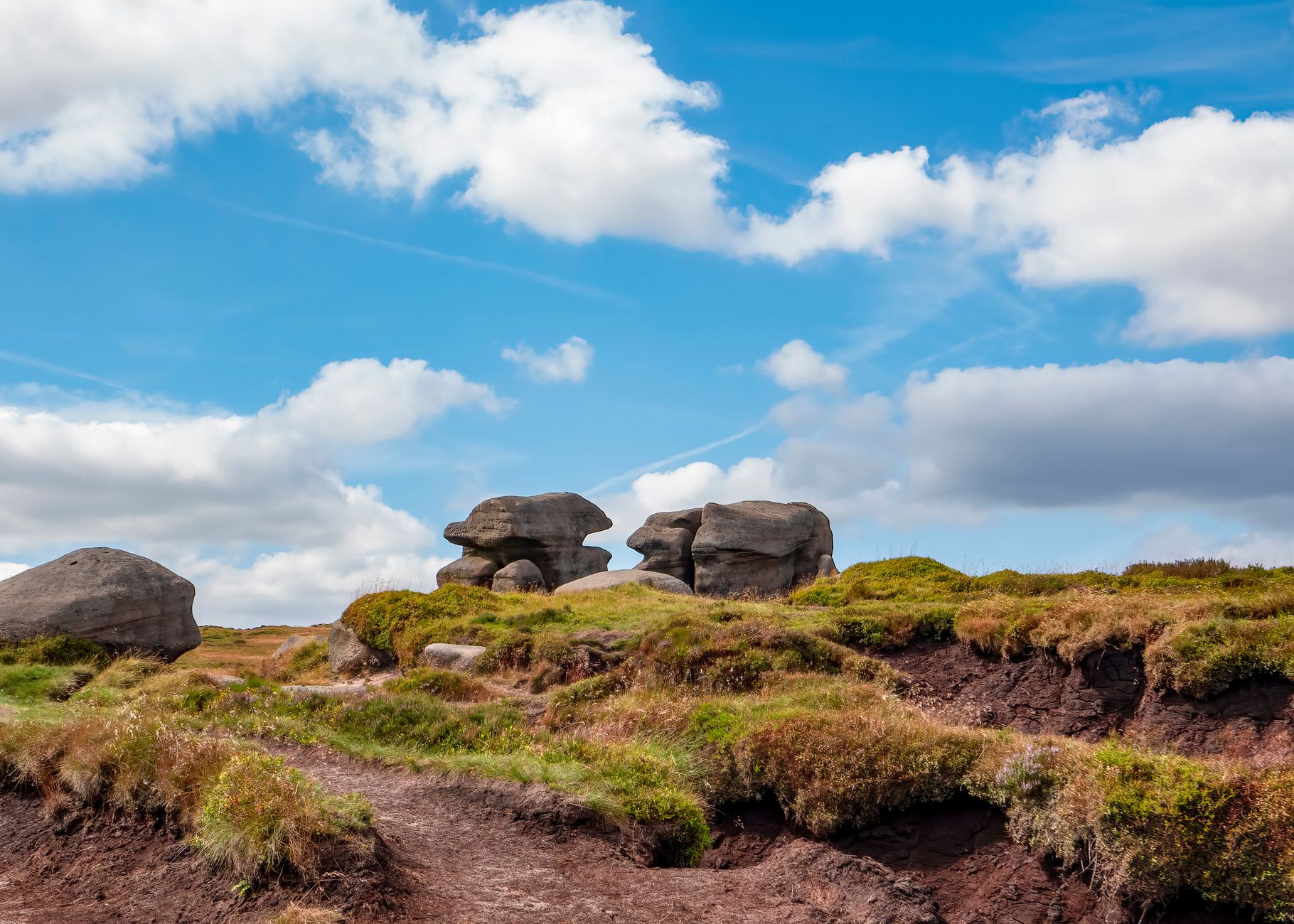
Photo: Marian Florinel Condruz / Pexels
Nine Ladies Death: Solstice Gathering Becomes a Murder Inquiry
A summer solstice gathering at one of England's most atmospheric ancient monuments has ended in a murder inquiry. Police in Derbyshire have named the man found dead at the Nine Ladies stone circle as Isaac Clare-Watts, a 26-year-old from Arnold, near Nottingham. His body was discovered on the afternoon of 22 June 2026, the day after crowds gathered on Stanton Moor to mark the longest day of the year.
The contrast at the heart of this story is hard to shake. A place people travel to for renewal and ritual, on the most hopeful date in the old calendar, is now cordoned with police tape. Officers have appealed directly to anyone who was there over the weekend, which tells you how many strangers may have passed through in the hours that matter.

What police have confirmed
Derbyshire Constabulary said officers were called to the circle at around 1.38pm on Monday 22 June, where the young man was pronounced dead at the scene. The death is being treated as murder, and the case has been handed to the East Midlands Special Operations Unit, a regional team that takes on the most serious crimes.
A 41-year-old man was arrested on suspicion of murder. Reporting on his status has differed, with some outlets saying he was released on bail and at least one saying he remained in custody, so that detail is best treated as unsettled until police confirm it. No charge had been announced at the time of writing.
The senior investigator, a detective inspector with the regional unit, described a young life taken in what he called the most brutal way. Police have asked anyone who attended the solstice celebrations, or who has phone footage from the event or dashcam clips of vehicles arriving and leaving, to come forward.

Who Isaac Clare-Watts was
Friends and family have begun paying tribute to a man described as popular and well-liked. According to reports, Clare-Watts was a qualified joiner who had worked for a local building firm until late last year, when he left to travel the world. He had only recently returned to the UK.
That detail lands heavily. A 26-year-old who had just come home from seeing the world, with a trade behind him and time ahead of him, is exactly the kind of person a solstice gathering tends to draw. The investigation now turns on reconstructing his final hours among a crowd that was never going to be neatly documented.
The place itself
The Nine Ladies is a small stone circle on Stanton Moor, a heather-and-birch plateau in the Peak District above the Derwent Valley. It is modest in scale, roughly 10.8 metres across, ringed by low blocks of millstone grit that barely reach the knee. What it lacks in drama it makes up for in age and feel.
Archaeologists place it in the long tradition of British stone circles built across the Late Neolithic and Early Bronze Age, broadly between 3300 and 900 BCE. In other words, it is somewhere in the region of four thousand years old. The site sits within a wider prehistoric landscape of cairns and a single outlying stone known as the King Stone, a short walk away.
The circle is named for a folk legend rather than archaeology. The story goes that nine women were turned to stone for dancing on the Sabbath, with the King Stone marking the fiddler who played for them. For centuries the circle appeared to have only nine stones; a tenth, long buried, was uncovered in 1977 after drought and erosion exposed it.
Why people gather there at the solstice
From the late twentieth century onward, Nine Ladies became a focus for modern Pagans, especially in the English Midlands, who regard the circle and the moor around it as sacred ground. The site has hosted seasonal rituals tied to the Wheel of the Year, as well as handfastings, the Pagan form of marriage.
The summer solstice is the busiest moment in that calendar. On the longest day, the sun is at its highest and the night at its shortest, and across Britain people mark it at ancient sites with drumming, fire, music and quiet ceremony. Stonehenge draws the famous crowds, but smaller circles like Nine Ladies pull their own loyal gatherings, often informal and spread across a whole weekend.
That informality is part of what makes this such a difficult inquiry. There is no ticketing, no single organiser and no guest list. People come and go on foot across open moorland, which is precisely why detectives are leaning on the public for photos and video rather than any official record of who was present.
What makes this case so hard to investigate
A killing in a fixed, enclosed place tends to leave a narrow pool of suspects and clear comings and goings. A solstice gathering on open moorland is the opposite. Consider the practical obstacles:
- No fixed perimeter. Stanton Moor has multiple paths in, and people arrive across a wide window rather than at one gate.
- A transient crowd. Many attendees are strangers to one another and may have travelled some distance, then dispersed.
- Patchy documentation. The best evidence is likely to be scattered across private phones, which is why police are appealing for footage.
- A delay before discovery. The body was found the day after the main celebrations, leaving a gap that investigators must reconstruct.
Each of these is a reason the appeal for witnesses is doing heavy lifting. In cases like this, a single clip showing the right car number plate or the right face in the background can reshape the entire timeline.
The wider picture
Violent deaths at England's ancient monuments are mercifully rare, which is part of why this story has travelled well beyond Derbyshire. These sites occupy a strange place in the modern imagination. They are heritage attractions and tourist stops, but for many they are also living places of worship, used much as they may have been used thousands of years ago.
There will be obvious questions in the days ahead about safety and stewardship at informal gatherings on remote heritage land. For now, though, the focus is narrower and more human. A family has lost a son who had just come home. A community that meets at Nine Ladies to celebrate light and renewal is reckoning with something much darker.
What happens next
The immediate task is forensic and methodical. Detectives will examine the scene, gather and timestamp public footage, and try to establish exactly when and how Clare-Watts died. The status of the arrested man, and whether anyone is charged, will follow from that work rather than precede it.
Anyone who attended the Nine Ladies solstice gathering over the weekend, or who has images or video from the site, has been urged to contact Derbyshire police. In an inquiry built almost entirely from the memories and cameras of strangers, that is where the answers are most likely to be hiding.