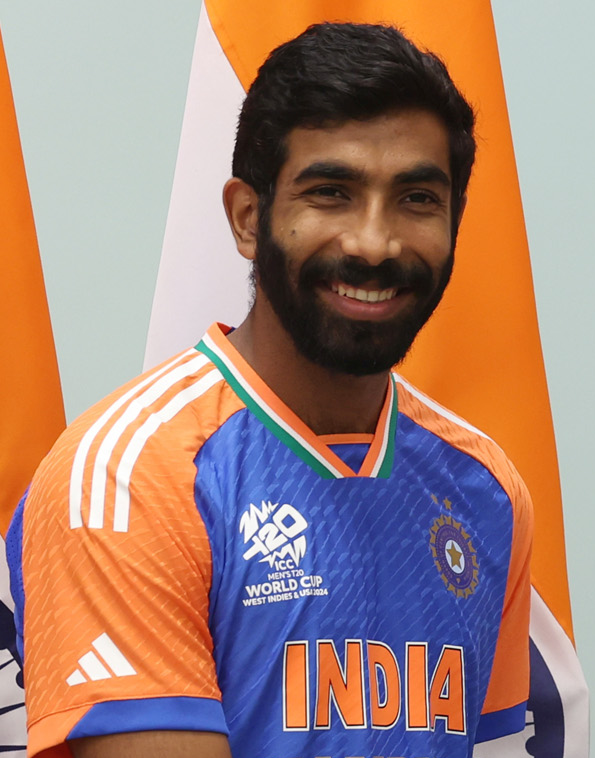
Photo: Prime Minister's Office · GODL-India / Wikimedia Commons
Person of the Day: Omar Abdullah's Boardroom-to-CM Journey
When Omar Abdullah was sworn in as the first Chief Minister of the Jammu & Kashmir Union Territory on 16 October 2024, it closed a long arc that began far from any political podium. Before the campaigns and the cabinets, he was a young commerce graduate clocking hours in the corporate world. The story of Omar Abdullah is, at its heart, a study in early starts, steep learning curves and steady comebacks — a career worth examining for anyone curious about how public leaders are actually made.
From the Classroom to the Corporate Desk
Omar Abdullah's foundations were built in the classroom rather than the constituency. He completed his schooling in India and went on to earn a Bachelor of Commerce degree from Sydenham College of Commerce and Economics in Mumbai, one of the country's most respected commerce institutions. He later pursued a postgraduate management qualification, an MBA at the University of Strathclyde in the United Kingdom.
What distinguishes his early years is that he did not move directly into public life. Instead, he spent his twenties in the private sector, taking on roles with ITC Limited and The Oberoi Group — two marquee names in Indian business and hospitality. That spell in the corporate world, lasting until he was around 29, gave him exposure to organisations, discipline and the workings of large institutions before he ever contested an election.
This detour matters. Many leaders enter politics straight from student activism or family tradition; relatively few arrive with a structured business education and hands-on managerial experience. It is a background that shaped a manager's instinct for process and delivery.
A Record-Setting Entry Into Public Life
Omar Abdullah's formal entry into national politics came in 1998, and it was anything but ordinary. At just 28 years old, he was elected to the Lok Sabha, becoming the youngest member of the house at the time. He represented the Srinagar parliamentary constituency, and the voters returned him to Parliament in successive elections, keeping him in the Lok Sabha from 1998 to 2009.
Winning a national seat in one's twenties is rare anywhere in the world. Doing it repeatedly, election after election, signalled that this was not a one-time wave but a durable connection with an electorate. For a first-time parliamentarian, it was a demanding apprenticeship in representing constituents on the national stage.
That early mandate set the template for much of what followed: a politician who arrived young, learned fast and kept being entrusted by voters with higher responsibility.
The Youngest Union Minister
The pace of his rise only quickened once he reached Delhi. On 13 October 1999, Omar Abdullah took oath as a Union Minister of State in the Ministry of Commerce and Industry, stepping into executive responsibility at the centre while still in his late twenties.
His biggest national milestone came soon after. On 22 July 2001, he was appointed Union Minister of State for External Affairs, making him the youngest Union Minister in the government of the day. Holding a portfolio that touches India's relationships with the wider world is a significant responsibility, and to do so at such an age was a genuine distinction.
These years in the central government broadened him from a regional figure into a national one. He gained a close view of how India's executive machinery functions — from trade and industry to diplomacy — experience that would later inform his approach to running a government of his own.
Key early milestones, in order:
- 1998 — Elected to the Lok Sabha as its youngest member, from Srinagar.
- 1999 — Sworn in as Union Minister of State for Commerce and Industry.
- 2001 — Becomes the youngest Union Minister, in the External Affairs portfolio.
- 2002 — Takes charge of his party's organisation as its president.
Leading a Party and a State
Alongside his ministerial work, Omar Abdullah stepped into organisational leadership. In 2002, he became the president of the Jammu & Kashmir National Conference, taking responsibility for steering one of the region's most established political parties. He was re-elected to that role in 2006, underlining the confidence the organisation placed in him.
The defining chapter came on 5 January 2009, when he was sworn in as the Chief Minister of Jammu & Kashmir. At 38, he became the youngest person to hold that office, and he led the government until 2015. Running a state administration is a far broader test than a single ministry — it means owning everything from development projects and public services to day-to-day governance — and that tenure marked his graduation into a full-fledged administrator.
The transition from party president to chief minister is one of the toughest in Indian politics, demanding the ability to both build an organisation and run an executive. He had now done both.
A Comeback and a Historic First
What makes a career compelling is often not the smooth climb but the comeback. After his term ended, Omar Abdullah's path took the dips that long political journeys usually do. The defining proof of his resilience arrived in 2024.
In that year's Jammu & Kashmir Assembly election, his party and its allies emerged as the leading bloc, securing the numbers needed to form a government. Omar Abdullah himself contested and won, taking both the Budgam and Ganderbal seats before choosing to retain Ganderbal. It was a personal and political turnaround that returned him to the centre of the state's public life.
On 16 October 2024, he was sworn in as Chief Minister once again — but this time with a historic distinction. He became the first Chief Minister of the Union Territory of Jammu & Kashmir, the inaugural elected head of government in the region's reorganised form. That "first" gives his current tenure a place in the record books regardless of what follows.
Why His Journey Resonates
Stripped of everything but the public record, Omar Abdullah's career offers a clear set of lessons. He shows that a strong educational and professional grounding — a commerce degree, an MBA and years in the corporate sector — can be a launchpad rather than a detour. He demonstrates that voters will repeatedly back leaders who start young and stay engaged. And he embodies the idea that political life is rarely a straight line; persistence through setbacks is often what separates a long career from a brief one.
From a corporate desk to Parliament's youngest benches, from a national ministry to the chief minister's chair — and back again as the head of a newly reorganised territory — his is a journey of early starts and steady returns. As he leads the Jammu & Kashmir administration today, the next chapters will be written in the everyday work of governance: the projects delivered, the services improved and the institutions strengthened. For now, the throughline of his story is simple and inspiring — keep showing up, keep learning, and let the record speak.