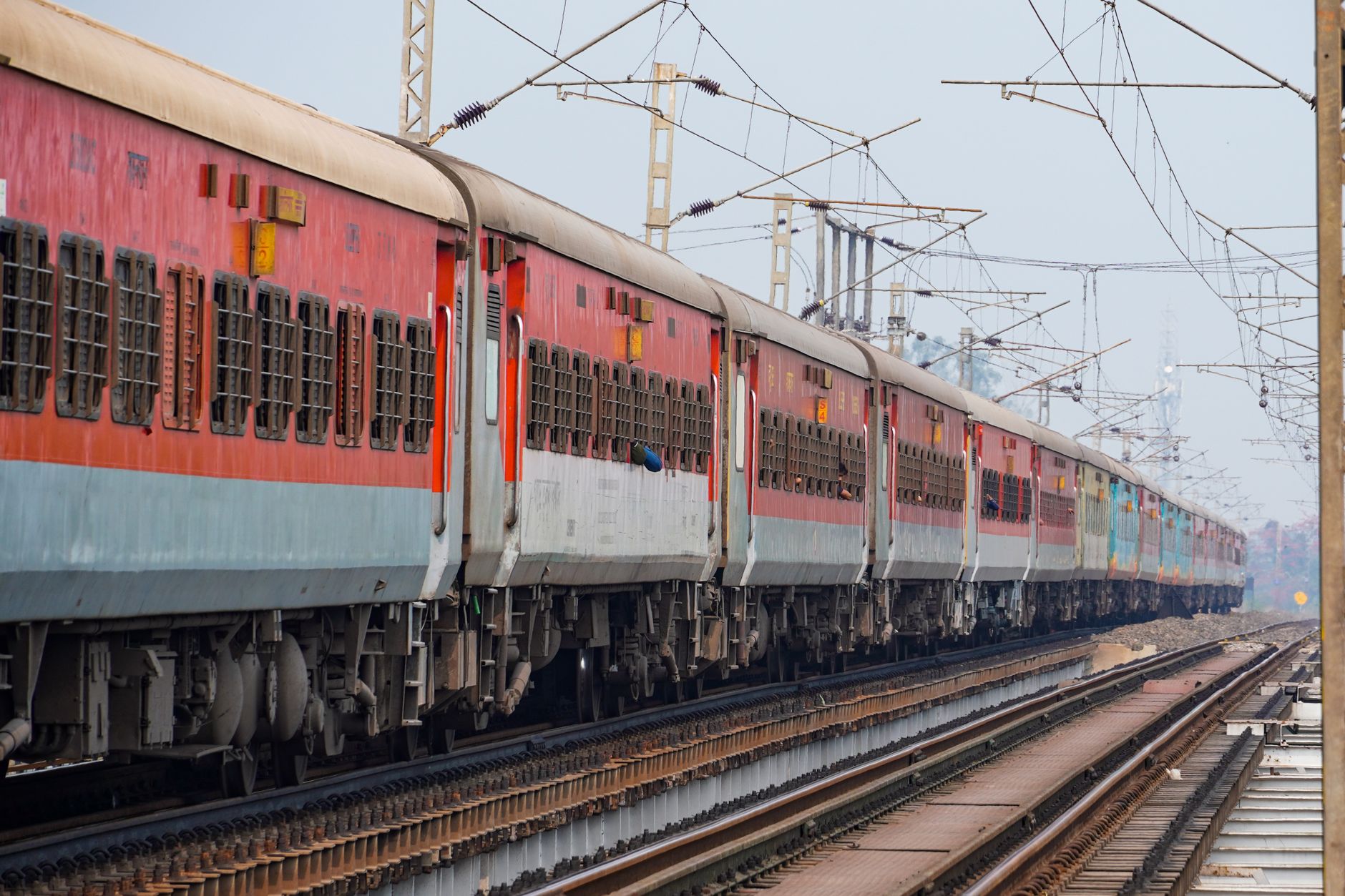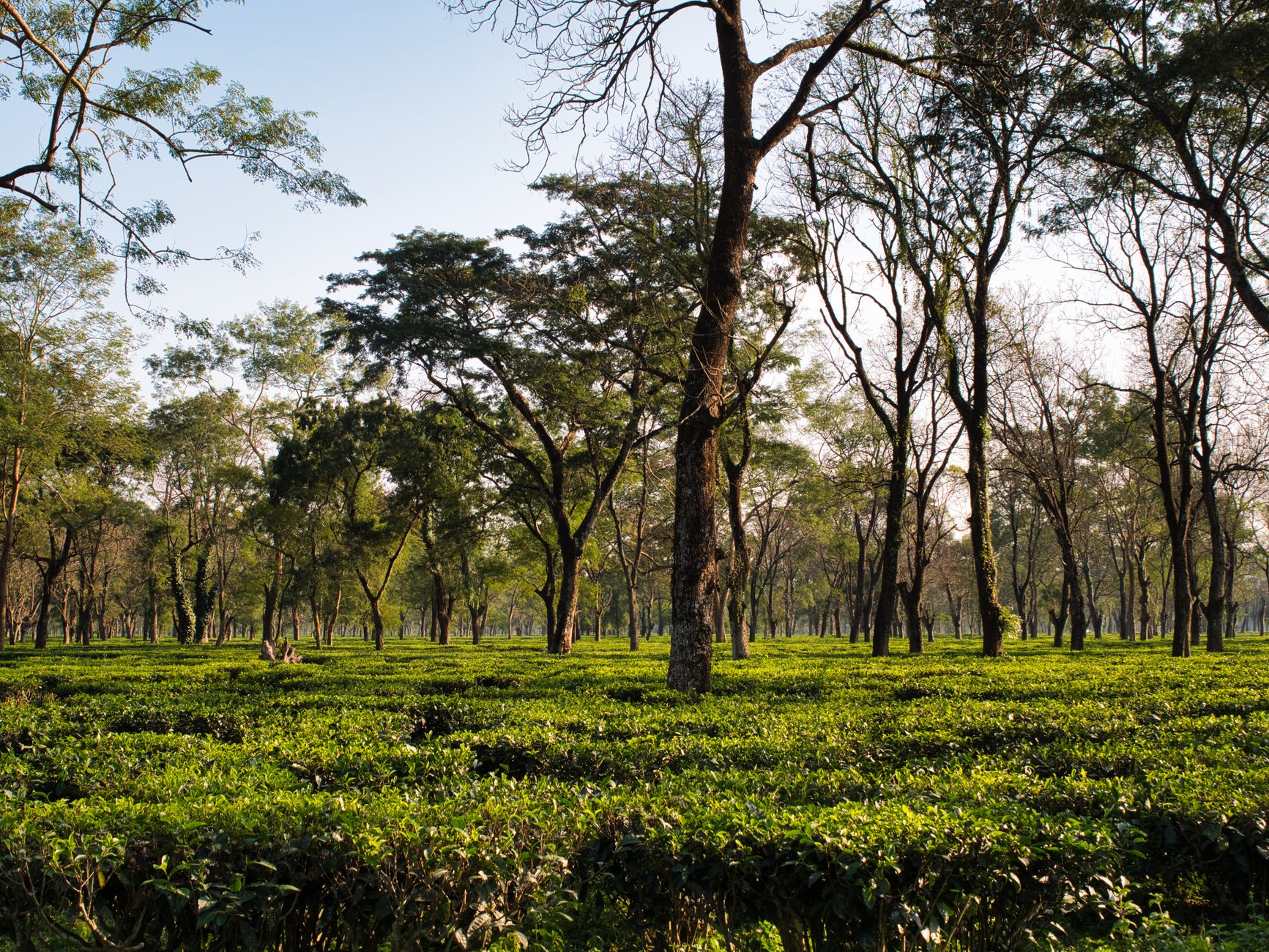
Photo: Tarak Nath Das / Pexels
Bagan Time: Assam's Tea Gardens Run an Hour Ahead of India
If you set your watch by Bagan Time in an Assam tea estate, you would be exactly one hour out of step with the rest of the country — and entirely on purpose. Across the rolling green plantations of Assam, work begins, breaks happen and shifts end on a clock that runs sixty minutes ahead of Indian Standard Time. It is one of India's most quietly persistent quirks: a parallel timekeeping system, born in the colonial era, that has outlasted the British, survived independence and still governs the daily rhythm of one of the world's great tea belts. Most Indians have never heard of it. For the people who pluck, wither and roll the leaves that fill the nation's morning cup, it is simply how the day has always worked.

What Bagan Time Actually Is
Bagan means garden, and 'Bagan Time' — also called Chaibagan Time or Tea Garden Time — is the unofficial standard followed inside Assam's tea estates. The rule is simple: the garden clock sits one hour ahead of IST. When the rest of India reads 8 a.m., the estate is already living at 9 a.m. Workers report to the fields earlier in absolute terms, take their midday meal earlier and finish before the heat and the fading light close in.
Crucially, this is not a different time zone in any legal sense. India recognises only one official time, IST, and a tea worker's phone, bank and train ticket all run on it. Bagan Time is an operational convention — a shared agreement about when the working day starts — layered on top of the national clock. The genius, and the confusion, is that two clocks coexist in the same valley: the legal one on your screen, and the practical one the estate actually runs on.

A Colonial Hangover That Made Sense
The practice traces back to British planters in the nineteenth century, and the logic behind it was sound enough that it never died. Assam lies in India's far east. Because the whole country shares a single time zone anchored to a meridian running through the Gangetic heartland, the sun's behaviour in the northeast is wildly out of sync with the clock. In Assam, dawn can break astonishingly early — well before 5 a.m. in the summer months — and darkness arrives correspondingly soon, with the light often gone by late afternoon in winter.
For labour-intensive farming that depends entirely on daylight, this is a serious problem. A standard nine-to-five would waste the cool, bright early hours and push work into the dim, mosquito-thick dusk. The planters' fix was elegant: advance the estate clock by an hour so that the working day tracked the sun rather than the railway timetable. Pluckers could harvest in good light and be done before the worst of the day. More than a century later, the agronomic reality has not changed, so neither has the habit.
Why India Has Just One Clock
To understand why Bagan Time exists at all, you have to appreciate how unusual India's single time zone is. The country stretches across roughly 29 degrees of longitude, from the Rann of Kutch in the west to Arunachal Pradesh in the east. That east-west spread is wide enough that the sun rises in Arunachal nearly two hours before it does in Gujarat. Yet every clock from Dwarka to Dibrugarh reads the same.
It was not always so. Before and even after independence, India juggled several local times — Bombay Time and Calcutta Time were the best known, set to the sun over their respective cities and differing from each other by around half an hour. Calcutta clung to its own time for years, and Bombay's lingered into the 1950s. Indian Standard Time, pegged to a reference meridian of 82.5°E passing near Mirzapur in present-day Uttar Pradesh, was adopted to unify the railways, telegraphs and administration of a vast subcontinent. One clock was simpler to run, harder to sabotage and symbolically powerful for a young nation knitting itself together. The trade-off was that the eastern edge of the country would forever live with a clock that lags well behind its sky.
The Real Cost of Living Out of Sync
This mismatch is not just a curiosity for the northeast — it has measurable consequences. When the sun is up by 4 a.m. but schools, offices and government buildings open at the standard hour, several hours of free, usable daylight are simply slept through. Worse, because dusk comes so early, lights, fans and appliances click on much sooner in the evening, lengthening the window of peak electricity demand.
Researchers have argued this costs real energy. A widely discussed study from the CSIR-National Physical Laboratory — the very institution that keeps India's official time — proposed splitting the country into two time zones: IST for most of the nation and a second zone an hour ahead for the northeastern states. The reasoning was that better-aligned working hours would let the region rise with the sun, shift activity into daylight and shave off a meaningful chunk of evening power consumption every single day. Across a year and a population this size, even small daily savings add up.
Assam's own leaders have periodically pushed the idea, at times suggesting the state formally adopt something close to Tea Garden Time for everyone, not just the plantations. The tea gardens, in other words, may have been quietly running the experiment that policymakers are still debating.
The Case Against Two Clocks
If the benefits are so clear, why hasn't India simply created a second zone? The objections are practical and, to many planners, persuasive. A boundary between two time zones has to be drawn somewhere, and wherever that line falls, the towns straddling it face daily friction — trains, flights and TV schedules that jump an hour across an invisible border. The Indian Railways, which runs a famously dense and tightly interlinked network, has long worried that two times multiply the risk of scheduling errors and, in the worst case, accidents at the changeover.
There is also a deeper, almost emotional argument. A single national time has been part of India's idea of itself — one country, one clock, no first-class and second-class hours. Critics fear a separate northeastern zone could feel like a line of division in a region already sensitive about its distance from the national mainstream. So the status quo holds, and the northeast keeps improvising: government clocks on IST, tea gardens on Bagan Time, and everyone quietly doing the mental arithmetic.
Why It Still Matters Today
Bagan Time is more than a charming relic. It is a living, working demonstration of a problem the rest of India debates in the abstract. The plantations solved their daylight dilemma generations ago with a pragmatic workaround, and the fact that the solution still runs smoothly is itself an argument that aligning hours with the sun is both possible and beneficial.
As India pushes for energy efficiency, productivity and a fairer deal for its eastern states, the question keeps resurfacing: should the northeast get its own official hour, or is one clock the glue worth preserving? The tea gardens won't wait for an answer. Tomorrow, as they have for over a century, the pluckers will step into the fields while much of the country is still asleep — living, as ever, one hour ahead of the nation, by a clock the nation has mostly forgotten exists.