Photo: Marcus Lange / Pexels
A Four-Winged Dinosaur Just Became a 120-Million-Year-Old Murder Suspect
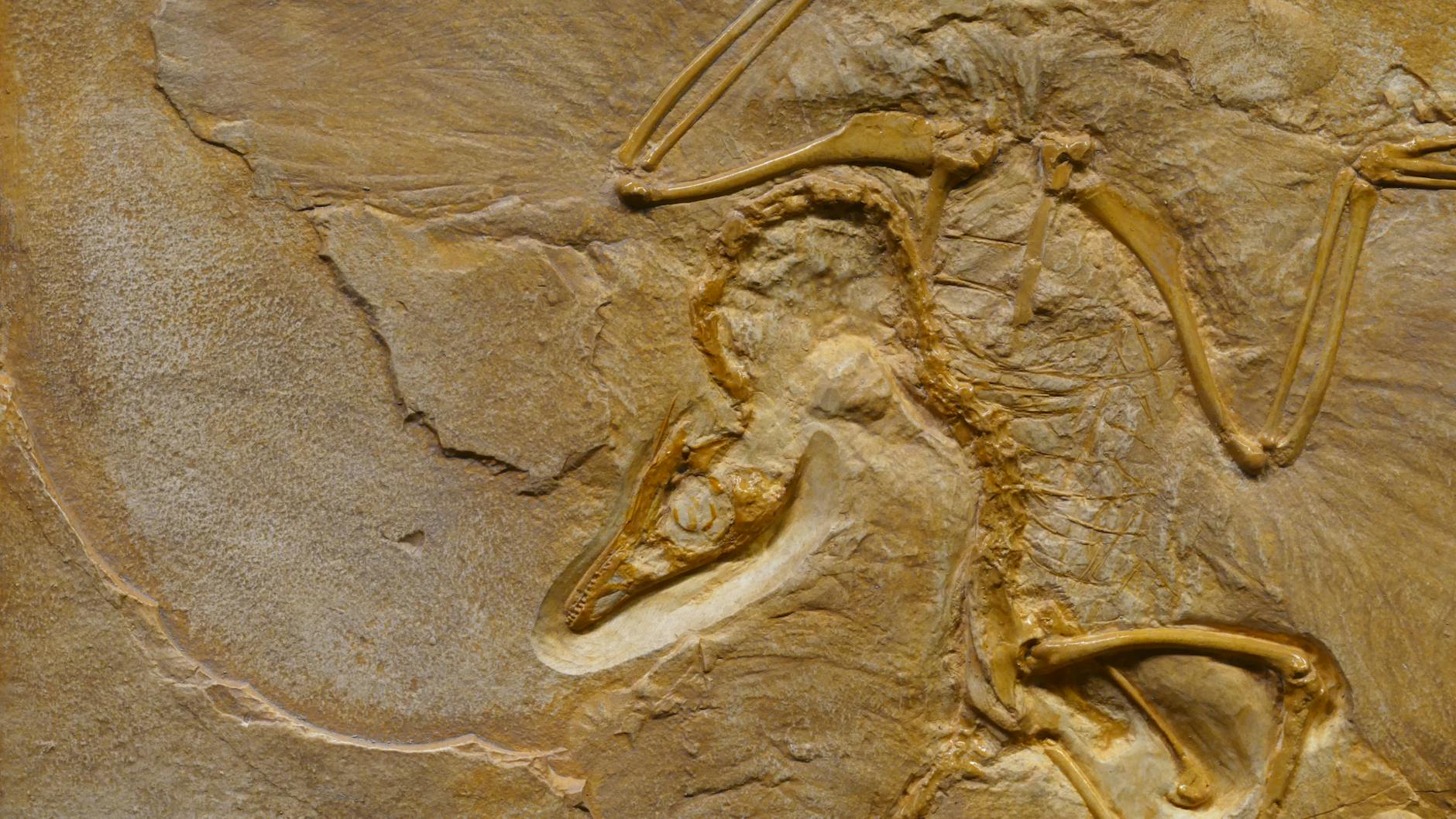
For more than twenty years, a fossil site in northwestern China kept handing scientists the same grim clue: dead birds. Over 100 prehistoric bird skeletons have come out of the ground there since 2004, and some of the saddest specimens are barely birds at all — just shattered bones squeezed into tight little wads that look exactly like the pellets owls cough up after a meal. Something was killing these animals, eating them, and leaving the leftovers. Nobody knew what.
Now scientists think they've finally got a suspect. Its name is Jian changmaensis, a newly described feathered dinosaur with an unusual feature: it had wings on all four limbs. Described in the Annals of Carnegie Museum on June 4, 2026, this is the first meat-eating dinosaur ever found at the site — which makes it the prime candidate in a cold case roughly 120 million years old.

A killer with four wings
Jian belongs to a group of small, feathered dinosaurs called microraptors, distant cousins of Velociraptor. What sets microraptors apart is their plumage: long feathers grew not just on the arms, where you'd expect them, but on the legs too. The result was effectively four wing-like surfaces instead of two.
That doesn't mean Jian flapped its way across the sky. Researchers believe it glided rather than flew, spreading its limbs to catch air and slow a fall, closer to a flying squirrel than a sparrow. One of the study's authors put the idea plainly, saying the microraptors probably couldn't manage true powered flight but could glide.
For a predator hunting birds, gliding is a quietly brilliant trick. You climb a tree, you spot a target, and you launch — covering distance and dropping onto prey without the energy cost of constant flapping. It's the kind of ambush style that fits the crime scene perfectly.
The body that doesn't lie
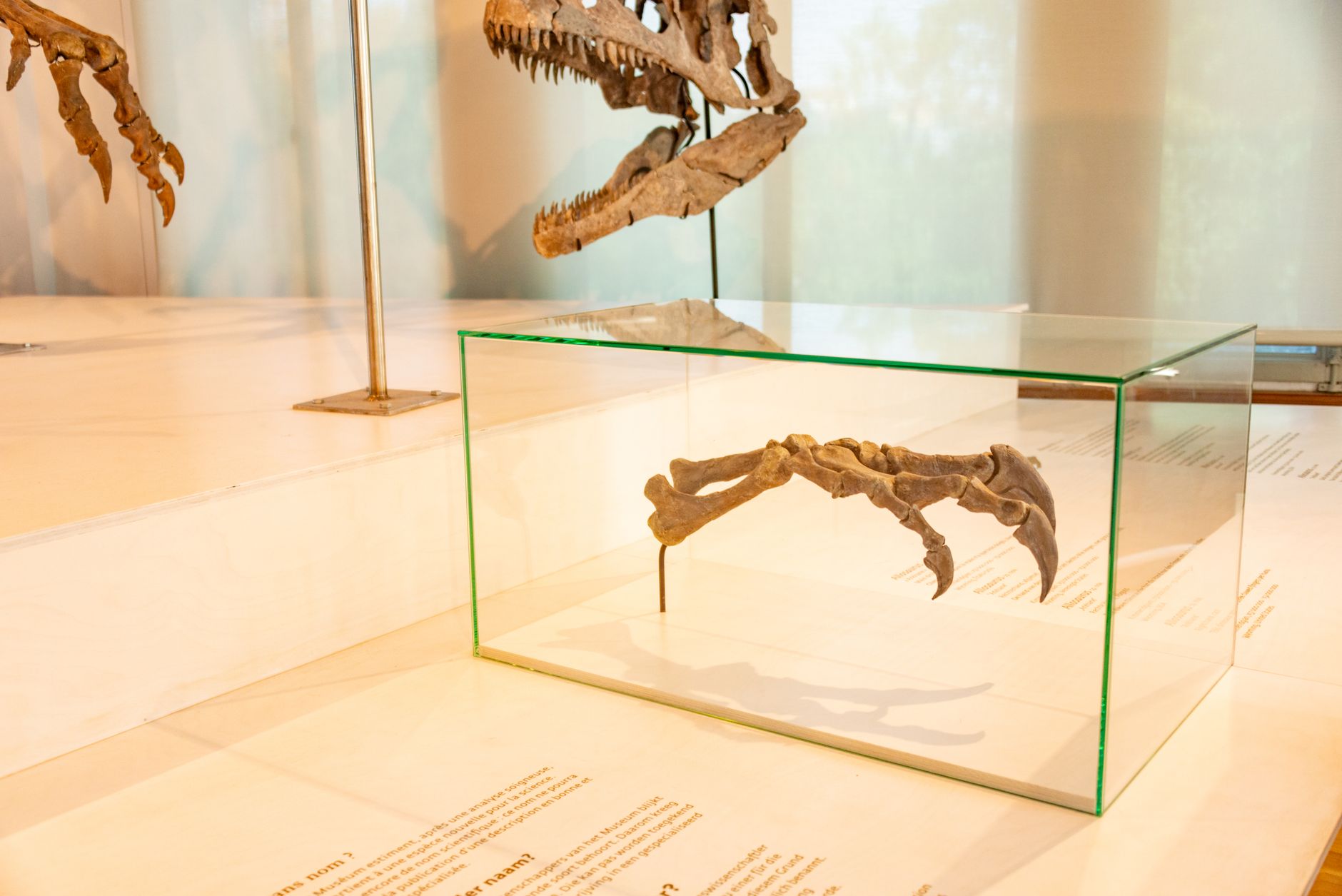
How big was this thing? Modest, by dinosaur standards. The upper arm bone measured only about four inches, and the full wingspan is estimated at roughly four feet — about the size of a barn owl. That scale matters, because it puts Jian in the right weight class to take down the small birds whose bones litter the site.
Despite its size, Jian is notable as one of the largest microraptor specimens ever recovered. The fossil preserved enough anatomy for the team to spot details in the arm and shoulder bones that distinguish it from its relatives, which is how a new species gets named in the first place. Every ridge and joint surface becomes a fingerprint.
The name itself is a nice touch. Jian refers to a winged creature from Chinese mythology, while changmaensis marks where it was found — near the village of Changma, in the Changma Basin of Gansu province.
Why this counts as solving a mystery
Here's what makes the discovery satisfying rather than just another new dinosaur. The Changma Basin has long been famous for its early birds, especially Gansus yumenensis, one of the first birds from the age of dinosaurs ever found in China. Researchers had the victims. They had the murder weapon's signature, those owl-style pellets of crushed bone. What they didn't have was a body that could plausibly do the killing.
A pellet full of broken bird bones is a strong hint of a predator that swallowed prey and later regurgitated the indigestible parts. But you can't accuse a culprit you've never met. Until Jian turned up, the basin had yielded plenty of prey and no obvious non-avian predator at all.
Jian changes that. It's the first carnivorous dinosaur identified from this ancient ecosystem, and its size, hunting style and habitat all line up with the evidence. As one outside expert noted, it's a fresh record from that lost world, and an exciting one. The case isn't airtight — paleontology rarely is — but the evidence now points somewhere it never could before.
What the scene looked like 120 million years ago
Picture the Early Cretaceous landscape around Changma: lakes and wetlands, a thriving community of small early birds wheeling over the water, and in the trees and undergrowth, gliding predators waiting for an opening. The food web that fossil sites usually only hint at is unusually legible here, because both halves of it — hunter and hunted — are now in hand.
A few things made this ecosystem a goldmine for the murder-mystery angle:
- A dense bird population. More than 100 bird specimens means a rich prey base, not a one-off.
- Preservation of behavior, not just bones. The pellets capture an action — a meal — frozen in stone.
- A newly found predator. Jian supplies the missing piece that ties the clues together.
That combination is rare. Most fossil sites give you skeletons and leave you to guess how the animals interacted. This one preserved the interaction itself.
The bigger reason scientists care
The true significance runs deeper than a single whodunit. Birds are the most successful group of land vertebrates alive today, and they descend directly from small feathered dinosaurs like the microraptors. Studying creatures such as Jian — animals caught experimenting with feathers and flight surfaces — helps explain how flight evolved and why the bird lineage eventually conquered the planet.
Jian sits near a fascinating fork in that story. Its four-winged, glider-style body represents an evolutionary road that didn't ultimately win. Modern birds went with two wings and powered flight, not four gliding surfaces. Fossils like this show the experiments nature tried and abandoned, which is often where the most surprising biology hides.
The study was led by a team including corresponding author Matt Lamanna and senior author Jingmai O'Connor of the Field Museum in Chicago, with Chinese collaborators who have worked the Changma deposits for years.
What comes next
Naming a suspect is not the same as closing a case, and the researchers know it. The next questions are the obvious ones a detective would ask. Did Jian definitely produce those pellets, or was there more than one predator at work? How exactly did it catch birds — drop from above, chase along the ground, snatch from the water's edge? And were there other, still-undiscovered hunters sharing the same hunting grounds?
More digging in the Changma Basin will help, and so will close re-examination of bones already in museum drawers. Fossil sites this generous tend to keep talking if you keep listening.
For now, though, the story has a shape it lacked for two decades. A strange little dinosaur that glided through Cretaceous skies on four feathered limbs has stepped into the frame for a series of deaths it left scattered across the rock. After 120 million years, the basin's oldest unsolved killings finally have a name attached to them — and it's one nobody had heard until this month.