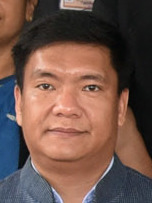
Photo: Government of Jharkhand · Attribution / Wikimedia Commons
Person of the Day: Hemant Soren, From Student Wing to Three-Time Jharkhand CM
Few politicians in eastern India have walked a steeper learning curve in public life than Hemant Soren. He grew up around the founding of a state-level movement, started at the bottom of its student ranks, and has since taken the oath as Chief Minister of Jharkhand three separate times. His story is a study in patience, regional identity and the slow craft of building a mandate from the ground up.
This is a profile of his public journey: the milestones, the policy record and the standing he holds today as one of the most recognisable faces in the politics of the Chhotanagpur and Santhal Pargana belt.
A name rooted in the Jharkhand movement
Hemant Soren was born on 10 August 1975 at Nemra in the Ramgarh area, in what was then Bihar and is now Jharkhand. He belongs to the Santhal tribal community, and his political surname carries weight: his father, Shibu Soren, is the founder-president of the Jharkhand Mukti Morcha (JMM) and a former Chief Minister himself.
Growing up inside the orbit of a statehood movement shaped how the younger Soren saw politics. The demand for a separate Jharkhand, carved out for the region's tribal and mineral-rich districts, was the dominant cause of his youth. That sense of regional pride would later become the spine of his own political message.
He studied up to the intermediate level and, by his election affidavit, enrolled in mechanical engineering at BIT Mesra in Ranchi before leaving the course. The classroom gave way early to the party office.
Starting at the bottom of the party ladder
Soren formally joined the JMM in 1994, but he did not parachute into a senior role. His first real responsibility came in 2003, when he was made president of the Jharkhand Chhatra Morcha, the party's student wing. It was an apprenticeship in organisation, the unglamorous work of mobilising young supporters and learning the machinery of a regional party.
That grounding mattered. By the time he contested his first Assembly election, he had spent years inside the structure rather than arriving as a famous surname alone.
In 2005, he made his Assembly debut, contesting from Dumka in the Jharkhand Assembly but falling short — his first electoral win would come a few years later. The Barhait seat in the Santhal Pargana region would, in time, become his political home base, anchoring him to the tribal heartland that the JMM has always claimed to represent.
A brief stint in the Rajya Sabha
Soren's rise then took a quick turn through national politics. In June 2009, he was elected to the Rajya Sabha, giving him a seat in Parliament's upper house. It was a notable step for a leader still in his early thirties.
The stint was short by design. Later in 2009 he won an Assembly seat and resigned from the Rajya Sabha to concentrate on state-level politics, signalling early that his ambitions lay in Ranchi rather than New Delhi. That decision set the template for a career built squarely around Jharkhand's own legislature and government.
Youngest Chief Minister at 38
The defining breakthrough came in 2013. With the support of allies, Soren was sworn in as Chief Minister on 13 July 2013, becoming the youngest Chief Minister Jharkhand had seen up to that point, at the age of 38.
That first innings was brief, but it established him as a leader capable of holding the top job rather than simply inheriting a famous name. His focus during the period leaned toward land questions and tribal welfare, the themes that the JMM has long treated as non-negotiable.
He then spent years rebuilding electoral strength. The patience paid off at the end of the decade.
The 2019 mandate and a welfare-first agenda
The 2019 Jharkhand Assembly election delivered Soren a clear opening. Leading an alliance of the JMM, the Congress and the RJD, he returned to power and was sworn in as Chief Minister on 29 December 2019. This time he had a fuller term to govern.
Much of his policy identity took shape in these years. His government leaned heavily into welfare delivery aimed at rural and tribal districts. Among the flagship efforts:
- Maiya Samman Yojana, a monthly cash-transfer scheme for eligible women, which scaled up to reach tens of lakhs of beneficiaries across the state.
- Abua Awas Yojana, a housing programme providing multi-room homes to poorer families.
- A universal pension push and expanded ration coverage, extending social-security style benefits to additional lakhs of residents.
- A health-insurance scheme offering substantial annual cover per family.
These programmes positioned Soren as a leader who pitched himself on the language of dignity, livelihood and protection of the state's land and resources for its own people.
Three oaths and his standing today
What sets Soren apart is the sheer number of times voters and legislators have returned him to the top job. He took the oath of office again in 2024, and after the 2024 Jharkhand Assembly election his alliance won 56 seats, with the legislature party unanimously choosing him as leader. He was sworn in once more as Chief Minister on 28 November 2024.
That fresh mandate cemented his place as the dominant figure in Jharkhand politics. His government's subsequent budgets have continued to foreground women, farmers and welfare delivery, branding the state's fiscal plans around the same regional-identity themes he has championed since his student-wing days.
His public work has drawn formal recognition as well. He received the Champions of Change Award for his efforts in his constituencies, presented by former President Pranab Mukherjee.
Why his journey resonates
Strip away the headlines and the through-line of Soren's career is consistency of message. From the Chhatra Morcha office in 2003 to the Chief Minister's chair in 2024, he has campaigned on one core idea: that Jharkhand's land, minerals and people deserve to benefit the state's own residents first.
His trajectory also reflects a generational handover within a regional movement, a younger leader carrying forward a cause associated with his father while building his own electoral base and policy record. The repeated returns to office suggest a politician who has learned to convert regional sentiment into durable votes.
At the helm of one of India's most resource-rich and tribal-majority states, Hemant Soren today stands as a central character in eastern India's political story, a leader whose rise from student organiser to three-time Chief Minister tracks the very state he governs.