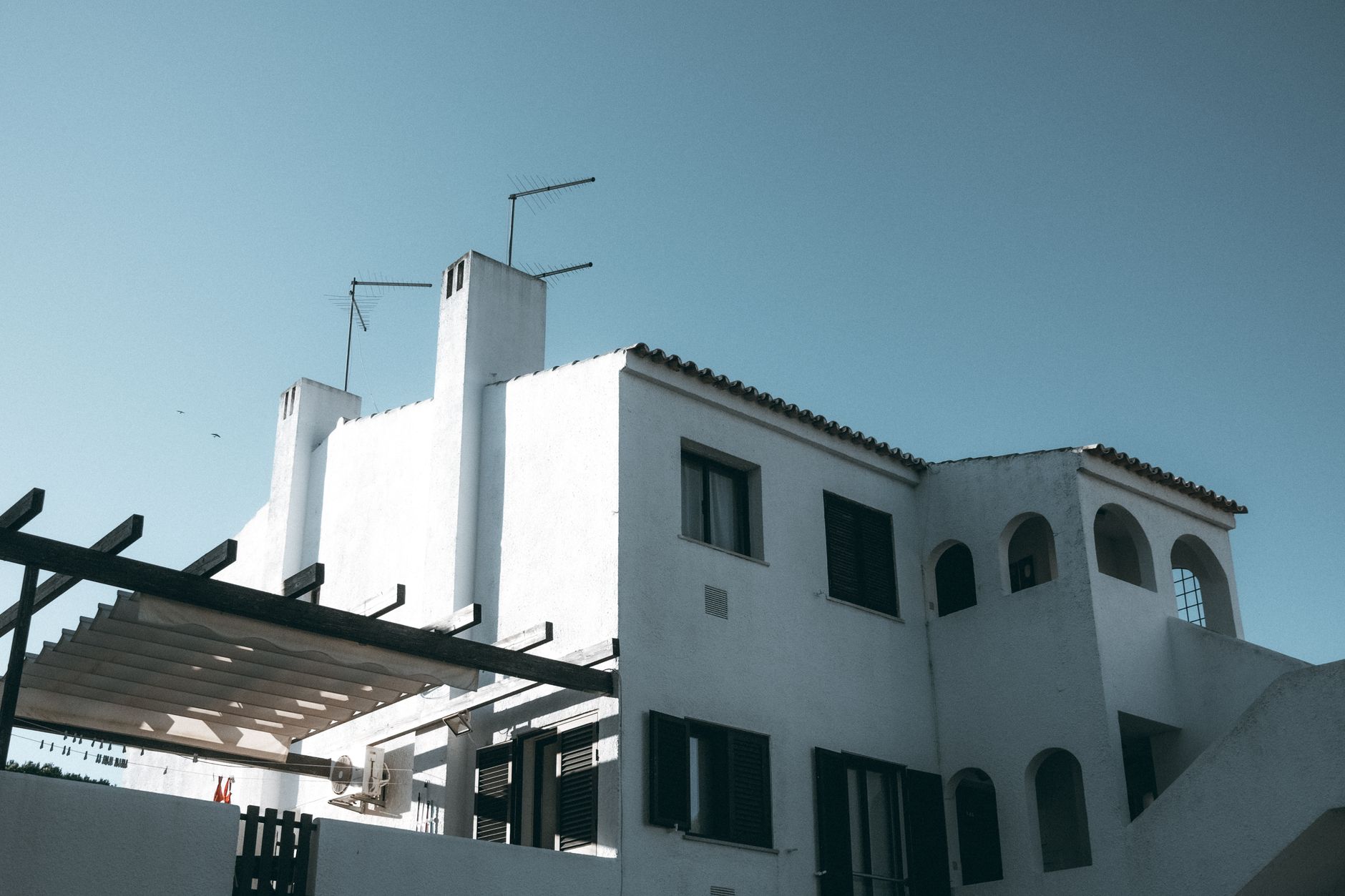
Photo: Vitor Lopes / Pexels
Cool Roofs: How a White Coat Can Drop Your Indoor Heat by 4°C
Walk across a bare concrete terrace at 2 pm in May and your slippers will tell you everything about why Indian homes turn into ovens. That slab is soaking up sunlight all day and quietly radiating it down into the rooms below well past midnight. A cool roof flips that equation. Instead of absorbing the sun, it reflects it straight back at the sky, and the room underneath stays noticeably cooler without a single extra unit of electricity.
This is not a gimmick or a new gadget. It is one of the cheapest, most proven heat defences available to an Indian household, and as summers stretch longer and hotter, it is finally getting policy attention. Telangana became the first Indian state to write cool roofs into law in 2023. Here is how the idea actually works, what to buy, and where it helps versus where it is a waste of money.

What a cool roof actually does
Every surface reflects some sunlight and absorbs the rest. A dark, weathered concrete or tar roof reflects only a small slice and turns the rest into heat. A properly coated white roof reflects the large majority of the sunlight falling on it. The technical word for this is albedo, or solar reflectance, measured from 0 to 1.
There is a second property that matters just as much: thermal emittance, the roof's ability to shed the heat it does absorb rather than hold onto it. A good cool roof scores high on both. That combination is why the surface stays cool to the touch even under a brutal afternoon sun.
The payoff inside is real and measurable. Research in Indian conditions puts the drop in indoor air temperature at roughly 2.1°C to 4.3°C under a cool roof compared with a conventional one. For a top-floor flat or a single-storey house, that is the difference between a fan being useless and a fan being enough.

The numbers that make it worth doing
The comfort gain is the headline, but the money follows close behind. Because the rooms run cooler, air conditioners and coolers work less hard and for fewer hours. Field estimates suggest a cool roof can cut air-conditioning energy use by up to 20% in the spaces directly below it.
Think about what that compounds into. Lower bills every summer, less wear on the compressor, and a more bearable home on the days the power cuts out. Telangana's own policy projects savings of hundreds of millions of electricity units across the state by 2028-29, simply from buildings demanding less cooling.
There is a city-scale bonus too. When enough roofs reflect instead of absorb, the whole neighbourhood runs a little cooler, chipping away at the urban heat island effect that makes dense areas several degrees hotter than their leafy outskirts. Your white terrace is a tiny contribution to that, but a real one.
What the Telangana policy got right
Telangana's Cool Roof Policy, launched in 2023, is worth understanding even if you live elsewhere, because it sets a template the rest of the country is likely to copy. It made cool roofs mandatory for new government and large commercial buildings and optional for residential plots smaller than around 600 square yards.
Crucially, it did not just say "paint it white." It set performance standards. To count as a cool roof under the policy, a low-slope roof must hit an initial solar reflectance of at least 0.70 and an emittance of at least 0.75. Those two numbers are the ones you should carry into any shop.
The state set itself a target of covering 300 square kilometres of roof area, most of it in the Hyderabad region. The logic is simple: heatwaves are getting deadlier, air-conditioning demand is exploding, and reflective roofs buy relief at a fraction of the cost of new power plants.
How to do it on your own home
You do not need a government scheme to coat your own terrace this weekend. The options run from dirt-cheap to properly engineered:
- Lime wash (whitewash): The traditional fix. A couple of coats of slaked lime, sometimes with a little adhesive or salt mixed in. It reflects well on day one and costs almost nothing. The catch is durability — it chalks off and washes away within a monsoon or two, so the reflectance fades fast and you re-do it every year.
- Acrylic cool roof coatings: Water-based white paints engineered for high reflectance and emittance. They bond far better than lime, resist dirt, and typically hold up for three to five years. This is the sweet spot for most homes.
- Elastomeric coatings: Thicker, rubbery membranes that reflect sunlight and stretch to bridge hairline cracks. They cost more but double as a light waterproofing layer, which suits older roofs that already weep in the rains.
- Reflective tiles or membranes: For flat commercial roofs or new construction, white china-mosaic, broken-tile finishes, or factory-made reflective sheets give the longest life with the least maintenance.
Whatever you pick, surface prep decides the result. Sweep and wash the roof, let it dry, patch obvious cracks, and apply two thin coats rather than one thick one. Coat early in the day so the paint cures before the afternoon sun hits it.
Where a cool roof helps — and where it doesn't
Be honest about your building before you spend. A cool roof works by intercepting heat at the topmost surface, so the benefit shrinks the further a room sits from the roof.
- Big winners: Top-floor flats, single-storey houses, tin or asbestos-sheet roofs, and anything with a slab you can fry an egg on by noon. Tin roofs especially can drop dramatically because metal heats and re-radiates so aggressively.
- Modest gains: Middle floors of a tall building, where several slabs of concrete already sit between the sun and your ceiling.
- Little point: Ground-floor rooms in a multi-storey block. Your heat is coming through walls and windows, not the roof three floors up. Spend on shading and insulation instead.
A few honest caveats. Reflectance fades as dust and grime settle, so an annual rinse keeps a cool roof performing. In the short, cool winter weeks a reflective roof gives up a little daytime warmth, but in most of India the summer savings dwarf that. And a coating is not a waterproofing system unless it specifically says so — fix leaks first, coat second.
The bigger shift this points to
Cool roofs sit inside a quiet rethink of how India keeps cool. The national approach has leaned on selling more air conditioners, but every new AC pumps heat back onto the street and pulls more load onto a straining grid. Passive measures — reflective roofs, cross-ventilation, shading, lighter building materials — cut the need for that machine in the first place.
Expect more states to follow Telangana with their own rules, and expect cool-roof requirements to creep into building bylaws and affordable-housing schemes, where the people in tin-roofed homes have the most to gain and the least access to an AC. Heat is now a public-health emergency in much of the country, not a seasonal nuisance, and the cheapest defences are the ones that scale.
For a household, the calculation is unusually simple. A few thousand rupees of reflective coating, a weekend of work, and a top floor that finally cools down after dark. Few home upgrades pay you back so quickly, and almost none of them do it just by sending sunlight back where it came from.